Showing posts with label thys. Show all posts

Sunday, 29 June 2014

Daily Cycling Facts 29.06.2014

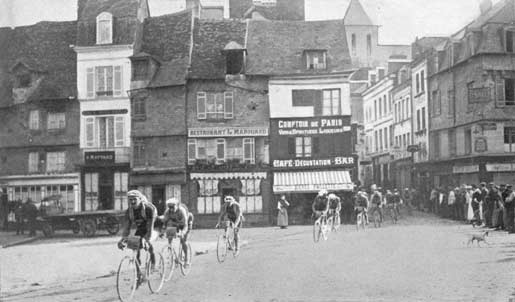
The Tour de France began on his day in 1913, 1919, 1967, 1978, 1984, 1996 and 2013. In 1913 there were 15 stages, covering a total of 5,338km. In 1903, the overall winner was decided by accumulated time, then in 1904 by points amassed during the race - in 1913 it returned to accumulated time and has remained so ever since; the main reason for the switch being that it was felt Belgian riders had been unfairly benefiting from the points system.

On the start line were no fewer than six previous winners, a record, who had won all by three of the Tours ever held: they were Louis Trousselier (1905), Lucien Petit-Breton (1907, 1908), François Faber (1909), Octave Lapize (1910), Gustave Garrigou (1911) and Odile Defraye (1912). For the very first time, an African rider took part - he was Ali Neffati, a Tunisian who had been "discovered" by Tour director Henri Desgrange and became a personal friend of his, being given a job as a driver for Desgrange's L'Auto newspaper when his cycling career came to an end. It's pleasing to be able to say that, while they were curious about the exotic rider, the French public exhibited no more prejudice towards him than they had towards "Major" Marshall Taylor, an American rider who enjoyed enormous popularity in France at the turn of the century - a time when, back home, he was barred from some velodrome races when a small number of venues refused him entry for no reason other than that he was black. It was also the first time that the race ran anticlockwise, heading out of Paris to Le Havre and then following the coastline south to the Pyrenees before moving across the south of the country to the Alps before heading north and back to Paris; previous editions had gone in the opposite direction.

Marcel Buysse
Givanni Michelotto, Jules Masselis, Henri Pélissier, Marcel Buysse and "The Death-Rider Of Lichtervelde" Henri van Lerberghe won the first five stages which, other than the spectators who threw nails into the road during the first stage (and ruined the chances of winning for 29 riders), an interesting four-way leadership split between Masselis, Buysse, Odile Defraye and Alfons Lauwers after Stage 2 and Lapize's decision to leave the race during Stage 3 in protest at his low salary, passed without incident with the overall leadership eventually going to Defraye, who went into Stage 6 with an advantage of 4'55" over second-place Eugène Christophe. The edition is most famous for what happened next.

Christophe dropped Defraye with relative ease during Stage 6, which started at 03:00 and took in seven major cols. He left his rival far behind on the Aubisque and wasn't too concerned when Thys caught him on Tourmalet and was first to the summit because officials had told him that he now led overall by 18'. Nevertheless, he thought that he might as well use the descent to try to extend his lead further, so in his own words he "plunged full-speed towards the valley." Then, with around 10km to go to the bottom, he found he was unable to steer. Looking down, he saw that his forks had snapped just below the crown race, and anyone who knows Tourmalet and the speeds that can be reached on the way down it will find it as amazing as he undoubtedly did that he was then able to bring himself to a safe halt.

Christophe descending
The rules stated that, unless a race official declared a bike irreparably damaged, the rider was required to repair it himself or face a stiff penalty, perhaps even disqualification. Christophe makes no mention of being refused permission, but we can assume permission was refused and he had no choice but carry his bike down the mountain in search of somewhere to mend it - he considered taking a shortcut down the goat tracks that snake all over the mountain, but he was crying with the sheer frustration of it all and couldn't see clearly enough to risk it. After two hours he reached Ste-Marie-de-Campan and met a girl who took him to Monsieur Lecomte, the village blacksmith. Lecomte said that he would repair the fork, but an official (the presence of an official at this point is why we can assume permission to replace the bike earlier was refused - he'd been joined by some nosy staff from other teams, keen to make sure Christophe didn't get any special treatment) told Christophe that this would result in a penalty. Lecomte then told him he was free to make use of the forge - fortunately, before becoming a professional cyclist, Christophe had been a locksmith; and in those days all locksmiths produced locks from raw materials rather than simply sold locks made elsewhere in factories, so he was no stranger to the tools he had at his disposal and with Lecomte's guidance he was able to complete the repair in three hours. Then the race official penalised him ten minutes, because Lecomte's seven-year-old son Corni had worked the bellows.

Lecomte have him a loaf of bread to replenish his energy levels then, having torn it up and stuffed it into his jersey pockets for easy consumption on the road, Christophe set off over the Cols du Aspin and Peyresourde towards the finish line, arriving there in 29th place and 3h50'14" after stage winner Thys - yet, incredibly, not last; fifteen riders arrived after him. There was some good news: the official that gave him the 10' penalty was considered to have been excessively harsh considering the rider's ordeal and the punishment was reduced to 3', unfortunately this still knocked him out of the overall top three once the other riders' bonuses had been added up. Moments after he'd arrived, representatives from Peugeot (who sponsored his team and supplied their equipment) surrounded him and took his bike away, then began informing everyone that he'd hit a car: they didn't want the press and public to know that one of their bikes had broken so catastrophically during normal use. The next morning his bike was returned, with a new fork, and the one Christophe fixed wasn't seen again until thirty years later when a dying man bequeathed it to him in his will.

1913 winner Philippe Thys
Marcel Buysse won Stage 7, then Garrigou and Lambot won the next two - on Stage 9, Buysse's chances of winning overall ended when his handlebars snapped and he lost just short of three-and-a-half hours, including a 25' minute penalty for getting some help mending them. He decided instead that he'd go for stage wins: Lambot won Stage 9 and Faber Stage 10, then Buysse won four of the remaining five (Stage 13 also went to Faber). After Stage 9, Thys led by 1h07'30" and looked set to win. Garrigou - who, like Thys, rode for Peugeot - was either content to take second or had been ordered by the team not to challenge; but Petit-Breton rode for Automoto and had every intention of limiting his losses, perhaps even stealing victory, by taking every chance that presented itself and making best use of the Sturmey-Archer hub that allowed him to change gear "on the fly" while Thys had to stop, remove his rear wheel, flip it over to the different cog on the other side and then fasten it up again. Both men crashed hard in Stage 14: Thys lost consciousness but recovered, then got help fixing his bike and received a 10' penalty that allowed him to remain 8'37" ahead overall; Petit-Breton was more seriously hurt and his race came to an end. The next day, Thys shadowed Garrigou all the way, responding the very same moment whenever he tried to attack, and his advantage remained inviolate. He won again the next year, then in 1920 became the first man to win three Tours.


1919 consisted of 15 stages and covered a total distance of 5,560km, which makes it the second-longest Tour ever held. As it was the first edition since the end of the First World War and France's roads had been severely damaged by bombs, shelling and tanks, the winner's average speed of 24.056km is the slowest ever recorded. Three winners from before the war were not on the startline: Lucien Petit-Breton had been killed when he was hit by a car while serving as an Army message carrier, Octave Lapize, who became a fighter pilot, was shot down over Flirey and died a few days later, François Faber was shot in the back while trying to rescue a fallen comrade from no man's land between the trenches, the very same day that news arrived informing him that his wife had just given birth to their daughter.

Odile Defraye
With an enormous percentage of an entire generation of young men lost, the average age of the starters was far higher than in previous years. Odile Defraye had won the Tour in 1912 and Philippe Thys won in 1913 and 1914 - as nobody really knew what to expect the two Belgians were favourites before the race. However, when Thys showed up it was obvious that he hadn't been riding his bike much during the war and apparently spent most of his time eating - "You have become un petit bourgeois who has lot his love for his bike and wasted a huge talent," Desgrange told him. The bike firms that had sponsored teams before the war were also in poor shape and couldn't provide the backing they once had; realising that the race would be the best way to advertise their products and they would all benefit as a result, they worked together as an organisation named La Sportive that managed to provide at least some sort of support to a little over half the riders. La Sportive remained in operation until 1923 as France tried to put itself back together. L'Auto, which owned and ran the Tour, realised that riders would be discouraged from entering if they couldn't afford to buy food - for the first time in the history of the race, the organisation supplied them.

Jean Rossius won Stage 1 but was then given a 30' penalty when judges declared that he'd contravened the rules by helping Thys, who was in a crash and decided he may as well give up;  Henri Pélissier, who crossed the line 1'15" after Rossius, became the race's first leader. On Stage 2 he won it fair and square after he and brother Francis outperformed their rivals, finishing with a 3'47" lead on Honoré Barthélemy and Jean Alavoine and an overall advantage of 19'52" over Eugène Christophe, while Rossius was 4'40" (the last rider to finish, Leon Leclerc, arrived 9h07'47" later).

Henri Pélissier wanted to abandon the race during Stage 3 and rode slowly. Tour director Henri Desgrange, who would later become his enemy following a row, realised that he was one of France's best hopes for victory and persuaded him to continue; but by this time he was 45' behind the leaders. He managed to catch up, though it took three hours of hard work to do so, then finished second behind his brother in a sprint to the finish - his overall lead now increased to 23'10. Meanwhile, Léon Scieur had had four punctures and ended up with an overall disadvantage of more than two hours - unless he experienced a miracle, he was out of contention.

Francis Pelissier, 1919
After the stage, Pélissier told journalists that whereas all the other riders were carthorses, he was a thoroughbred - this obviously won him no friends in the peloton, but Henri was rather a disagreeable man anyway and had never really had any friends other than Petit-Breton (who had "discovered" him) and his brothers (who seem to have been completely over-awed by him). It's worth noting that he was also correct - he was one of the very first riders to realise that a small amounts of healthy food consumed regularly was a better diet for a cyclist than loading up on vast piles of steak, eggs, sugar and alcohol (the list of what Maurice Garin, who won the first Tour, ate during a race in Paris in 1893 makes for amusing reading and is a good indication of the sort of things cyclists ate before more of them started to find that old Henri had been right after all). He was also one of the first to develop a training regime that had some basis in science, rather than old wives' tales, and it paid off - when he returned to the Tour in 1923 to prove a point to Desgrange, he was unstoppable. On Stage 4 he'd regret it, though: he had a puncture and, rather than riding slowly while he fixed it (as the unwritten laws of gentlemanly competition and more tangible rules of the Tour in those days stated they and he must), the entire peloton attacked and left him far behind - only faithful Francis waited. Before too long, a few riders began dropping off the back of the peloton and the Pélissiers recruited them to assist in a chase, but since they represented different teams Desgrange ordered them to stop working together. Henri did remarkably well to finish in tenth place, 34'52" behind stage winner Alavoine, but he'd lost a significant amount of time to Christophe and now trailed in second place overall with a disadvantage of 11'42". Francis was even less fortunate - he finished 17th, 3h25'27" behind Alavoine. That evening, the two of them decided to retire from the race.

Christophe, the first man to wear the
maillot jaune (probabaly)
Stage 5 was the longest in the history of the Tour at 482km. Alavoine won again, though it took him 18h54'07" to do so. Incredibly, it finished in a bunch sprint with seven other riders sharing the winning time. Christophe finished 13" after them, extending his advantage to 15'51" over Émile Masson. Barthélemy won the next stage, Alavoine won two and then Barthélemy won another two, but nobody could get close to Christophe and his lead was 23'19" at the start of Stage 11. That morning, Desgrange came to him shortly before the stage started and announced that he had come up with an idea that would make it easier for fans to spot the race leader, thus drawing more attention to him and to the race - and then produced a bright yellow jersey to replace the green armband that had previously marked out the race leader. Christophe hated it on sight, but agreed to wear it; though he had to be persuaded to put it on again for Stage 12 because some spectators had called him a canary (which ranks quite low on any list of "most hurtful insults ever hurled at the peloton").

Many years later, Philippe Thys told Champions et Vedettes magazine that he'd been offered (and had refused) a yellow jersey in 1913. His honesty and good character are in no doubt; but there is no documentary evidence to support his claim whatsoever and, since he was 67 when he said it, it's generally assumed that his mind was playing tricks on him. However, in 1920, the jersey was not awarded until Stage 9, when it was given to Thys. This leads to three obvious possibilities: the first is that the jersey didn't exist until 1919 and Thys was actually remembering an incident from 1920; the second is that Desgrange thought it up on a whim in 1919 and had no intention of it ever becoming a permanent part of the race until he suddenly remembered it a year later; the third is that it wasn't intended to be a permanent feature and Desgrange thought it up in 1919 (or perhaps remembered it. and the effect it either did have or he perceived it to have had in 1913, then reintroduced it) in an attempt to increase competition - by this point in 1919, only eleven riders remained in the race and, while he once claimed that in the ideal Tour only one rider would finish, he was well aware that fewer riders meant less interest. In 1920, most of the favourites abandoned early and the riders that remained rode slowly due to oppressive heat. Could it be that Desgrange, desperate to liven things up, brought back what has become one of the most recognised and prestigious trophies in sport simply as a last resort? There's another mystery - why is the yellow jersey yellow? The reason usually given is that the paper upon which L'Auto was printed was yellow, but some people have wondered if in reality it's because yellow has never been a very fashionable colour for clothing and it was the only one in which Desrange could get the jersey made at very short notice due to the post-war shortage of materials and at a price he liked.

Firmin Lambot
Barthélemy won Stage 11, his third consecutive victory, then a little-known Italian named Luigi Lucottin won two. Christophe's lead remained intact, and at the start of Stage 14 he had an overall advantage of 28'05" over second place Firmin Lambot. Over the course of the Tour's history since that year, the legend of the Curse of the Yellow Jersey has appeared. It has some basis in reality - the race leader can expect to have to deal with more attacks than any other rider, especially if he's one of the also-rans allowed to win it in the early stages when as many as a hundred other also-rans will be after their own time in the spotlight or if he's a General Classification contender in the final stages, when rivals will be trying to steal it and the Tour. Cyclists are a superstitious bunch, as anyone who has seen the assortment of charms they dangle from their handlebars or the utter horror on their faces if somebody spills salt during a meal at the team's hotel will tell you; thus it wasn't long before some people appeared to genuinely believe in the Curse and blamed it for the bad luck its wearer supposedly experiences because of it. Christophe was its first victim - during Stage 14, on the rough cobbled roads around Valenciennes, his forks snapped. This happened to him in 1913 (see above) and would happen again in 1922, and since the rules of the day stated that every rider had to carry out his own repairs he had no alternative but to carry his bike for an hour to the nearest forge, where he made sure that nobody did anything that could possibly be considered to have assisted him in any way. He finished tenth, last-but-one, 2h28'58" after Lambot (who took 21h04'27" to get to the finish line) and dropped to third place overall, 2h00'53" behind Lambot and 7'56" behind Alavoine.

On Stage 15, Christophe had so many punctures that it looks rather like somebody might have been paying spectators to throw tacks in the road, which was most certainly not unknown in those days but tended to be carried out less blatantly than before the war. He lost more time, but remained in third place 2h26'31" behind the winner. Alavoine stayed second with +1h42'54", Lambot won with 231h07'15" and many riders realised that amassing stage wins was not necessarily the way to win the Tour.


During the 1920s, Henri Desgrange had become increasingly convinced that the teams' manuacturers, almost invariably bike manuacturers, were using nefarious means to ensure their riders won and sales went up as a result. He was right, they were; he was also right when he said there was nothing he could do to stop them other than ban trade teams altogether and replace them national teams who, in theory at least (in some cases, national teams have been so tied up with one sponsor that they're virtually a trade team - and vice versa, as is the the case with Euskaltel-Euskadi to this day). In 1929, when Alcyon worked together to get Maurice de Waele over the line in first place even though according to Desgrange he resembled a corpse, he'd had enough and from 1930 only national teams came. That situation came to an end in 1962 and the trade teams returned; then - officially to control protests against doping controls but arguably in an effort to end complaints that the race caused too many road closures (Geoffrey Nicholson, Le Tour, ISBN 0-340-54268-3) they were introduced in 1967 and 1968, after which they vanished forever.

There were 22 stages that year and they covered a total of 4,708km. For the first time there was also a prologue, and the race had been designed to be the hardest Tour ever. It cannot, therefore, have been an uneventful race all the way until it reached Mont Ventoux in Stage 13 on the 13th of July - but because of what happened that day, everything else had been forgotten.

Tom Simpson was the finest male rider Britain had ever produced and, thanks largely due to him, the Tour was increasingly popular on that side of the English Channel where there was a real sense that he might even become the first British winner. He was also intelligent and funny, making him popular with the other riders; those that might not have liked him (and not one surviving rider from his era will admit to that) learned to respect him, because he had the legs to go with it.

It was hellishly hot that morning before the stage began and forecasters warned it would get worse, reaching as much as 45C. That worried official race doctor Pierre Dumas - when he went for a walk at 06:30, he met some friends. "If the riders take something today, we'll have a death on our hands," he told them. They may have shared his concerns, but Dumas - who had come to cycling almost by chance, with no previous background in the sport - was well known for taking doping far more seriously than anybody else. Many people accepted it a simply a part of the sport, one that was better not discussed, so they may also have not.

It seems odd that, only 45 years ago, medical science believed that drinking the amount of water now recommended during athletic activity was actually harmful; but that was the case and, as a result, race organisers permitted riders no more than four standard bidons (about two litres) of water per stage. The riders, meanwhile, knew that they got thirsty and mounted cafe raids in which they would descend en masse upon rural bars and shops and guzzle down any fluids they could find, not caring about the large bills that showed up on their managers' desks months later. Early on in the stage, Tom had been drinking from a bottle of brandy.

He'd been up Ventoux before and was well aware that, as Raphaël Géminiani had tried to warn Ferdinand Kübler more than a decade earlier, it's "not like any col." Kübler thought he could prove himself stronger than the old volcano, so Ventoux ended his Tour career. Tom had once written the following, describing an earlier experience:
"It is like another world up there among the bare rocks and the glaring sun. The white rocks reflect the heat and the dust rises, clinging to your arms, legs and face. I rode well up there doing about five miles to the gallon in perspiration. It was almost overwhelming hot up there and I think it was the only time that I have got off my bike and my pants have nearly fallen down. They were soaked and heavy with sweat which was running off me in streams and I had to wring out my socks because the sweat was running into my shoes."
He knew, then, that Ventoux demanded respect. At Chalet Reynard, near the point where riders emerge from the weird and airless forests of the lower slopes and come out into the blast furnace of a road that leads to the top, the heat and alcohol was already giving his problems and several riders passed him. Team manager Alec Taylor wondered briefly if this might be a psychological trick designed to make his rivals think he couldn't cope, but when he drew close to Tom he could see that it wasn't. A little further up he was even worse, unable to concentrate and wondering about all over the road in a place without barriers to prevent a plunge over the side. At this point, Taylor and team mechanic Harry Hall still didn't doubt Tom would make it up the mountain and were far more concerned about what he might do to try to make up the time he was losing once he was over the summit - he'd long ago earned a reputation for being a lunatic descender, apparently relishing the thrill of high-speed corners that would have had most other riders reducing their speed by half. Then he crashed.

Hall was the first one to reach him. "That's it for you, Tom," he said, preparing himself for the emotional outpouring that was sure to come when the rider sat out the remainder of the stage in the team car, following his comrades. But Tom wanted to go on. Both men wished later that they'd stopped him.

For a man suffering as Tom was, he made it a very long way - it's 5.35km along the road and not far from 400m upward to the place where he fell for the second time. This time he wasn't going on, though he didn't know it because he was already unconscious, his hands locked in a deathgrip to the bars and his legs still trying to pedal. Hall was first to him again and said later that he knew it was too late. With the help of another mechanic, Ken Ryall, they prised his hands loose and laid him down at the side of the road. One of the Tour's police outriders summoned Dr. Dumas, who was there in moments. He, his deputy and a nurse took turns administering heart massage, mouth-to-mouth resuscitation and oxygen until the helicopter arrived and took him to hospital, where he was declared dead. His last words, spoken as Hall reached him, were not "Put me back on my bike!" - that was made up by a journalist who wasn't there. Hall and Taylor say they were "Go on! Go on!"

The cause of death was given as a heart attack but Dumas, knowing that there was more to it than that and realising that Tom had bequeathed him a chance to prevent more stupid deaths, refused to sign the death certificate until an approved poisons expert had carried out an autopsy. Five days later, it confirmed that he had been taking the amphetamines that were also found in the pockets of his jersey; the drugs having prevented him from being able to know when his body was unable to take any more.

1978
Hinault (left) with Joop Zoetemelk
22 stages, 2 split + prologue, 3,908km. Hinault's first victory, on his very first appearance in the race.

Top Ten Final General Classification
1 Bernard Hinault (FRA) Renault 107h 18' 00"
2 Joop Zoetemelk (NED) Miko +3' 56"
3 Joaquim Agostinho (POR) Flandria-Velda +6' 54"
4 Joseph Bruyere (BEL) C&A +9' 04"
5 Christian Seznec (FRA) Miko +12' 50"
6 Paul Wellens (BEL) Raleigh +14' 38"
7 Francisco Galdos (ESP) KAS +17' 08"
8 Henk Lubberding (NED) Raleigh +17' 26"
9 Lucien Van Impe (BEL) C&A +21' 01"
10 Mariano Martínez (FRA) Jobo +22' 58"

1984
Laurent Fignon
23 stages + prologue, 4,020.9km.
The Battle of Hinault and Fignon, eventually won by Fignon (his second consecutive victory). For the first time the Tour was joined by a women's race, the Tour de France Féminin: Marianne Martin won, followed by Heleen Hage and Deborah Schumway

Top Ten Final General Classification
1 Laurent Fignon (FRA) Renault-Elf 112h 03' 40"
2 Bernard Hinault (FRA) La Vie Claire-Terraillon +10' 32"
3 Greg LeMond (USA) Renault-Elf +11' 46"
4 Robert Millar (GBR) Peugeot +14' 42"
5 Sean Kelly (IRE) Skil-Reydel-Sem +16' 35"
6 Ángel Arroyo (ESP) Reynolds-Papel Aluminio +19' 22"
7 Pascal Simon (FRA) Peugeot +21' 17"
8 Pedro Muñoz (ESP) Teka +26' 17"
9 Claude Criquielion (BEL) Splendor-Mondial-Moquettes +29' 12"
10 Phil Anderson (AUS) Panasonic-Raleigh +29' 16"

1996
21 stages + prologue, 3,895.4km.
Bjarne Riis wins, bringing the Indurain Era to an end. Later, he would admit to doing so with the help of EPO. The period permitted by the legal statute of limitation has since expired, meaning that Riis cannot be stripped of the title; however, he is generally regarded as having not won and is not listed as having done so in the Tour's official records.

Top Ten Final General Classification
1 Bjarne Riis (DEN) Telekom 95h 57' 16"
2 Jan Ullrich (GER) Telekom +1' 41"
3 Richard Virenque (FRA) Festina +4' 37"
4 Laurent Dufaux (SUI) Festina +5' 53"
5 Peter Luttenberger (AUT) Carrera +7' 07"
6 Luc Leblanc (FRA) Polti +10' 03"
7 Piotr Ugrumov (LAT) Roslotto-ZG Mobili +10' 04"
8 Fernando Escartin (ESP) Kelme +10' 26"
9 Abraham Olano (ESP) Mapei +11' 00"
10 Toni Rominger (SUI) Mapei +11' 53"


Livio Isotti, born in Pesaro, Italy on this day in 1927, won the Giro della Romagna in 1950 and Stage 7 at the 1953 Tour de France, where he was 42nd overall.

In 2013, the 100th edition of the Tour began in Corsica - the first time that the race had ever visited the island, which was the only French metropolitan district it had not previously visited. With 2012 winner Bradley Wiggins staying away, there was no clear favourite; however, Cadel Evans, Chris Froome, Andy Schleck and Alberto Contador were all heavily backed by fans. Stage 1 followed the trend set over the previous decade or so by being a full, mass-start stage rather than an individual time trial prologue and was marked by several crashes and a remarkable incident in which Australian outfit Orica-AIS' enormous team bus, the largest at the race in 2012, became wedged under the banner over the finish line - with the peloton fast approaching. It was initially decided to end the race at the 3km to go point but, when the bus was finally moved, the stage ran its full course, though not without another crash that left stage win favourite Mark Cavendish limping to the line. The crash having taken place in the last 3km, all riders were awarded the same time; however, Marcel Kittel was first over the line for the victory.

Cyclists born today: George Hincapie (USA, 1973); Bob Haro (USA, 1958); Sante Gaiardoni (Italy, 1939); Frank Brilando (USA, 1925); Pedro Caino (Argentina, 1956); Pedro Lopes (Portugal, 1975); Ľuboš Kondis (Slovakia, 1976); Pascal Poisson (France, 1958); Cesare Zanzottera (Italy, 1886, died 1961); Yaichi Numata (Japan, 1951); Rusli Hamsjin (Indonesia, 1938); Matías Médici (Argentina, 1975); Niels Baunsøe (Denmark, 1939); Lars Olsen (Denmark, 1965); Ernesto Grobet (Mexico, 1909, died 1969); Evrard Godefroid (Belgium, 1932); Manuel Aravena (Chile, 1954); Ernest Moodie (Cayman Islands, 1959); Philippe Grivel (Switzerland, 1964); Moises López (Mexico, 1940) - and, possibly, Louis Trousellier, who was born on the 29th of either January or June in 1881.

Saturday, 28 June 2014

Daily Cycling Facts 28.06.2014

The Tour de France has begun on this day three times - 1914, 1969 and 1985. By 1914, eleven years since the first edition, the race had been increased to 15 stages and the total distance was 5,405km; making stages on average 360km in length. In fact, the longest was 470km - while this is as long as two long stages together in a modern Tour, riders had a rest day after ever stage. There were eight plain stages and seven mountain stages, time trials not being introduced until 1927. Today is also the anniversary of the assassination of Archduke Franz Ferdinand in Sarajevo: one month and once day later the First World War began, then six days after that Germany invaded Belgium and declared itself at war with France. There would not be another Tour for five years.

Le Tour, 1914
The assassination was the tipping point at which Europe descended into war rather than the cause, of course: her most powerful forces (Great Britain, Germany, Austro-Hungary and France) had been building up their armies for decades, peering nervously at one another and turning the entire continent into a powderkeg. The relationship between France and Germany had been especially frosty for a very long time due to the question of Alsace, the region that has changed hands between the two countries numerous times and where, until comparatively recently, the majority of the population spoke a German dialect (that row led in a roundabout way to the invention of the Tour, as it happens, but describing how with sufficient detail to make doing so worthwhile would take a lengthy article of its own); as a result the parcours went from Belfort, which sits between the Vosges and Jura and is just kilometres from Alsace to Longwy near the Luxembourgian border. That way, it stayed well clear of the German border for a fourth consecutive year.

Le Grand Départ, 1914
The number of starters had grown enormously since the first Tour, meaning that reporters and race officials were no longer able to recognise every rider; so for the first time each bike had a number displayed upon it. Don Kirkham and Ivan Munro became the first Australian riders to take part, racing for Phebus-Dunlop they would come 17th and 20th respectively.

Philippe Thys and his Peugeot-Wolber team mate Henri Pélissier were favourites, but also racing were six previous winners: Louis Trousselier (1905), Lucien Petit-Breton (1907, 1908), François Faber (1909), Octave Lapize (1910), Gustave Garrigou (1911) and Odile Defraye (1912). Three riders would win after the war - Firmin Lambot (1919, 1922), Léon Scieur (1921) and Lucien Buysse (and 1926). Thys also won in 1913 and in 1920 would become the first man to win three Tours; Pélissier won in 1923. Eleven Tour winners with fifteen victories between them in one edition remains a record, and one that's unlikely to be broken. When Thys won Stage 1, beating several of his main rivals in the sprint and the rest by at least 3'21", he looked set to dominate the race - though Jean Rossius, who second with the same time, came very close to taking the lead on Stage 2, which he won. However, on that occasion it was Thys who was second, also recording the same time, so they shared leadership. This situation remained until after Stage 5.

On the third stage, riders arrived at a checkpoint (in those days, they had to stop and sign their names to prove they hadn't taken shortcuts) an hour late and found that the official in charge had got bored and left a subordinate to wait for them. As a result, they were given incorrect instructions and ended up riding 30km in the wrong direction, completely unaware until organisers discovered the mistake and sent a car to find them so that they could be brought back and the race could be restarted. Emile Engel, who had won stages in the Independents class in 1909 and 1910, won his only stage as a professional, sponsored rider that day (later on he was in a collision with another rider named Maurice Brocco. The language he used when explaining to Brocco why it was his fault was so strong that he was disqualified); Thys, Rossius and several others finished joint fifth. Stage 4, the longest at 470km, went to the Swiss Oscar Egg with Pélissier second for the same time, Thys and Rossius were joint fourth. It was on Stage 5, when Egg won again, that Thys finally managed to get away from Rossius and gained upper the hand; he was third and Rossius was fifth.

Stage 6 brought the riders to the Pyrenees and the climbers took over. Lambot won the stage whilst Thys was second, 7'40" behind him. Rossius was eleventh, 1h02'09" behind the winner: overall victory slipped from his grasp. The Tunisian Ali Neffati was hit by an official race car on the Aubisque and couldn't finish the stage; fortunately for him the rules of the day allowed him to remain in the race after his likely time had been determined and he was given 42nd place and raced again. Jean Alavoine won the sixth stage of his career when he was first over the finish line for Stage 7, leading a group of five men that, in addition to himself, included Marcel Buysse (2nd), Thys (3rd), Pélissier (4th) and Rossius (5th). The mountains were left behind in Stage 8 for the 370km trip between Perpignan and Marseilles and the weather was so hot that the riders didn't want to race, riding at little more than walking pace. Henri Desgrange, trying to prevent a boring stage, stopped the race and rapidly organised an impromptu sprinting contest eventually won by Lapize (who got into an argument with Egg - Egg's language, like that of Engel earlier the same day, was found disagreeably coarse, but he escaped with a fine). Stage 9 took a mountainous 338km route from Marseilles to Nice: Rossius won with a 6'54" led over joint second Pélissier and Thys, but by now his overall disadvantage was so great that it no longer mattered. François Faber, who had become the first foreigner to win the Tour in 1909, was spotted taking a drink from a motorcycle and being pushed, for which he was awarded a 90' penalty - that didn't matter either, any chance he may have had at the start of the race were long gone now.

Pélissier's disadvantage was 44'30" at the start of Stage 10, but he was the only man in the race able to take on Thys and still thought he might be able to do so, fighting hard to win Stage 10 - he managed it and took back more than 10', starting Stage 11 34'27" behind. That day, the finished together so the gap remained untouched after Garrigou won; after Stage 12, which he won, he reduced it by another 2'37" whilst Thys was sixth - the only stage in which he didn't finish in the top five.

Philippe Thys
Faber won Stages 13 and 14. Pélissier was still 31'50" at the beginning of Stage 14, but then an opportunity fell into his lap: on the way to Dunkirk, one of Thys' wheels collapsed. The rules stated that a rider had to either repair all faults himself (strictly without outside help) or wait for a race official to declare it irreparable, in which case a replacement part could be provided from the team car. Thys realised that following correct procedure was likely to cost him too much time, so he took a risk and went off in search of a bike shop to buy a new wheel (it was a big risk, because officials were being especially firm that year: earlier in the race, one of the sponsored riders threw away a half-eaten sandwich. Seconds later it was pounced upon by an independent, thanking his lucky stars for some free food - and the professional rider got a 30' penalty for assisting a rider who wasn't a member of his team). Officials spotted him and he was penalised 30', which sent Pélissier haring off towards Dunkirk in an attempt to make up the remaining 1'50" and take control of the race. Precisely what happened next is a mystery: Pélissier said that there were spectators in the road at Dunkirk and they wouldn't let him through. This happened, rather conveniently, at a time when there were no race officials nor police officers around to back him up, which has led many to wonder if he was simply unable to counter the heroic - and successful - attempts Thys made to preserve his lead. Pélissier would win the final stage, but took back no more time.

When the riders returned to the real world after the race, Europe was a very different place. The war began just two days later, and a few weeks after that Desgrange used his L'Auto newspaper to publish the following letter to his champions:
"For 14 years, Le Auto has appeared every day.  It has never let you down. So listen my dear fellows, my dear Frenchmen.  There can be no question that a Frenchman succumbs to a German.  GO! Go without Pity!"
Faber, Petit-Breton and Lapize would not return in 1919 when the Tour next took place: Faber was shot in the back while trying to rescue a fallen comrade from no man's land between the trenches, Petit-Breton died when he was hit by a car while serving as an Army message carrier and Lapize, who became a fighter pilot, was shot down over Flirey and died a few days later. They were not the only ones, but most of those who could only dream of Tour success are now forgotten.


In 1969 there were 22 stages and the race covered 4,110km - seven more stages than 1914, but 1,295 fewer kilometres. After a few decades in which the Tour was open only to national teams, commercially sponsored trade teams returned in 1962. However, after a riders' protest against ani-doping tests in 1966 (which organisers believed had been provoked by sponsors, who wanted the problem covered up rather than brought out into the open where they might become associated with it) they decided to return to national teams (or at least, that was the official reason: in his book Le Tour (ISBN 0-340-54268-3), Geoffrey Nicholson argues that the decision may have been prompted by accusations that the race caused too many road closures and that by reintroducing national teams teams they were trying to drum up patriotic support). Trade teams countered by refusing to allow their best riders to compete, which is why Eddy Merckx didn't take part in the Tour of 1968. Organisers relented and the trade teams returned on 1969 (with Eddy Merckx, once political intervention - and the hundreds of protesting fans who surrounded the Belgian Federation's headquarters - had seen to it that his highly questionable doping conviction from the Giro d'Italia earlier in the year had been quashed), initially on the understanding that the race would revert to national teams every few years. 43 years later, this has not happened.

Eddy Merckx
Merckx had not yet won a Tour, but he'd already been World Champion and won a Giro, three editions of Milan-San Remo, a Tour of Flanders, Paris-Roubaix, Gent-Wevelgem, Liège-Bastogne-Liège and La Flèche Wallonne; the spectators that saw him on the start line were already realising that here was a rider whose talent was far greater than any of those who had come before him. He had made no secret of the fact that he was there to win, yet one thing stood in his way - for a period of eighteen days between the positive test at the Giro and the start of the Tour, he'd been suspended from competition. That was enough time without race practice to affect his form, and he was not at his best. Rudi Altig of Salvarani knew that and he put it to good use by beating the Belgian by 7" in the prologue. Stage 1a ended at Merckx's hometown Sint-Pieters-Woluwe and he was determined to win, but now Marino Basso took advantage of his reduced form and sprinted past him in the last 50m (Sint-Pieters-Woluwe is also home to the Palais Stoclet, a private home that must be seen if you ever happen to be in the area as it's the finest example of 20th Century architecture anywhere in the world); Altig finished outside of the top ten but was able to retain the yellow jersey when the first 96 finishers were awarded the same time.

Stage 1b was a team time trial, in which Faema beat Bic by 46" and Salvarani by 48". Merckx therefore started the next day in yellow, but he didn't chase when a group led by his team mate Julien Stevens escaped because none of his rivals went with them. He finished 16" after Stevens, which meant Stevens took the maillot jaune. "It was a great moment for him to take over the yellow jersey. I was quite happy to give it up - temporarily; it's much too conspicious," he said later. Only a year ago, the moment the break got away, Merckx would have been after them and kept going until he'd hunted down every single member regardless of whether they presented him with any sort of challenge or even if they were team mates - he was maturing, and that made him even more dangerous. Stage 3 went to Eric Leman of the Flandria team, this time the first 116 riders over the line were given the same time and so Stevens remained in yellow for another day. He'd have lost it on Stage 4 when Rik van Looy escaped, making good use of the terrain (described as flat stage officially, it's actually rather hilly and precisely the sort of parcours a Flanders Classics specialist such as van Looy can use to his advantage) - not because he thought he had any chance of winning the Tour, but in an attempt to get himself noticed by the selection panel for the World Championships; he managed to build up a considerable gap that, if he'd kept it to the end, would have got him into yellow. Stevens wasn't ready to give it up just yet, however, and went after him  accompanied by seven other riders. Among them was René Pijnen, who rode with van Looy on the Willem II-Gazelle team (ah, those heady days when a bicycle manufacturer and cycling team were happy to associate themselves with a cigar firm), who set about trying to disrupt the chase. The others turned on him and using the various means and ways by which an unwanted rider can be ejected from a group (including, but not limited too, verbal warnings that the unfavoured one is going to be kicked into a ditch or wall just as soon as there's a reasonable chance that the race officials are looking the other way) got rid of him. Stevens finished 42" after van Looy and kept the yellow jersey, the rest of the group were 2" behind and Pijnens arrived 53" later (van Looy got his ticket to the Worlds and came 24th; so did Stevens, but he won a silver medal).

Julien Stevens
The following day, the Tour reached the mountains of Alsace and everything changed. Stevens had used up too much energy the day before; he couldn't stay with the break led by Désiré Letort, who had been in the Stage 4 chase group, and lost the jersey. Joaquim Agostinho won the stage by 18" against Altig; Letort was tenth he'd won enough time to put himself into the overall lead the only time he wore the maillot jaune in his nine years as a professional - but Merckx was now in second place overall with a disadvantage of only 9". It was no surprise the next day, when the race climbed its first serious mountains (including the Grand Ballon, Alsace's highest point, and the Ballon d'Alsace which, on the 11th of July 1905, had been the first mountain the Tour ever climbed) when he converted that disadvantage into a 2'03" advantage. He was 28th on Stage 7 but none of the riders that came before him were close enough to cause much concern and Altig remained 2'03" behind, so Merckx was confident going into the Stage 8a individual time trial. It didn't go quite as well as he might have liked with only 2" being added to his lead, but it was still early days and while he was 29th behind stage winner Michele Dancelli in 8b that afternoon, Altig recorded the same time so again nothing changed.

In Stage 9, Merckx and Roger Pingeon escaped together. Merckx had the strength to win mountain stages even though he was built like a sprinter, but Pingeon's lighter build left him less tired at the end of the stage and he was able to win the sprint. For Altig, a sprint specialist, the stage was an unmitigated disaster: he finished in 76th place, 7'59" behind Pingeon and Merckx, which cost him. Now trailing Merckx by 10'04" overall, his chance to win was lost.

Pingeon was now in second place overall, but trailed Merckx by 5'21" in the General Classification. Herman van Springel won with a 2'01" lead the next day but was much to far down the leadership to make any difference at all, and the 5'21" stayed intact. Then Merckx won Stage 11, adding another 22", then 1'28" when he was third behind Felice Gimondi on Stage 12. He maintained it at 7'11" for the next two stages (which went to Guido Reybrouck and Agostinho) and had no reason at all to win the time trial in Stage 15 - but he did, and finished with 8'03" advantage overall. Raymond Delisle beat him by 2'45" on Stage 16 after a small group away up Portet d'Aspet; since he too was no rival there was even less reason for Merckx to bother himself with winning Stage 17. But Merckx had a greater competitive drive than anyone else, as well as the legs to go with it - he went solo for 140km over Tourmalet and the Aubisque; and when the stage finished and he'd beaten Dancelli by 7'56", he was 16'18" ahead overall. Pingeon may have technically been in second place, but it was irrelevant now: Merckx had reduced the entire field to the level of also-rans. Barry Hoban won Stages 18 and 19, thus becoming the first British rider to win two consecutive days at the Tour (it would be 29 years before Cavendish repeated his feat, then did it again - twice - a year later).

Pierre Matignon's unexpected victory in Stage 20 is worthy of note. He was the lowliest of domestiques, in the race purely to act as a servant for Frimatic's leader Agostinho; and he started the stage in 86th place. Three hours behind Merckx, he'd given up all hope of a good result so long ago that he'd spent much of the intervening time locked in a private competition with Sonolor's André Wilhem to become lanterne rouge, because being last in the Tour gains a rider far more media attention and race contracts than finishing anywhere else outside the top ten does. Wilhelm decided he was unable to ride as slowly as Matignon and gave up the battle early in the stage, sprinting away from him.

Puy-de-Dôme
Up at the front of the peloton, the leaders (or those that were left; around 45 riders had abandoned by this point) were biding their time, waiting for the final decisive climb up the corkscrew road to the summit of the Puy-de-Dôme. When Wilhelm rode away, Matignon punctured and, being a domestique, was left to fend for himself because he wasn't important enough for the team to try to help him back into the race. They wouldn't expect to see him the next day, and at that point Matignon would have been certain he'd been on his way home later that evening. Ah, what the hell - he decided he may as well hurry up a bit, perhaps he'd at least get a chance to see the stage being won. Then he caught the peloton, so when it slowed to pass through the feeding station with 66km to go he grabbed a musette and attacked. The leaders watched him go and remained steadfastly unconcerned. Over the following 20km, he built up a 3' lead. The leaders still weren't especially concerned, but when he had 5"with 30km to go they decided it would be better to be safe than sorry - a chase group, made up of domestiques who'd pleased their masters sufficiently to be permitted a chance to get themselves on television, was sent off to catch him and return him to his rightful position. They couldn't catch him; he had a lead of seven and a half minutes when he got to within 20km of the finish line. Now Peugeot began to worry - at this rate, there was a chance that a complete unknown was going to rob Pingeon of his second place in the General Classification, so they sent a serious chase group of strong climbers off to do the job. They got within 2km of him by 10km to go, at which point Merckx decided he'd better sort things out. When he launched, Matignon's fun could last only seconds longer.

Or could it? Merckx got within sight of his quarry just as Matignon turned onto the final section towards the summit, a private track that rises for 5km at 12.5%, but with 500m to go he still hadn't caught up. Angry now, he stomped on the pedals and lurched forward after a man who was clearly suffering and weaving about all over the road in a desperate attempt to deal with the gradient. He didn't look back again. From then onwards, he saw nothing - there was nothing to see, the universe was him, his bike, a gradient and the pain. Then there was also the summit, and 1'25" there was Merckx. The most unimportant man in the Tour had won one of its most prestigious stages, and in doing so he had beaten the greatest cyclist that ever lived. He died in 1987, aged only 44.

Van Springel and Spruyt won Stages 21 and 22a, but it was far too late for anything to change now. Merckx increased his advantage to 17'54" in the Stage 22b time trial. He'd won six stages and worn the maillot jaune for seventeen days, as well as winning the General Classification, the King of the Mountains and the Points competition, all after turning up to the race after missing two valuable weeks of preparation. What was he going to do to his rivals next year?


In 1985, cycling had left the Era of Merckx behind and now another one, the Age of Hinault, was coming to an end as the Breton aimed for a fifth and final Tour; which would make him Merckx and Anquetil's equal. He had been beaten by Laurent Fignon the year before and the American Greg Lemond came close several times - now Fignon was away recovering from surgery on his knee, so the La Vie Claire team dealt with the Lemond problem by signing him up. A deal was reached - if Lemond looked the better bet for overall victory, Hinault would ride for him. If Hinault was better, Lemond would ride for him.

There were 22 stages and a prologue that year, covering 4,109km in total. For the first time, the multi-coloured Combination jersey was inflicted upon the eyes of spectators (it had been white when the classification was introduced in 1968, then the classification vanished in 1975 and the white jersey was given to the leader of the new Youth classification instead. In 1980 it reappeared as the TF1 GP but lasted only three years. After reintroduction in 1985, it vanished again in 1989 and has never returned), but otherwise there were no major changes to the way the race was run in 1984. Hinault won the prologue - he had to, really, because it was in Brittany and he was a Breton folk hero. He beat Lemond by 21", but a 6km time trial gives no indication of what will happen later in a three-week Grand Tour.

As is usually the case, the General Classification contenders didn't worry too much about the first week and Hinault didn't mind when Eric Vanderaerden took the yellow jersey in Stage 1 thanks to time bonuses. Rudy Matthijs won Stages 1 and 2, then La Vie Claire beat Kwantum by a minute in the Stage 3 team time trial, which sounds an even better result when one bears in mind that they did so on their standard road race bikes rather than using specialised time trial machines like the other teams did; which may be why a huge mob of fans climbed over the barriers to get to them. Hinault, who felt uncomfortable in crowds and had felled a well-built shipyard worker during an angry protest at Paris-Nice in 1982, flew into a panic and landed the sort of punch that would make a boxer proud on the chin of a press photographer. Police bundled him into a car and sped him away to his hotel before he set his sights on another target.

Eric Vanderaerden
Vanderaeden stayed in yellow, but Hinault was 32" behind him in second place and La Vie Claire riders occupied the next seven places in the overall top ten too. Kim Andersen (who now works with Frank and Andy Schleck), who was with the team, escaped in a breakaway during Stage 4; Kwantum's Gerrit Sollevend won the stage but Andersen ended up in the maillot jaune with an advantage of 19" over Vanderaerden and 1'01" over Hinault. Little changed during Stage 5 which was won by another Kwantum rider, Henri Manders; then, once initial winners Vanderaerden and Sean Kelly had been penalised for irregular sprinting, Lemond came second behind Francis Castaing (Peugeot) the next day, picking up sufficient time bonuses to place himself third overall with a 2" advantage over Hinault. Ludwig Wijnants won Stage 7, the gap between Lemond and Hinault stayed the same.

It all changed with the Stage 8 time trial. All great Tour riders can perform well on any type of parcours, like many of the very best Hinault was especially good in a time trial - and he won this one by 2'20", taking back the maillot jaune with a 2'30" advantage over second place Lemond. This time, police were ready and he was protected from the crowd - or the crowd was protected from him - by a police escort. Dietrich Thurau (Hitachi) was judged to have drafted behind another rider and penalised, though he made it quite clear he disagreed with the decision. He was still furious at the start of Stage 9 the next morning when he spotted the chief of the race judges, a man named Raymond Trine, and then it was his turn for trouble: he had his hands clenched around Trine's throat when the race started, at which point he dropped him and ran to his bike, jumped on and started pedaling. After the stage had finished, he was apparently quite surprised when informed that he'd been thrown out. That stage, and the next, were hilly, so some of the less well-known riders used them to gain time on rivals while the General Classification contenders conserved energy for the upcoming mountains where bigger gains could be found: Maarten Ducrot and Jørgen V. Pedersen shared them. On Stage 10, the British rider Paul Sherwen (who is now the "Voice of the Tour" for people who watch it on TV in Britain, Australia and the USA) crashed in the first kilometre of Stage 10; two team mates stayed with him to help get back to the peloton, but he told them to go on without him rather than risk their own chances. He tried desperately to catch up, riding solo for more than six hours over six tough climbs, but could not; when he reached the finish line (he'd met the aravan coming back the other way some kilometres down the road - everyone had assumed he'd abandoned and the finish line infrastructure was being packed away) he was more than an hour behind Pedersen and a full 23 minutes beyond the maximum time. He should therefore have been eliminated, but judges were so impressed by his efforts that just as had been the case following a similar incident in 1979, the rule was waived and he stayed to ride again the following day. In the General Classification, Lemond won back a few seconds and, when they arrived at the Alps for Stage 11, he was 2'16" behind Hinault.

Parra at the Vuelta, 1989
Luis Alberto Herrera and Fabio Enrique Parra climbed the Alps like a short flight of stairs because they were both Colombian and had grown up training on Andean roads that started at far higher altitudes than those at which Alpine roads stopped. Herrera rode for Cafe de Colombia, but his team were only interested in the King of the Mountains and so he had no reason not to agree when Hinault suggested they work together. La Vie Claire management forbade Lemond from following them - they'd decided now who the boss was. The Breton crossed the finish line 7" after the Colombian and his overall lead rose to four minutes - the next day he took things much easier and finished 16th, making sure he recorded the same time as 10th place Lemond.

Hinault was apparently still feeling the effects of the mountains in the Stage 13 time trial because Vanderaerden beat him by 1'07". This, however, was not enough to break into the overall Top Ten; meanwhile, Lemond finished 19th, 1'23" slower than Hinault. The Breton's advantage rose to 5'23". Stage 14 was hilly - no problem at all for Herrera, who attacked early to pick up some more King of the Mountains points. This time, Lemond was given the go-ahead to chase, accompanied by Robert Millar, Pedro Delgado and six others while Hinault stayed where he was. They couldn't catch him, but did well to finish 47" later. Hinault was with Panasonic's Phil Anderson around 1'30" down the road, but in the final kilometre they were in a crash with three others. Race rules state that, if a rider crashes within the final 3km, his or her overall time will not be reduced for the time that passes until he or she is back on the bike but that the rider must get to the finish line unaided. This was fortunate for Hinault because he was on the ground for some time while doctors attended to him but lost only 1'50" overall, though his face and the maillot jaune were covered in blood when he got back on his bike. What was less fortunate was that he'd broken his nose.

Lemond in yellow, 1990
Few people expected him to show up at the start of Stage 15, but Hinault was tougher than that - he had two black eyes, his nose was bandaged and he was having difficulty breathing, but he was there. Incredibly, he lost no time that day, then added 6" the next by first matching and then beating the American as Eduardo Chozas and Frédéric Vichot won the stages. Stage 17 nearly proved to be his undoing - featuring Tourmalet and Luz-Ardiden, two of the toughest climbs in the Pyrenees, it was simply too much for a man in his condition and he was unable to respond when Lemond escaped with Delgado and Stephen Roche. Further on, Delgado attacked. Roche went after him, which forced Lemond to respond because Roche was close enough to potentially become a General Classifiation rival. Lemond believed that he had a better chance of chasing down Delgado and could even win the stage, which in turn he might be able to upgrade into overall leadership over the next few stages; but when he asked team manager Paul Koechli for position he was refused. Instead, they ordered him to wait for Hinault and help him limit time losses, claiming that the Breton was only 40" back down the road. Koechli may have been mistaken, but Lemond maintains that it was a lie told because they were afraid he might pretend not to have received the order and go for glory if he knew the truth, which was than Hinault was actually some minutes away (later, the team claimed that Lemond had in fact been given permission and had made it all up rather than admit he wasn't strong enough). Lemond slowed, waited, then slowed some more. Various other riders sailed past him, but still Hinault hadn't caught up. Eventually, the finish line came within sight and he had no choice but to cross it at a gentle pace 2'52" behind Delgado, the man he still says he knew he could have beaten. Hinault 1'11" later, though with an overall lead still standing at 2'25". Lemond was, understandably, furious; especially when he realised he'd been lied to. Hinault was grateful that he'd proved himself faithful, and promised that next year he - Le Patron - would ride as Lemond's domestique.

Roche won Stage 18a and Régis Simon won Stage 18b before the race left the mountains behind, then Vanderaerden and Johan Lammerts won the two plain stages that followed. None of them posed any sort of challenge to Hinault who still led by 1'59" after Stage 20. Stage 21 was the last time trial and turned out to be Lemond's ever Tour stage win, but the 5" by which he beat Hinault made no difference now when there was only Stage 22 left. Matthijs finished the Tour as he had started by winning that last stage, while Hinault's final overall advantage was 1'42". He had equalled Anquetil and Merckx, but next year would be different: another era had ended and, while Lemond won three Tours and is one of the greats by any standards and although Miguel Indurain won five and Lance Armstrong won seven, it's been a long time since fans saw a rider in the same vein as Merckx, Hinault and their like. At the time of writing, it was also the last time a Frenchman won the Tour - they need another, soon.

Hinault, his face battered after Stage 14
The 1985 race had two major effects. The first came as a result that there had been too many time trials in the last few years, which gave some riders what was perceived to be an unfair advantage - it took a while to happen, but in the early 1990s race organisers found themselves in agreement and times trial kilometres started to decrease. Nowadays there'll usually be one or two individual time trials, one team time trial and sometimes a prologue, though any one of them can be omitted (interestingly, if time trial results hadn't counted towards General Classification results in 1985, the overall outcome would have been very different: Herrera would have won with an advantage of 16", Delgado would have been second and Lemond would have been third at +2'28. Hinault would have been eighth at +4'47". The second was that Hinault was the first rider to win using clipless pedals, having worked closely with LOOK during their development. It was largely as a result of his victory that they replaced the older type, with toe cages and straps, as rapidly as they did.


Cyclists born today: Vasil Kiryienka (USSR, 1981); Leslie Rawlins (Trinidad and Tobago, 1954); Pietro Guerra (Italy, 1943); Simone Cadamuro (Italy, 1976); Filiberto Mercado (Mexico, 1938); Rafael Montiel (Colombia, 1981); Lucien Victor (Belgium, 1931, died 1995); Ernst Fuhrimann (Switzerland, 1913); Julio Cesar Rodríguez (Colombia, 1966).

Tuesday, 8 October 2013

Daily Cycling Facts 08.10.2013

Annemiek van Vleuten
Born in Vleuten, Netherlands on this day in 1982, Annemiek van Vleuten played football as a teenager and, despite having cycling ancestors on her mother's side of the family, had no interest in cycling until she suffered a knee injury in 2005 and doctors advised it as an ideal sport to maintain fitness during recovery. Very rapidly, she became good at it and it wasn't long before somebody told her that she'd probably do well in a race. She gave it a go and did; so in 2007 she took our her first racing licence and began to train seriously with the WV Ede cycling club. Later that year she was invited to ride at the Holland Ladies' Tour, then won the National Students Championships.

In 2008, van Vleuten signed to the Vrienden van het Platteland team where she rode alongside Martine Bras, Liesbet de Vocht, Willy Kanis, Roxane Knetemann and Ellen van Dijk and came second in the individual time trial and third in the road race at the World Universities Championships; in 2009, when the team merged with DSB Bank to become DSB Bank-Nederland Bloeit, they were joined by 22-year-old Marianne Vos and van Vleuten won her first professional race, a criterium at Rijssen. The following year was her real breakthrough - she won Stage 2 at the Gracia Orlova and was second overall behind Vos then Stage 4 at the Emakumeen Bira, where she was again second overall, and Stage 1 plus the General Classification at the Route de France. 2011 was better - she won the Ronde van Vlaanderen, one of the most prestigious victories in cycling, and added excellent results in numerous races before winning the GP Ouest-France and the World Cup; but 2012 was equally as good with victory at the National Road Race Championship, second place at the GP Elsy Jacobs, victory at the Holland Hills and the Dorpenomloop Wijk en Aalburg and stage wins at the Emakumeen Bira and Giro della Toscana.

Van Vleuten has become Vos' most important lieutenant, a rider able to stay with her team leader right up until Vos makes her winning move (and when Vos does that, nobody can stay with her). However, she remains very capable of winning races for herself - in 2013, she won the prologue at the GP Elsy Jacobs, Stage 3 at the Thuringen Rundfahrt and Stage 6 at the Trophee d'Or Feminin.

Sanne Cant
Born in Antwerpen, Belgium on this day in 1990, Sanne Cant is a cyclo cross rider who became Junior National Champion in 2006, successfully defended the title in 2007 and 2008; then became Elite National Champion in 2010 and successfully defended that title in 2011 and 2012. In 2012 she was also third at the World Cyclo Cross Championships, losing out to Marianne Vos and Daphny van den Brand, and came second at the National Mountain Bike Cross Country Championships.

Cant says that she wants to become Cyclo Cross World Champion; as she is still only 23 years old - and with the 2013/14 season off to an excellent start with victory over Sophie de Boer at Baden in Switzerland (where Nicole Koller singled herself out as a rider to watch in the coming years, taking third place despite being only 16 years old), it seems certain she'll achieve that ambition sooner or later.

Philippe Thys
Born in Anderlecht on this day in 1889, Philippe Thys became Belgium's first ever National Cyclo Cross Champion in 1910 and then won the Independents competition (for riders with limited sponsorship - or sometimes paying their own way - but not members of teams) at the Tour de France. The following year he signed to Peugeot-Wolber to be able to ride the Tour as a professional and came sixth; in 1913 (the first time the Tour ran anti-clockwise around France and the first time an African rider took part - the Tunisian Ali Neffati) he was given a ten minute penalty after getting a bike shop to repair his broken fork but took the lead when Eugène Christophe broke his own fork and was given a penalty when judges learned he'd also received help - a seven-year-old boy named Corni had worked the bellows in the forge for him as he fixed the forks himself. Thys lost the lead again later in the race, but then Christophe's forks broke for a second time and Thys went on to win overall.

Philippe Thys
In 1914, he won again; this time, however, he dominated the race from Stage 5 - he only won the first, but finishing in the top five on every subsequent stage meant that nobody could even get close to him for the overall lead even though he received a 30-minute penalty after breaking a wheel and buying a replacement in a shop (Neffati raced again but was hit by a car during Stage 6 and abandoned). It would be the last Tour before the First World War; when the race next took place in 1919, many of the star riders from before the War had been killed.

Belgium was rapidly conquered by Germany at the start of the war and Thys, as a citizen of an occupied nation, did not fight. Some races continued; Thys won Paris-Tours and the Giro di Lombardia in 1917 then Paris-Tours again in 1918, but apparently hadn't had much opportunity to ride his bike after that and, when he showed up at the Tour in 1919, fans wondered if he'd spent the last year eating instead - he was overweight and in poor physical condition: "You have become un petit bourgeois who has lost his love for his bike and wasted a huge talent," race director Henri Desgrange told him. After getting left behind in the first stage, he gave up and went home.

Insults in the newspapers stung him into training hard throughout the 1919 winter and, in 1920, the Thys who began the Tour was perhaps even fitter than the one who had won before the war. The race that year was declared by fans to be boring with the riders taking it easy in unusually hot weather, but Thys shone - he was a part of every breakaway, won four stages and once again finished in the top five on every stage, thus becoming the first man in history to win the Tour three times (no other rider would win more until Jacques Anquetil won a fourth in 1963). "France is not unaware that, without the war, the crack rider from Anderlecht would be celebrating not his third Tour, but his fifth or sixth," Desgrange wrote.

Thys in the 1914 Tour de France
Thys may also have been the first man to wear the maillot jaune. Officially, it was first awarded to Christophe during the 1919 Tour when Desgrange came to him one morning and asked him to wear it, saying it would make it easier for fans and photographers to spot him. Christophe hated it on sight but agreed to wear it, though he had to be persuaded to put it on again for Stage 12 because some spectators had called him a canary (which ranks quite low on any list of "most hurtful insults ever hurled at the peloton"). However, many years later Thys told Champions et Vedettes magazine that he'd been offered (and had refused) a yellow jersey in 1913. His honesty and good character are in no doubt, but there is no documentary evidence to support his claim whatsoever and, since he was 67 when he said it, it's generally assumed that his mind was playing tricks on him. This leads to two obvious possibilities: the first is that the jersey didn't exist until 1919 and Thys was actually remembering an incident from 1920; the second is that in 1919 Desgrange remembered it and the effect it either did have or he perceived it to have had when he first awarded it in 1913, then reintroduced it in an attempt to increase competition - by this point in 1919, only eleven riders remained in the race and, while he once claimed that in the ideal Tour only one rider would finish, he was well aware that fewer riders meant less interest (this seems to be what happened in 1920, too, when the race progressed slowly and it wasn't awarded until Stage 9). It's possible, therefore, that Thys was right - and that the maillot jaune, the greatest prize in cycling, began as nothing but a cheap gimmick intended to create a bit of excitement when the Tour became boring.

Anne-Caroline Chausson
Born in Dijon in 1977, Anne-Caroline Chausson had already enjoyed an impressive career as a BMX rider by 1993 when she turned to mountain biking. However, it was in mountain biking that she became world famous - she has been called the most successful downhill racer of all time and her decade-long battle for supremacy with the American star Missy Giove is often said to have been the sport's golden age.

Chausson was immediately highly successful in downhill racing, winning the  Junior World Championship in 1993, 1994 and 1995. Her first major victory at Elite level came in 1996 when she won the National Championship, beating Carole Grange who had been third at the European Championships the previous year; a short while later, she beat Leigh Donovan and Giove at the World Championship in Cairns, Australia and then successfully defended the World Champion title for the next seven years, retaining it until 2004 when it passed to Vanessa Quin - Chausson won it back for a ninth and final time in 2005. In 1998, she took the World Cup from Giove, then won it again in 1999, 2000, 2001 and 2002.

From 2000, many downhill riders began to compete in dual slalom events, pitting themselves against another rider on an identical, designed course. Chausson dominated in the early years, winning the World Championship and World Cup in 2000 and a second World Championship a year later. The fast and furious nature of dual slalom gave rise to four-cross, in which four riders compete on one course with plenty of elbowing thrown in for good measure; this rapidly became even more popular than dual slalom and replaced it at the World Championships- which Chausson won in 2002 and 2003, also winning the World Cup in 2002.

Following fifteen years at the very pinnacle of downhill racing, Chausson made a return to BMX in 2007 with a view to representing France in 2008 when the sport made its debut at the Olympics. She qualified, then beat her team mate Laëtitia Le Corguillé and the American Jill Kintner into second and third place respectively; thus becoming the first person to have ever won a gold medal for BMX at the Games (later that same year, she won the silver medal at the BMX World Championships). She qualified again for the 2012 Games but lost time after the British rider Shanaze Reade touched wheels with her on the final berm; neither woman finished in the top three.

Dede Barry
Deirdre "Dede" Demet Barry, born in Milwaukee in this day in 1972, began her sporting career in skating, as have many other cyclists - originally, she was a figure skater but found the sport boring, spending most of her time on the rink challenging others to races. Her coach suggested she might therefore find speed skating more to her liking and made it onto the national team in 1987, then competed at the World Championships between 1988 and 1991.

Like so many other great cyclists, Barry began cycling solely to maintain fitness while not skating but after watching the International Cycling Classic criterium series she decided to concentrate solely on cycling and, in 1989, became Junior World Road Race Champion, National Road Race Champion and National Individual Time Trial Champion. After riding with the victorious time trial teams at the Nationals and PanAmerican Games in 1991, she took a second National ITT title in 1993, then won three stages and came third overall at the Women's Challenge in 1994. In 1995 she won the Women's Challenge and the PanAmerican Games ITT, in 1996 she was again National Road Race Champion and won the Mountains competition at the Redlands Classic, also coming second overall, and in 1997 she won the General Classification and the Points competition at the Grand Prix Féminin du Canada. The following year she was National Criterium Champion and in 1999 she won the Tour of Houston, but 2000 passed without victory and she took a year out of the sport in 2001 before returning to win the Coupe du Monde Cycliste Féminine de Montréal in 2002 aboard a steel bike built for her by her father-in-law. She was second overall and won a stage at the Giro della Toscana in 2003, then went to the Olympics in 2004 and won silver in the time trial before taking two stages at the Tour de l'Aude later in the season, her last before retirement.

Trent Lowe
Born in Melbourne, Australia on this day in 1984, Trent Lowe was National Mountain Bike Cross Country Champion in the Under-17 class in 2000, then in the Under-19 class in 2001 and 2002 and in the Under-23 class in 2003 and 2004; he was also Junior World Cross Country Champion in 2002. From 2005 he has competed in road racing and earned a contract with Discovery for the following season; in 2005 he took second place at the Redlands Classic and won the Youth category at the Tour of Georgia. He won the Under-23 category at the Herald Sun Tour in 2006 and 2007, then a second Youth category at the Tour of Georgia in 2008, where he was also second overall. In 2008, he rode the Tour de France, finishing in 77th place.

Lowe suffered a series of injuries and illnesses through 2009 and 2010, going without victory, but looked set for a comeback after signing to the new Australian Pegasus team for 2011. However, the team did not receive the ProTour licence it had expected and he has not been able to make a return since; his efforts have, perhaps, been hampered by an incident in 2010/2011, when Lowe threatened to publish information relating to Garmin-Slipstream doctor Luis Garcia del Moral (since banned from working with athletes for life as part of USADA's investigations into doping at US Postal, which has also seen Lance Armstrong stripped of his seven Tour de France victories) unless the team paid him €500,000.


Giuseppe Beghetto, born in Tombolo, Italy on this day in 1939, was Amateur National 1km Champion in 1958 and won a gold medal riding with Sergio Bianchetto in the tandem race at the 1960 Olympics. The following year he won the Sprint and the Tandem (again with Bianchetto) at the Amateur Nationals, then the 1km and Tandem in 1962, also coming second in the Sprint at the Amateur World Championships. In 1965 he became Elite World Sprint Champion, then successfully defended the title in 1966 and won it back in 1968 (when he also won the same race at the Nationals). He was National Sprint Champion again in 1969 and won two stages at the Giro di Sardegna, inspiring a move into road cycling that saw him compete in the Tour de France the following year - he finished two stages in tenth place before abandoning, then won a stage at Tirreno-Adriatico in 1971 before retiring in 1973.

Waclaw Starzynski, born on this day in 1910, was National Cyclo Cross Champion of Poland in 1936. He also took part on the notorious Berlin Olympics that year and came 16th in the road race; two years later he rode at the World Championships in Valkenburg but failed to finish.

Jørgen Pedersen, who was born in Copenhagen on this day in 1959, became Amateur National Road Race Champion in 1981 and won Stage 10 at the Tour de France in 1985, then wore the maillot jaune for five days in 1986. In 2007 he became a directeur sportif for Team CSC, but is no longer employed by the team.

Other cyclists born on this day: Lu Yu'e (China, 1960); Bruce Keech (Australia, 1966); Thomas Nyemeg (Cameroon, 1957); Wanderley Magalhães (Brazil, 1966, died 2006); Manuel De Vecchi (Italy, 1980); Jørgen Pedersen (Denmark, 1959); Ignace Mandjambi (Congo, 1940); Hiroko Nambu (Japan, 1968); Witold Plutecki (Poland, 1956); Lada Kozlíková (Czechoslovakia, 1979); José Robles (Colombia, 1964); Miguel Chacón (Venezuela, 1983 (The Netherlands).