Wednesday, 21 March 2012

Prize disparity at the Dwars door Vlaanderen

Here's an interesting little factoid for you all. The winner of the men's race at the Dwars door Vlaanderen will receive €5785. The winner of the women's race will receive €1000.
The women's race is, of course, much shorter than the men's - 81.5km compared to either 199.5 or 201km (the former is the distance stated on the route details, the latter is stated elsewhere). So if we divide the prize by the distance, we find that the winning woman is going to receive €12.67 for each kilometre; around 44% of the  €29 (199.5km) or €28.78 (201km) that the winning man will receive.
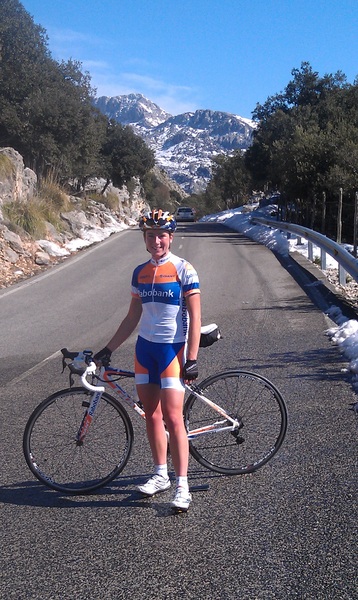
Margriet Kloppenburg
(image credit: Margriet Kloppenberg)
Or at least, that's what Cyclopunk thought. Since then, Danish road and cyclo cross rider Margriet Kloppenburg (see the comments after this article), who says she's happy just to be able to race, has informed me that the top prize is not in fact €1000 at all - that's the entire prize fund for the women's race, to be shared among the winning riders. I'd wondered about that when I read the event rules, but the idea that €1000 could be the whole pot was so ridiculous I dismissed it.

Any one of them could earn more than  €1000 each week working in a full-time job. Split between them, it's peanuts. In fact, with the way food prices have increased in the last couple of years, their prizes would only just about allow them to afford a packet of peanuts.

That, of course, is why there are so few women's races mid-week: the riders are working in full time jobs, because the prize money and team salaries don't give them enough money to live on. It's also why women's cycling isn't as "developed" (as Pat McQuaid likes to say) as men's cycling - it's not that female riders are any less competitive, it's because they simply don't have the time to devote to their sport like the men do.

Come on, Pat. Sort it out.
(image credit: Oblongo CC BY-SA 2.0
The Dwars door Vlaanderen is showing the way ahead by including a women's race and it's not the organiser's fault that so little money is available - the problem is that the sport simply doesn't have the sponsorship. The way to get more sponsors is to have more exposure, because commercial companies other than those directly involved with bicycle or athletic equipment manufacture (with the possible exception of Rabobank and one or two others) don't hand over the cash for the good of cycling. They do it because they want to advertise stuff to the fans. The way to get more exposure? More races. The UCI can help with that one by encouraging more existing men's events to run corresponding women's races, like the Dwars does. It wouldn't hurt if some of that vast pile of cash they've been bragging about recently could be used to help support women's cycling, too.


Kloppenberg also says that the women's prize fund at this Sunday's Gent-Wevelgem is, incredibly, only €500;which may be why at the time of writing the information isn't available on the Flanders Classics website - the poor organisers are probably embarrassed.


Come on, Pat. Sort it out.

Cyclopunk's News Digest 20-21.03.12

Today's News: Dwars door Vlaanderen - Volta Ciclista a Catalunya Stage 3 ends in a snowstorm - Annemiek van Vleuten is back - Pooley rates self and Vos for Worlds - Wilkinson wins in Normandy - UCI toughens up on lawyer tabs

Dwars door Vlaanderen today
Vlaamse Wielerweek, the ten-day "week" that includes several of Northern Europe's finest races, kicks off today with the Dwars door Vlaanderen. It concludes with the Ronde van Vlaanderen on the 1st of April and features rather a lot of the finest cycle racing and a whole lot of cobbled climbs in between.

The Dwars is known for being a tough race with plenty of the short but steep climbs that characterise cycling in that part of the world. So guess what the organisers have done this year? That's right - they've seen to it that it's even harder than year. This is, after all, Flanders; where the riders are riders and the cobbles are nervous. (More details including map and altimetry here).

Volta Ciclista a Catalunya Stage 3
Click to enlage
Today was intended to be the Queen Stage at the world's third-oldest stage race, with the dedicated climbing specialists battle to be the first to the summit finish 1,947m high on Hors-Categorie Port Aine 210.9km away.

Yesterday, GreenEDGE had done a fine job of getting Michael Albasini - more of an all-rounder rather than a climbing specialist - over the mountains and into the final kilometre where he was able to follow Sky's Rigoberto Uran to within 200m of the line before using his considerable skills as a sprinter to power past and take a second stage win. Today was supposed to be all about the climbing specialists. However, the wisdom of locating the finish line at a ski resort with almost a month of the ski season still to go proved questionable when riders faced heavy snow; organisers taking the decision to cut the stage to 155km with the finish being repositioned to a point 10km from the summit of Port del Canto. (Map.)

The stage started in La Vall d'en Bas, a village located among the wooded lower slopes of the Llancers y por el Puigsacalm mountains that is famous for its sausages. Numerous riders, including our top tip Andy Schleck, abandoned as the weather turned inclement even before the decision to cut the stage was announced, then the race turned into a free-for-all the moment word got round that they unexpectedly only had 10km to go. Fortunately, it had turned into a battle against the elements by this time and nobody could manage much f a turn of speed - which gave the snowploughs time to clear the final 6km section.

Astana's Janez Brajkovic was first over the line, an unexpected win for an all-rounder who had spent the majority of the race in a ten-man break. It's not yet clear, however, if judges will allow today's results to count in the General Classification standings. Michal Golas (Omega Pharma-QuickStep) was second and Mickael Cherel (AG2R-La Mondiale) was third.

Movistar's Alejandro Valverde and Javier Moreno, Rabobank's Grischa Niermann, Saxobank's Daniel Navarro and Joan Horrach of Katusha failed to start, Valverde following a crash yesterday that was caused when he lost control after hitting a discarded bidon near the feed station. Moreno is said to be suffering a stomach problem and also elected not to begin the stage, reducing Movistar to six riders. Amir Zigari of AG2R-La Mondiale abandoned after the stage got under way. Schleck took Tiago Machado and Ben Hermans with him today, reducing RadioShack-Nissan to five men.
Annemiek van Vleuten
(image credit: Rabosport)


Annemiek van Vleuten to ride Trofeo Binda
Rabobank's Annemiek van Vleuten, who has been away from competion for six months following surgery on a narrowed artery, will make her comeback at the Italian race that constitutes the second round of the Women's World Cup.

The team had originally planned for her to be with them as the season started, but recovering from the operation took longer than predicted. "I look forward to being able to race again," the 29-year-old says. "I'm very glad that it's over, so I get an opportunity to see where I currently stand."

Other news
Emma Pooley has had a look at the Limburg World Cup parcours and found it to her liking - but she also thinks it'll suit Marianne Vos. (More here.)

Endura Racing's Ian Wilkinson won this morning's short 61km Stage 3 at the Tour of Normandy - the first British victory in the race. Stage 1 went to Swede Michael Olsson of Team Cykelcity.se and Stage 2 to Frenchman Jérôme Cousin of Europcar. (Full results when available.)

The UCI have introduced various new laws and plan on getting stricter on some existing ones, especially with regard to lawyer tabs... (more from Velonews)

Other races today
Women's Grand Prix GSB, El Salvador
Settimana Coppi e Bartali - Stage 2

Daily Cycling Facts 21.03.12

Jules Vanhevel
The Ronde van Vlaanderen was held on this day in 1920, 1926 and 1937. The 1920 winner was Jules Vanhevel, whose name is very often wrongly spelled van Hevel and who had been a very successful amateur in 1913, then Independent in 1914 and gone on to win several races while in the Army during the First World War until he was injured and sent to Great Britain to recover. After the war, he became professional and enjoyed an extraordinarily productive career until his retirement in 1936 when, at the age of 41, he came 6th in the Six Days of Brussels. (There's a lot more information on him and a remarkable museum about him housed in an Ichtegem pub in the entry for the 6th of April, the anniversary of his Paris-Roubaix win in 1924.)

1926 was won by Denis Verschueren, nicknamed The Giant of Itegem on account of his phenomenal strength. That same year, he won Paris-Brussels and he won Paris-Tours in both 1925 and 1927.


In 1937, the race was won by Michel D'Hooghe who raced for Van Hauwaert, the team with which he spent the entirety of his career from 1933 when he turned professional to 1940, the year he was killed at the age of 28 during the German bombing of Lokeren railway station. During the early years of the Ronde van Vlaanderen, Karel Van Wijnendaele - a racing cyclist turned journalist who had organised the race to advertise the Sportwereld newspaper - expressed grave concern at the event's lack of popularity and small entry numbers: "We had bitten off more than we could chew. It was hard, seeing a band of second-class riders riding round Flanders, scraping up a handful of centimes to help cover the costs," he would later remember. However, in the years following the First World War and helped no end by Flemmish domination of the podium, the Ronde had become a symbol of Flemmish nationhood and as such was increasingly popular. By 1937, around half a million spectators showed up to see the race - and many of them now had cars, which meant they could chase the riders en masse over the entire parcours, frequently zooming off at high speed to take a short cut through tiny villages in order to see the peloton pass by at a later point. This led to widespread chaos, being far beyond the sort of public excitement Belgium had ever before experienced, and so organisers decided that in future they were going to need the assistance of the police. The gendarmerie had had some limited involvement since 1933, but had done little other than keep an eye on things - now, drastic action was needed if the race was not to be banned. The next year, Van Wijnendaele used his newspaper to publish the following message: "To control as far as possible the plague of race-followers and assure the dependable running of our races, we have sent an exceptional request to the roads ministry to have our race followed by several gendarmes on motorbikes... They will have the right to penalise anybody following the race without permission" and from that point onwards it was run along similar lines to any other major race, with large numbers of police and private security officers controlling crowds and providing rolling roadblocks.

Hugo Koblet
Hugo Koblet was born in Zürich on this day in 1925. Like Louison Bobet, who was born a week earlier and whom he would race against (and beat) on many occasions, Koblet was the son of a baker. His widowed mother Héléna concentrated on training her oldest son to take on the business while Hugo, as the youngest, was made to carry out more menial tasks such as cleaning work surfaces, sweeping the floor - and delivering bread on a heavy utility bicycle.

He must have found cycling to his liking, because when he was 17 he left the bakery and found a job as a trainee bike mechanic at Zürich's Oerlikon Velodrome. Before long, he started to enter races - his first was a 10km hill climb, and that heavy delivery bike had evidently put some muscle on his legs because he won. Léo Amberg, who had come 3rd overall in the 1937 Tour de France, saw him race and was impressed. Afterwards, he sought out the young rider and persuaded him that he stood a good chance of making a living as a track cyclist. By the age of 20, he was National Amateur Pursuit Champion.

In 1946, Koblet turned professional with Amberg's team on track and with Mercier-R. Lapebie on troad, travelling to the USA to compete in the Six Days of New York and Chicago. Road cycling had already begun its long downward spiral into the obscurity that wouldn't end until the Polish coach Eddie Borysewicz single-handedly rescued it in the 1980s, but velodrome racing remained popular in the USA just as it was in Europe at the time, and the American crowds that watched the races were as impressed by the dashing Swiss rider with his movie-star good looks as he was by their country - and he was very impressed by their country, driving all the way to Florida and California, teaching himself American English from films and falling completely in love with the place and the good life that, in the 1940s and 1950s, had ceased to be a promise and had become reality.


In 1950, Koblet won a gold medal at the National Road Race Championship and then the General Classification at the Giro d'Italia - the first foreigner to win the race - along with the Mountains Classification and Stages 6 and 8. Back at home, he won Stages 4a, 4b and the General Classification at the Tour de Suisse and the GP Suisse 100km time trial. That was a good year, but it paled into insignificance in comparison to the next - 1951 was nothing short of phenomenal: he won the Criterium des As, the Geneva Criterium, numerous other one-day races, another National Championship, Stages 2 and 7 at the Tour de Suisse, Stage 19 at the Giro and Stages 7, 11, 14, 16 and the General Classification of the Tour de France.

That year, Gino Bartali was drawing towards the end of his career and Coppi was not at his best - and never would be again - following the tragic death of his younger brother Serse, but still Koblet faced stiff competition from the likes of Raphaël Géminiani, Fiorenzo Magni, Stan Ockers and Louison Bobet who was desperate to prove those who had labeled him a "crybaby" wrong by winning a Tour. Koblet began to attack the moment the peloton set off in the first stage and hardly let up, later being declared the winner of the Stage 7 time trial after it was discovered - following Koblet's protestation - that the original winning time attributed to Bobet had been mis-recorded, taking a whole minute off the Frenchman's actual time. Stage 11 has become one of the most legendary in the history of the race: Koblet literally dominated, attacking after 32km and then riding the remaining 145km alone to win the stage by three minutes despite Bobet, Bartali and Coppi doing everything within their combined power to stop him.

During one stage, when François Mahé was attempting to attack him in the mountains, Koblet calmly sat up and took his hands off the handlebars before retrieving a comb from a jersey pocket and tidying his hair. Mahé was instantly, devastatingly demoralised and never bother him again; the spectators, naturally, adored it. Stunts along these lines became a bit of a Koblet trademark and he began to always carry his comb, a small sponge and a bottle of cologne in a special pocket in his custom-made jerseys during races, using them to freshen up as he rode towards the finish line so he'd be ready to meet the reporters on the other side. In a lesser rider, this sort of thing would be considered detestable arrogance - but Kobket had the go to go with the show and when the Tour came to an end, he was a full 22 minutes ahead of second place Geminiani, almost half an hour ahead of Bartali and more than 45 minutes ahead of Coppi. Bobet, meanwhile, was more than an hour and 24 minutes down, languishing in 20th place overall after he'd been unable to keep up the pace in the mountains and had cracked badly.

Despite forming such an unbeatable obstacle, Koblet enjoyed near-universal popularity among the riders. Journalist René de Latour remarked on this in 1964, when he wrote in Sporting Cyclist: "[He] had not an enemy at all. His ready and kindly smile came from deep down inside, and one knows from the start that this was a man without rancour, a rare thing to say of anybody who has raced in top competition on the road where the intense physical struggle often leads to jealousy and dispute." Those good looks that had endeared him to American fans, combined with his charming manners and habit of always dressing impeccably, meant that he was extremely popular with women, too; and he lived something of a playboy's lifestyle, spending money like his income was guaranteed forever, enoying the company of beautiful women - one of whom, a 23-year-old model named Sonja Buhl, he married in 1923. Yet, fun as that lifestyle was, Koblet was the son of a widowed baker, completely unsuited to it and it took a heavy toll.

Despite winning two more National Championships, another Tour de Suisse and further stages at both the Giro d'Italia and Tour de France, Koblet was visibly a different rider in the years after his Tour victory. He remained strong through to 1955 and even in 1956 was capable of winning a stage at the Vuelta a Espana, but it was plainly obvious that 1951 was the pinnacle. Prize money began to tail off as a result, but he was fortunate enough to find promotional work with Alfa-Romeo in South America for a while, but then that began to fail too. He has begun to look much older, confused and pre-occupied by some mysterious concern of his own. By the time he and Sonja returned to Europe, he also seemed to be showing signs of memory loss - most notably, he completely forgot that he had signed a contract worth seven million lire (a vast amount, even in lire, at the time) for his name to be attached to a range of combs in Italy. The marriage suffered, then broke up, and Koblet set up home in an apartment over a garage he'd opened within sight of the velodrome where he'd worked as a mechanic. He retired from racing in 1958.

Knowing what we now know about clinical depression, it seems obvious that the rider suffered an emotional breakdown - the confusion, the emotional and physical change, the memory loss all stand in support. As we have seen so many times, this is a phenomenon experienced all too frequently by those who have fame ad fortune thrust upon them in a short space of time - especially when the dream begins to crack and fall apart. We have already noted that Koblet came from a poor background - the life he led was not the one he had been raised to live, and it overloaded him. The 2010 film Hugo Koblet: Pédaleur de Charme (which, incidentally, in an absolute must-see for all fans of the Tour's golden age) attributes his decline to doping, though Koblet was never caught using performance-enhancing drugs (and would probably would not have faced any penalty even if he had been). In the light of what we have seen time and time again - with popular celebrities and cyclists (Pantani is the first to spring to mind) who raced since Koblet's day - and with knowledge of the cavalier attitude towards drugs among riders who would merrily swallow or inject just about anything with little or no consideration for the consequences provided they might offer an advantage in a race, we cannot rule out the possibility that unknown drugs played a major part in his downfall.

In 1964, Koblet asked Buhl if she might be willing to consider giving their marriage another go. By this time his money was gone, he was in debt and he faced prosecution for unpaid taxes; so she refused. Later that year, he died four days after a car crash that was declared to have been an accident following investigation and is still officially documented as such. However, a man named Émile Isler swore that he had seen Koblet driving his white Alfa-Romeo at between 120-140kph on a road between Zürich and Esslingen, then turn around and drive back at a slightly slower speed past a pear tree at the roadside. Then, he turned around again and drove at high speed straight into it. He was 39 years old.

Jesper Skibby
Jesper Skibby
(image credit: Heelgrasper CC BY-SA 3.0)
Aging fans - such as your esteemed author - can commonly be heard complaining that the modern peloton doesn't contain the characters that populated cycling in days gone by. It's rubbish, of course - people said the same thing in the 1920s and in every decade since; it's just that today's cyclists haven't completed their careers and said all the things they'll say and done all the things they'll do yet. Once they do, we'll decide who amused us (except for David Zabriskie, who has already proved he's got personality by the bucketful) and turn them into heroes, then we'll start saying the same things about the riders of the 2020s. That this is the case can be proven by the fact that we moaned in the 1990s that the Tour de France was lacking the sort of personalities it had in the 1980s - even though the 1990s was the time that Jesper Skibby was riding.

Skibby, who was born in Silkeborg, Denmark on this day in 1964, is that rare thing: a character who thinks he's funny and genuinely is, lacing clown-like behaviour and silly jokes with a rare, razor wit that, when required, could burst pomposity like a needle bursts and balloon. He was even funny when he lay in a hospital bed recovering from a double skull fracture sustained in a crash at the 1993 Tirreno–Adriatico and when he lost his balance and came inches from a potentially career-ending injury under the wheels of a race director's car on the cobbles of Koppenberg in the 1987 Tour of Flanders.

What's more, he could really ride. He won National Championship titles whilst still an amateur and then managed podium places at numerous prestigious races during his professional career, including 1st place for Stage 19 at the 1989 Giro d'Italia, Stages 3 and 7 at the 1991 Vuelta a Espana and Stage 5 at the 1993 Tour de France. In 1999 and 2000, he rounded things off by forming part of the winning teams in the National Team Trial Championships.

In 2006, six years after he retired, Skibby published his autobiography. In it, he confesses that he doped through much of his career, stating that he began with anabolic steroids in 1991, then added testosterone supplements and growth hormones a year later and by 1993 was using EPO. Though he had never been caught using drugs while racing, he claimed that he had wanted the book to be brutally honest so that his daughters would know the truth - the unmissable undercurrent is that he didn't want them to believe he had been a hero when in fact he was cheat.

Unlike the majority of riders and cycling figures who have been caught red-handed or come clean as a result of their own consciences, Skibby does not try to implicate others, name names or even suggest un-named individuals had anything to do with his doping in his book, never once trying to excuse his actions with an "everyone else was doing it, so I was pressurised into doping simply to remain competitive" argument. Instead, he says that he heard about doping products that were available, purchased them himself and administered them to himself, taking full responsibility for his actions. Perhaps, then, he is a sort of hero after all.

Brooke Miller

Brooke Miller (orange sunglasses) with Alison Rosenthal
(image credit: Richard Masoner CC BY-SA 2.0)

Brooke Miller, born in Huntingdon Beach, California on this day in 1976, was cycling simply for reasons of fitness in 2005 as her successful Elite Women's Volleyball career began to wind down. That year, she attended a USA Cycling conference and learned that female cyclists have a tendency to reach their athletic peak later in life than their male counterparts. Still hungry for competition, she realised that she could have a second career. Two years later,, after gaining her PhD in evolutionary biology, she was selected for the National Team.

Victories came her way right from the start, including stage wins at the Tour de Toona, Mount Hood Classic and Nature Valley Grand Prix in 2006. 2007 brought 13 podium finishes, five of them wins, then in 2008 she became National Champion in both Road Race and Criterium. 2009 was similarly successful with sixteen podium finishes, six of them 1st place, then 2010 got off to an excellent start. However, that year she announced her retirement; citing difficulties in spending so much time away from home and a desire to concentrate on the 2012 Olympics as her reasons. She supports her new amateur career by working as a software development engineer and as marketing director at Team Tibco, with whom she rode when professional.

Andrey Kashechkin

Andrey Kashechkin, born on this day in Kyzyl-Orda, Kazakhstan, moved to Belgium in 2001 and turned professional with the Domo-Farm Frites team. He began achieving good results almost immediately, this putting himself in a good position to negotiate a contract with Quick Step-Davitamon two years later and, after a season with them moved on to Crédit Agricole and then Liberty Seguros-Würth. He did well throughout the season and was signed to Astana in 2007 with an agreement that he would ride in the Tour de France that year.

By the end of Stage 15, he was in 8th place and heading towards a respectable result. However, team leader Alexandre Vinokourov tested positive for illegal blood transfusions and the team withdrew from the event. As part of its investigation, Astana put all their riders through a rigourous  testing programme and samples provided by Kashechkin were also shown to display evidence of doping - when his B-sample confirmed the result, he was sacked from the team and received a two-year suspension, announcing that he would return to competition in 2009 after the ban was upheld at an appeal.

However, as is often the case when riders return from a high profile suspension - and so soon after Operación Puerto, all suspensions were high profile - he was unable to find a team willing to give him a contract and had to sit out for another year. Halfway through 2010 he signed to Lampre-Farnese Vini, the negotiated a release during the 2011 season so that he could be free to return to Astana and ride the Vuelta a Espana with them.


Ray Eden, winner of the 1995 RTTC National 100-mile Championship, died on this day in 2011 as a result of serious head injuries sustained during an assault near his Doncaster home. His attacker was subsequently charged with inflicting grievous bodily harm, the found guilty of manslaughter and imprisoned on the 12th of August that year.

Regina Schleicher, born in Würzburg, Germany on this day in 1974, probably couldn't have become anything other than a professional cyclist because her father, a qualified cycling coach, saw to it that she was immersed in the culture throughout her childhood. With his help, she became national Road Race Champion at Elite level in 1994 when she was still only 20, then won the Under-23 European Championship a year later. She began to ride to a high level in stage races early in the 21st Century, winning Stage 5 at the 2002 Giro Donne and Stages 4, 5, 6 and 7a in 2003 - and would almost certainly have won the General Classification over the next few years had it not have been for the domination of first Edita Pucinskaite and then Nicole Brändli, Ina-Yoko Teutenberg, Mara Abbott and Marianne Vos since then. In 2005, she won both the National and World Championships before concentrating on stage races in subsequent years.

Other births: Sébastien Chavanel (younger brother of Sylvain, France, 1981); Mohammad Reza Bajool (Iran, 1960); Linda Gornall (Great Britain, 1964); Franco Fanti (Italy, 1924, died 2007); Viktor Kunz (Switzerland, 1968); Antonio Salvador (Spain, 1968); Otar Dadunashvili (USSR, 1928, died 1992); Abas Ismaili (Iran, 1967); Hirotsugu Fukuhara (Japan, 1945); Netai Bysack (India, 1921, died 2005).

Tuesday, 20 March 2012

Dwars door Vlaanderen 2012

The parcours - click to enlarge
(image credit: Flanders Classics)
For many cyclists and fans, this week is better than Christmas, all their birthdays, Chanukah, Eid, Diwali, Maghi, Saturnalia, Walpurgisnact and the Feast of the Beast all rolled into one with sprinkles on top - it's Vlaamse Wielerweek, the ten-day "week" that kicks off with the Dwars door Vlaanderen on the 21st of March, ends with the Ronde van Vlaanderen on the 1st of April and features rather a lot of the finest cycle racing and a whole lot of cobbled climbs in between.

The Dwars door Vlaanderen is known for being a tough race with plenty of the short but steep climbs that characterise cycling in that part of the world. So guess what the organisers have done this year? That's right - they've seen to it that it's even harder than year. This is, after all, Flanders; where the riders are riders and the cobbles are nervous. There's a new climb called Berendries (maximum gradient 14%) located 120.7km into the parcours which won't be an especially welcome sight to those already suffering sore knees after Niuewe Kwaaremont (86.9km, max. 8%), Kattenberg (106.3km, max.8.2%) and Leberg (114.9km, max.14%), then once that's over they still have Valkenberg (125.8, max. 12.8%), Eikenberg (138.6km, max. 10%), Steenbeekdries (142.7km, max. 6.7%), Knockteberg (156.9km, max. 13.3%), notorious Oude Kwaaremont with 1.6km of cobbles (163.8km, max. 11.6%), and the ridiculously steep Paterberg (167.3km, max. 20%) and another four climbs of varying if slightly-lesser malevolence once that lot's been seen to.

Altimetry - click to enlarge
(image credit: Flanders Classics)
Sounds like a whole lot of fun - if you happen to enjoy seeing people suffer. Which all cycling fans do, of course. Being one of the most famous and prestigious events on the Spring racing calendar, the Dwars will be completely ignored by all British television channels; so it's lucky for us that there'll be various naughty live streams available online. You probably already have a favoured supplier for that sort of thing, but if you haven't Sports-Livez is always a god place to start. Load up your fridge with Leffe, stock up on frites and enjoy the race.


The Race-Losing Curse, also known as Cyclopunk's Top Victory Tip: Sky's Juan Antonio Flecha looked like he had as good a chance as anyone for this one - right up until he broke his hand earlier this month. Team mate Mathew Hayman will probably do alright, but doesn't look a potential winner and Cav is likely to die; with the rest of the team very unlikely to get a foot on the podium it's not looking as though a Sky victory is on the cards.

In fact, the outcome of this race is very difficult to predict - there are no obvious winners that leap from the start list but there are many, many riders with a fighting chance. So, for the hell of it, let's say Sylvain Chavanel; but keep an eye on Oscar Freire - he may be 36 and he may be better-known for the sprinty Classics, but he's a tricksy little bugger and has won more than one race with his brain.


Dwars organisers are, shall we say, a little more enlightened than their counterparts at certain other events and so for the first time in 2012 they've added a women's race running along a section of the men's parcours for a total of five laps, covering a total distance of 81.5km. It's not the longest race on the women's calendar by any means and, to be brutally honest, does rather have the feel of having been tacked onto the men's race simply to keep up with a - positive - trend; but it's now been shown time and time again that running women's races alongside men's races brings serious benefits to women's cycling and the sport in general, so we can expect to see this race grow and develop in the coming years. While short, let's not forget that there's an ascent of Holsraat (max. 12%) each time they go round - an easy race it categorically is not. The chances of catching live footage anywhere are probably considerably less than zero, but links will be posted here if any become available.

Men's start list
Women's start list

Cyclopunk's News Digest 20-21.03.12

More GreenEDGE victories as Albasini wins twice in Catalunya
Michael Albasini
(image credit: Manfred Werner-Tsui CC BY-SA 3.0)
Michael Albasini of GreenEDGE took a second stage victory at at the Volta Ciclista a Catalunya on Tuesday afternoon, having won Stage 1 after spending a large part of the race in break with Timothy Duggan (Liquigas-Cannondale), Ben Gastauer (AG2R La Mondiale), Anthony Delaplace (Saur Sojasun) and Nicolas Edet (Cofidis) for company, the five men achieving a lead of 6'05" for a while.

On Monday, the peloton seemed content to let them get away with it for just a little too long - when it was eventually decided that the gang of five needed to be put back in their place, it rapidly began to look as though they'd been left just a little too long. The gap was shortened to around three minutes as the race entered the final 25km of the 138.9km total, but it was by now clear that the break had worked. Delaplace fought him all the way to the end after Edet had had enough, but he wasn't fast enough to prevent the 31-year-old Swiss rider crossing the line with a 42" advantage. Edet then took third, 1'14" down on the winner.


Tuesday's Stage 2 was an entirely different beast. 161km in length, it featured a tough climb in the form of Alt dels Angels - though only 480m in height, the road to the top is sufficiently steep for the mountain to be graded Category 1, the second-toughest of all, and 235m Cat 3 Alt de la Ganga some 15km before the Angels got under way had already taken its toll on the riders' legs. Starting and ending at Girona ( once home to George Hincapie, Tyler Hamilton and Lance Armstrong), the parcours looped north and then east up to Salvador Dali's birthplace Figueres, then south and west to the mountains and back to the city.

An early break consisting of Jordy Simon, Julian Sanchez and Cyril Bessy got ahead early on in the race and for a while had seven minutes on the peloton; but they were swept up with 42km to go when the Alt de la Ganga proved too much for them. Tejay van Garderen and others attacked on the way up the last climb but their attempts failed to have the effect they wanted, leaving several riders with plenty enough energy to form a lead group as the end of the stage drew near. GreenEDGE had done a fine job of getting Albasini, who is more of an all-rounder rather than a climbing specialist, over the mountains and into the final kilometre; which is where he made his move, following Uran to within 200m of the line and then using his considerable skills as a sprinter to power past and beat the twenty riders who went with him by a tiny margin. Dario Cataldo took second place, followed by Sky's Rigoberto Uran in third. (Full stage results when available.)

Tomorrow, they face the 210km Queen Stage and the Hors-Categorie Ports del Canto and Aine; at 1,730 and 1,947m respectively, the most challenging climbs in any of the seven stages.

Other news
Paris-Roubaix organisers AMO have announced the list of teams they've invited to take part in this year's edition of the legendary, mad, bad and dangerous to know Monument. 18 WorldTour outfits and seven wildcards made it onto the list and will soon announce their rosters for the race, to be held on the 8th of April. WorldTour teams: AG2R-La Mondiale, Astana, BMC, Euskaltel-Euskadi, FDJ-Big Mat, Garmin-Barracuda, GreenEdge, Katusha, Lampre-ISD, Liquigas-Cannondale, Lotto Belisol, Movistar, Omega Pharma-QuickStep, Rabobank, RadioShack-Nissan, Sky, SaxoBank, Vacansoleil-DCM. Wildcards: Bretagne-Schuller, Cofidis, Farnese Vini-Selle Italia, Project 1t4i, Saur-Sojasun, Team Europcar, Team NetApp.

Omega Pharma-QuickStep's Sylvain Chavanel has been given a clean bill of health following the recent bout of bronchitis that forced him to miss Milan-San Remo and seriously messed up his plans at Paris-Nice. The 32-year-old Frenchman recovered significantly quicker than expected and, having originally said he'd be taking this week off, will now ride in Wednesday's Dwars Door Vlaanderen.

Right after yesterday's reports that Rein Taaramäe and Thor Hushovd are having to take a break due to illness comes news that Katusha's Joaquim Rodriguez, one of the strongest climbers in the contemporary peloton, has developed tendinitis - probably as a result of new shoes at Tirreno-Adriatico. Team doctors will now concentrate on getting him well in time for the Vuelta Ciclista al País Vasco, which he led for four of six stages last year before a disastrous Stage 6 time trial left him outside the top ten in the overall General Classification.

Someone's gotta say it...

There is no evidence that Fabrice Muamba is a doper and
unless evidence suggests otherwise, it would be wrong
to claim he is one. Why is the same not true of cyclists?
(image credit: Struay CC BY-SA 3.0)
Let's have this one out since so many people are thinking it already.

If Fabrice Muamba had been a professional cyclist rather than a soccer player, the first whispered mentions of EPO would have come within seconds of the 23-year-old's heart attack. Just like they did when Frederiek Nolf, Bruno Neves and Marc Demeyer died; along with just about every other young cyclist to have suffered a heart attack, even when no evidence of doping was ever found.

There is no suggestion that Muamba doped and unless evidence should appear, it would be wrong to suggest that he did. It should be wrong to suggest the same of any young athlete who rides a bike, too. The difference is, cycling has - admittedly against its own will, at first - done more to eradicate doping than any other sport, thereby exposing the problem and associating itself with drugs in the public eye.

It's not known if doping is widespread in soccer and to date only one British player, Abel Xavier, has ever been banned for performance-enhancing drugs - however, many players have been caught taking recreational drugs with cocaine an apparent favourite; which rather suggests that footballers are as happy to put questionable chemicals into their bodies as cyclists once were.

It's often said that doping in cycling changed from the witch-doctory of Choppy Warburton to the science of Eufemiano Fuentes as a result of the development into a big-bucks televised sport with extra-sportifs pouring in vast sums and rider salaries sometimes reaching several million dollars per season. At its top levels, soccer is bigger bucks than cycling ever was - we have seen many young men, in many cases with no other discernible talent, become very wealthy indeed. It is, therefore, ludicrous to dismiss the suggestion that there is doping in football. The same is true of all other competitive sports, just as it is in business and anywhere else that chemicals might give an advantage in competition, just as there are also soccer players and cyclists who reach the top of their game through sheer hard work and athletic excellence.

However, the day will come when other sports too will be laid bare; and it'll be seen that cycling is no different to them in this respect - it was merely the first to be forced to clear up its act.

Get well soon, Fabrice.

Daily Cycling Facts 20.03.12

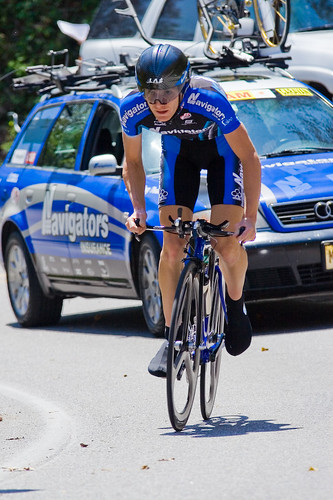
Zajicek
(image credit: Cycling Shots)
Phil Zajicek
Phil Zajicek, born in Eugene, Oregon on this day in 1979, had already claimed a National Criterium title and an Arizona State Road Cycling Championship when he turned professional with Mercury-Viatel in 2001 - results that suggested he might have the makings of a great rider, and he continued adding impressive results during his first years.

In 2004, now riding with the Navigators Insurance Team, he failed an anti-doping test after winning the Tour of Qinghai Lake. The test revealed traces of d-norpseudoephedrine, a psychoactive stimulant, for which his victory was disallowed and he was fined 666 Swiss francs - however, he maintained that he had not knowingly doped and suggested that the drug had metabolised in his body from chemicals contained in an over-the-counter cold remedy he had used either during or shortly before the race and, since it is known that certain legal dietary supplements can metabolise into d-norpseudoephedrine, the United States Anti-Doping Agency felt that the argument was feasible and did not suspend him from competition, later changing its rules regarding the presence of the drug in samples in an effort to prevent athletes being unfairly banned in the future.

During his first year riding for Fly V Australia at the 2009 Tour of Gila, Zajicek sensationally beat both Levi Leipheimer and Lance Armstrong to the finish line of Stage 5 - a route that has earned the name Gila Monster and which is said to be the most difficult road race stage in North America. The two superstar riders were at the event to prepare for the Tour de France later that year, which Armstrong would finish in third place, and on paper appeared to be far beyond Zacijek's level. Yet he matched them all the way through five hours of hard, aggressive racing, surviving repeated attempts to drop him and even attacking in response. Finally, he powered past them on a tough uphill sprint to the finish line - apparently one of the most impressive instances of giant-slaying in recent years.

Unfortunately, we'll never know if it truly was an impressive victory. In 2011, Zajicek signed up to the Pegasus Professional Cycling Team Project with what were rumoured to be lucrative terms. However, the team failed to be granted a UCI ProTour licence and folded shortly afterwards when it turned out that its finances were not quite as solid as had at first appeared and the rider was left without a team. Later in the year, he found himself accused of purchasing EPO and did not contest the charge, also pleading no contest to an accusation that he had tried to encourage witnesses to provide false testimony and provided false testimony himself to the American Arbitration Assocation  during a civil dispute. The court found against him and he received a $5,000 fine and a lifetime suspension. Whether he was using EPO when he beat Armstrong is unknown.


Intxausti
(image credit: Euskal Bizikleta CC BY-SA 2.0)
Beñat Intxausti was born on this day in 1986 in Amorebieta-Etxano which, as one might suspect from his name and that of the town, is in Euskadi, the Basque Country. He turned professional in 2008 with Saunier Duval-Scott, then moved on to Scott-American Beef when his first team folded during their first season and then went to Fuji-Servetto when Scott-American Beef also folded at the end of 2008. Fuji-Servetto also lasted just a year, so in 2010 he signed up with the natural home of all Basque riders Euskaltel-Euskadi and remained with them for a year before departing for Movistar - the other Basque team.

Other births: Luvsandagvyn Jargalsaikhan (Mongolia, 1959); Václav Tintěra (Bohemia, 1893); Johari Ramli (Malaysia, 1949); Manuel García (Guam, 1964); Jan Hijzelendoorn (Netherlands, 1929, died 2008); Henri Fin (France, 1950).