Showing posts with label drugs. Show all posts

Thursday, 29 August 2013

Daily Cycling Facts 29.08.2013

Geneviève Jeanson
© James F. Perry
Geneviève Jeanson with André Aubut
Born in Lachine, Canada on this day in 1981, Geneviève Jeanson won the Junior World Road and Time Trial Championships in 1999 and went on to have one of the most controversial careers of any professional female cyclist.

In 2000, she faced allegations that she had asked for - and received - special treatment from the nation cycling federation in order to be able to take part in that year's Olympics, persuading them to give her a place if she could finish in the top eight of two out of five pre-decided races rather than, as was the case with other athletes, based on cumulative results gained during 1999 and up until the Games. However, since she had been a junior in 1999 and junior results didn't count, it's arguable if this could be termed unfair; she also exceeded the requirement by winning the Tour de Snowy and Waalse Pijl, then coming second at the Elite national Time Trial Championship (beating all the Olympics hopefuls in the event). She got her place at the Games and came 11th in the road race and 15th in the time trial, but not without further controversy: during the road race, Canadian team mate Lyne Bessett escaped the peloton in a breakaway. Many people believed that, with permission from her coach André Aubut, Jeanson had assisted rival teams in chasing and catching the break; though she would later claim that she had moved to the front of the pack to try to hold back the chase group and only gone with them to try to bring them back when they gained a slight gap.

The following year she won Stages 1, 3, 4 and 6 at the Redlands Classic and Stages 1, 2, 3, 4 and 5 at the Tour of the Gila, taking the General Classification at the former with an overall advantage of 9'23" and at the latter with 14'57" - huge and unexpected improvements that immediately raised suspicions. At the Montreal round of the World Cup the same year, she lapped all but a few of the other riders; then in 2002 she won a second Tour of the Gila, this time with an advantage of 11'42". Few people expressed any sort of surprise in 2003 when, after winning Redlands by 12'52" and either winning or reaching the podium in 24 races, she failed a haematocrit reading, a red blood cell count used to detect possible EPO use or blood transfusion (tests for EPO and homologous transfusions - ie, those using blood from a donor - had been developed in 2000 but were not yet widely used away from the top levels of European men's cycling; other than checking for traces of plastic from the IV bags within which blood is stored, there is still no test for autologous transfusions which use the subject's own blood). However, a high haematocrit reading proved nothing; therefore all the UCI could do was ban any rider who failed one for two weeks "for health reasons." Jeanson claimed that she used an oxygen tent as part of her training and that this had caused her high red cell population; when she passed a count two weeks later she was free to continue racing.

Jeanson in 2002
She was caught by an out-of-competition test in 2005 at the Tour de Toona, later explaining to journalists that the sample she provided had been declared positive for EPO and insisting that she was innocent. She still denied that she had ever doped by January the following year, then announced her retirement. Later that year, in November, the UCI revealed news that she had decided to accept their back-dated two-year ban, then a little under a month later she told journalists that she did not plan to return to cycling when the ban expired in July the following year. Finally, in September 2007, she confessed; admitting to Radio Canada that she had been using EPO for most of her career but placing the blame squarely on André Aubut whom, she claimed, had suggested she start using the drug shortly after he first began coaching her when she was 15. "I hated everything. I hated myself for doing it. I hated myself not being able to get out of it," she said in an interview. "It was miserable. It was not Geneviève that lied, it was someone else I did not know. It was something I was told to do and yes, I do regret it."

Aubut and a doctor who had worked with her Rona team were subsequently banned from working with athletes for life, but there are still questions: when Jeanson failed the haematocrit test in 2003, she was reportedly tested for EPO and blood transfusions but no indication of either was detected. Had she temporarily stopped using the drug in favour of autologous transfusions? If not - and she certainly didn't say she'd stopped using it at that point - how many other riders might also have been using it and escaped detection?


Frank Hoste, who was born in Ghent on this day in 1955, won Gent-Wevelgem, the Belgian National Road Race Championship and Stage 8 at the Tour de France in 1982; Stage 16a at the Giro d'Italia and Stages 1, 2 and 8 at the Tour de Suisse in 1983; Stages 1, 6, 21 and the Points competition at the Tour in 1984; Stage 6 at the Giro in 1985 and Stage 15 at the Tour in 1986.

Andrey Amador
Andrey Amador, born in San José, Costa Rica on this day in 1986, won the prologue and came fifth overall the Tour de l'Avenir in 2008. Four years later, he won Stage 14 at the 2012 Giro d'Italia; leaving little doubt that at the age of 26 he is a rider to watch in the coming years.

Ole Ritter, born in Slagelse in Denmark on this day in 1941, set a new Hour Record of 48.653km at Mexico City in 1968. It was the first time the record had been broken at altitude since 1898 and it would stand for four years until Eddy Merckx bettered it by 778m in 1972. Ritter rode the Giro d'Italia in 1967 and beat Merckx, Rudi Altig and Jacques "Monsieur Chrono" Anquetil in the Stage 11 individual time trial; he also won Stage 5 in 1969 and Stage 2 in 1973. He is the subject of two films, both made in 1974. The first, The Stars and the Water Carriers, follows the 1973 Giro d'Italia and also heavily features José Manuel Fuente and Merckx; the second, The Impossible Hour, follows on from The Stars and tells the story of his Hour Record attempt, taking him back to Mexico City where he managed to beat his 1968 record twice in a week (but not Merckx's record - the Belgian shows up a lot in this one too).

Valentin Uriona, born in Muxica in Spain on this day in 1940, won Stage 2 at the Milk Race (Tour of Britain) in 1961, Stage 9 at the same event a year later, Stage 7 at the Vuelta a Espana in 1963, overall at the 1964 Critérium du Dauphiné and Stage 4 at the Vuelta in 1966. He was killed in a crash at the National Championships the following year

Stijn Devolder at the 2012 Omloop Het
Nieuwsblad
Stijn Devolder, who was born Kortrijk on this day in 1979, is a Belgian cyclist who has enjoyed much success in one-day events, including his victories in the National Road Race Championship of 2007, the National Time Trial Championship of 2008 and both events in 2010 as well as at the Ronde van Vlaanderen in 2008 and 2009. A good climber and a great time trial rider, he has also gained impressive results in the shorter stage races, winning the Österreich-Rundfahrt in 2007, the Volta ao Algarve in 2008 and the Tour of Belgium in 2008 and 2010. Somewhat surprisingly, this ability has not translated into Grand Tour success and he hasn't won a stage either the Tour de France nor the Vuelta a Espana, the two that he has entered, though he was 11th overall at the Vuelta in 2006.

Henk Faanhof, born in Amsterdam on this day in 1922, was disqualified from the 1947 National Championships after officials saw him swap bikes with a team mate - a new UCI rule, unbeknownst to either rider, had recently banned bike exchanges during races. Two years later, Faanhof became Amateur Road Race Champion and the year after that he won two stages at the Ronde van Nederland; then in 1954 he won Stage 9 at the Tour de France.

Other cyclists born on this day: Jhon González (Colombia, 1971); Veaceslav Oriol (Moldova, 1968); Hector Zamarron (Mexico, 1980); Giuseppe Faraca (Italy, 1959); Hernán Medina Calderón (Colombia, 1937); Gil Suray (Belgium, 1984); Xaver Kurmann (Switzerland, 1948); Denis Špička (Czechoslovakia, 1988); Alessandra Grassi (Mexico, 1976); Michael Belcourt (Canada, 1964); Georgios Portelanos (Greece, 1966); Fausto Lurati (Switzerland, 1929); Carlos Torrent (Spain, 1974); Walter Gorini (Italy, 1944).

Wednesday, 29 August 2012

Daily Cycling Facts 29.08.12

Geneviève Jeanson
© James F. Perry
Geneviève Jeanson with André Aubut
Born in Lachine, Canada on this day in 1981, Geneviève Jeanson won the Junior World Road and Time Trial Championships in 1999 and went on to have one of the most controversial careers of any professional female cyclist.

In 2000, she faced allegations that she had asked for - and received - special treatment from the nation cycling federation in order to be able to take part in that year's Olympics, persuading them to give her a place if she could finish in the top eight of two out of five pre-decided races rather than, as was the case with other athletes, based on cumulative results gained during 1999 and up until the Games. However, since she had been a junior in 1999 and junior results didn't count, it's arguable if this could be termed unfair; she also exceeded the requirement by winning the Tour de Snowy and Waale Pijl, then coming second at the Elite national Time Trial Championship (beating all the Olympics hopefuls in the event). She got her place at the Games and came 11th in the road race and 15th in the time trial, but not without further controversy: during the road race, Canadian team mate Lyne Bessett escaped the peloton in a breakaway. Many people believed that, with permission from her coach André Aubut, Jeanson had assisted rival teams in chasing and catching the break; though she would later claim that she had moved to the front of the pack to try to hold back the chase group and only gone with them to try to bring them back when they gained a slight gap.

The following year she won Stages 1, 3, 4 and 6 at the Redlands Classic and Stages 1, 2, 3, 4 and 5 at the Tour of the Gila, taking the General Classification at the former with an overall advantage of 9'23" and at the latter with 14'57" - huge and unexpected margins that immediately raised suspicions. At the Montreal round of the World Cup the same year, she lapped all but a few of the other riders; then in 2002 she won a second Tour of the Gila, this time with an advantage of 11'42". Few people expressed any sort of surprise in 2003 when, after winning Redlands by 12'52" and either winning or reaching the podium in 24 races, she failed a haematocrit reading, a red blood cell count used to detect possible EPO use or blood transfusion (tests for EPO and homologous transfusions - ie, those using blood from a donor - had been developed in 2000 but were not yet widely used away from the top levels of European men's cycling; other than checking for traces of plastic from the IV bags within which blood is stored, there is still no test for autologous transfusions which use the subject's own blood). However, a high haematocrit reading proved nothing; therefore all the UCI could do was ban any rider who failed one for two weeks "for health reasons." Jeanson claimed that she used an oxygen tent as part of her training and that this had caused her high red cell population; when she passed a count two weeks later she was free to continue racing.

Jeanson in 2002
She was caught by an out-of-competition test in 2005 at the Tour de Toona, later explaining to journalists that the ample she provided had been declared positive for EPO and insisting that she was innocent. She still denied that she had ever doped by January the following year, then announced her retirement. Later that year, in November, the UCI revealed news that she had decided to accept their back-dated two-year ban, then a little under a month later she told journalists that she did not plan to return to cycling when the ban expired in July the following year. Finally, in September 2007, she confessed; admitting to Radio Canada that she had been using EPO for most of her career but placed the blame squarely on André Aubut whom, she claimed, had suggested she start using the drug shortly after he first began coaching her when she was 15. "I hated everything. I hated myself for doing it. I hated myself not being able to get out of it," she said in an interview. "It was miserable. It was not Geneviève that lied, it was someone else I did not know. It was something I was told to do and yes, I do regret it."

Aubut and a doctor who had worked with her Rona team were subsequently banned from working with athletes for life, but there are still questions: when Jeanson failed the haematocrit test in 2003, she was reportedly tested for EPO and blood transfusions but no indication of either was detected. Had she temporarily stopped using the drug in favour of autologous transfusions? If not - and she certainly didn't say she'd stopped using it at that point - how many other riders might also have been using it and escaped detection?


Frank Hoste, who was born in Ghent on this day in 1955, won Gent-Wevelgem, the Belgian National Road Race Championship and Stage 8 at the Tour de France in 1982; Stage 16a at the Giro d'Italia and Stages 1, 2 and 8 at the Tour de Suisse in 1983; Stages 1, 6, 21 and the Points competition at the Tour in 1984; Stage 6 at the Giro in 1985 and Stage 15 at the Tour in 1986.

Andrey Amador
Andrey Amador, born in San José, Costa Rica on this day in 1986, won the prologue and came fifth overall the Tour de l'Avenir in 2008. Four years later, he won Stage 14 at the 2012 Giro d'Italia; leaving little doubt that at the age of 26 he is a rider to watch in the coming years.

Ole Ritter, born in Slagelse in Denmark on this day in 1941, set a new Hour Record of 48.653km at Mexico City in 1968. It was the first time the record had been broken at altitude since 1898 and it would stand for four years until Eddy Merckx bettered it by 778m in 1972. Ritter rode the Giro d'Italia in 1967 and beat Merckx, Rudi Altig and Jacques "Monsieur Chrono" Anquetil in the Stage 11 individual time trial; he also won Stage 5 in 1969 and Stage 2 in 1973. He is the subject of two films, both made in 1974. The first, The Stars and the Water Carriers, follows the 1973 Giro d'Italia and also heavily features José Manuel Fuente and Merckx; the second, The Impossible Hour, follows on from The Stars and tells the story of his Hour Record attempt, taking him back to Mexico City where he managed to beat his 1968 record twice in a week (but not Merckx's record - the Belgian shows up a lot in this one too).

Valentin Uriona, born in Muxica in Spain on this day in 1940, won Stage 2 at the Milk Race (Tour of Britain) in 1961, Stage 9 at the same event a year later, Stage 7 at the Vuelta a Espana in 1963, overall at the 1964 Critérium du Dauphiné and Stage 4 at the Vuelta in 1966. He was killed in a crash at the National Championships the following year

Stijn Devolder at the 2012 Omloop Het
Nieuwsblad
Stijn Devolder, who was born Kortrijk on this day in 1979, is a Belgian cyclist who has enjoyed much success in one-day events, including his victories in the National Road Race Championship of 2007, the National Time Trial Championship of 2008 and both events in 2010 as well as at the Ronde van Vlaanderen in 2008 and 2009. A good climber and a great time trial rider, he has also gained impressive results in the shorter stage races, winning the Österreich-Rundfahrt in 2007, the Volta ao Algarve in 2008 and the Tour of Belgium in 2008 and 2010. Somewhat surprisingly, this ability has not translated into Grand Tour success and he hasn't won a stage either the Tour de France nor the Vuelta a Espana, the two that he has entered, though he was 11th overall at the Vuelta in 2006.

Henk Faanhof, born in Amsterdam on this day in 1922, was disqualified from the 1947 National Championships after officials saw him swap bikes with a team mate - a new UCI rule, unbeknownst to either rider, had recently banned bike exchanges during races. Two years later, Faanhof became Amateur Road Race Champion and the year after that he won two stages at the Ronde van Nederland; then in 1954 he won Stage 9 at the Tour de France.

Les Triplettes de Belleville
On this day in 2003, Les Triplettes de Belleville was released in the UK. A 78-minute animated film, it tells the story of Champion Souza (who looks like many great cyclists, but especially like Tom Simpson) who is kidnapped along with two of his rivals during the Tour de France by mysterious gangsters, who wish to use them to power a cinema. Souza's grandmother, accompanied by her dog Bruno, go in search of him and end up in Belleville, where they befriend and are assisted by Les Triplettes, an aging jazz group.

Many have tried to work out which Tour Les Triplettes is set within; the truth is that is is an amalgamation of several, allowing writer/director Sylvain Chomet to employ various devices and bits and pieces of Tour history wherever he wishes. However, in the film one stage finishes in Marseilles and the leader of the Tour is clearly based on Jacques Anquetil; Stage 12 in 1957 was the only stage in any of the Tours ridden by Anquetil to finish in the city.

Other cyclists born on this day: Jhon González (Colombia, 1971); Veaceslav Oriol (Moldova, 1968); Hector Zamarron (Mexico, 1980); Giuseppe Faraca (Italy, 1959); Hernán Medina Calderón (Colombia, 1937); Gil Suray (Belgium, 1984); Xaver Kurmann (Switzerland, 1948); Denis Špička (Czechoslovakia, 1988); Alessandra Grassi (Mexico, 1976); Michael Belcourt (Canada, 1964); Georgios Portelanos (Greece, 1966); Fausto Lurati (Switzerland, 1929); Carlos Torrent (Spain, 1974); Walter Gorini (Italy, 1944).

Thursday, 14 June 2012

So what happens if Lance is stripped of his Tour wins?

Armstrong in 2010
In an article published by The Guardian this morning, William Fotheringham says that "Lance Armstrong could be stripped of his record seven Tour de France victories" after being accused of doping in 2010 and 2011 (the complete letter sent by USADA has since been made public). That'd be a turn up for the books! In a way, quite a welcome one too, because I get bored explaining to people why it is that despite having won two more Tours than anyone else Lance isn't the greatest Tour rider of all time.

So if he's convicted and disqualified from all his Tours, that leaves us with...

1999 - Alex Zülle
2000 - Jan Ullrich
2001 - Jan Ullrich
2002 - Joseba Beloki
2003 - Jan Ullrich
2004 - Andreas Klöden
2005 - Ivan Basso

Zülle admitted to using EPO during the Festina Affair investigations. Ullrich, of course, is a proven doper and was convicted in February this year. Basso says he planned to dope, but didn't get round to it before Operacion Puerto (which CONI decided - quite rightly - as much the same as actually doping, and handed him a two-year ban). Klöden has been accused (but not proven) to have received an illegal blood transfusion at the Tour in 2006. Only Beloki, who was caught up in Operacion Puerto but cleared, seems to be in the clear.

Which means there's a possibility that the USADA are about to prove that the one cyclist everyone (including people with no interest in cycling, even if they do think he was the first man to sing "Wonderful World" on the moon) is a doper, thus firing off a great big media shitstorm; then replace him with other riders who don't exactly have whiter-than-white track records either.

There's no alternative - the timing couldn't be worse, but it's not USADA's fault. If Lance is a cheat, which hasn't yet been proven, he must be stripped of his victories. It's completely unthinkable that the whole thing be swept under the carpet to avoid a fuss because cycling must be seen to be taking action against doping, because justice must be done and because if it happens any other way cycling risks losing fans just as it did after Willy Voet's mobile pharmacy was stopped by customs officials in 1998 and again when the murky world of Dr. Fuentes came under the microscope eight years later. Fans know that there are clean riders and that professional cycling has done a great deal more than any other sport to end doping; but once again the general public's (mistaken) belief that "they're all on drugs, aren't they?" may be about to be reinforced, just months after the Contador case did the same and weeks before the Tour when cycling is more in the public eye than at any other time. The newspapers are not going to miss that; and this is not, as some fans may think, a time to look on in glee as the mighty fall.

Lance was wrong when he accused Christophe Bassons of wanting to destroy cycling. It's the dopers who spit in the soup, not those who speak up about it nor those who seek to catch the cheats.

Tuesday, 20 March 2012

Someone's gotta say it...

There is no evidence that Fabrice Muamba is a doper and
unless evidence suggests otherwise, it would be wrong
to claim he is one. Why is the same not true of cyclists?
(image credit: Struay CC BY-SA 3.0)
Let's have this one out since so many people are thinking it already.

If Fabrice Muamba had been a professional cyclist rather than a soccer player, the first whispered mentions of EPO would have come within seconds of the 23-year-old's heart attack. Just like they did when Frederiek Nolf, Bruno Neves and Marc Demeyer died; along with just about every other young cyclist to have suffered a heart attack, even when no evidence of doping was ever found.

There is no suggestion that Muamba doped and unless evidence should appear, it would be wrong to suggest that he did. It should be wrong to suggest the same of any young athlete who rides a bike, too. The difference is, cycling has - admittedly against its own will, at first - done more to eradicate doping than any other sport, thereby exposing the problem and associating itself with drugs in the public eye.

It's not known if doping is widespread in soccer and to date only one British player, Abel Xavier, has ever been banned for performance-enhancing drugs - however, many players have been caught taking recreational drugs with cocaine an apparent favourite; which rather suggests that footballers are as happy to put questionable chemicals into their bodies as cyclists once were.

It's often said that doping in cycling changed from the witch-doctory of Choppy Warburton to the science of Eufemiano Fuentes as a result of the development into a big-bucks televised sport with extra-sportifs pouring in vast sums and rider salaries sometimes reaching several million dollars per season. At its top levels, soccer is bigger bucks than cycling ever was - we have seen many young men, in many cases with no other discernible talent, become very wealthy indeed. It is, therefore, ludicrous to dismiss the suggestion that there is doping in football. The same is true of all other competitive sports, just as it is in business and anywhere else that chemicals might give an advantage in competition, just as there are also soccer players and cyclists who reach the top of their game through sheer hard work and athletic excellence.

However, the day will come when other sports too will be laid bare; and it'll be seen that cycling is no different to them in this respect - it was merely the first to be forced to clear up its act.

Get well soon, Fabrice.

Saturday, 3 December 2011

UCI appeals Kolobnev dope punishment

Kolobnev in 2006, when he rode for
Rabobank. He was signed to Katusha
when he gave his positive sample
(image credit: Heidas CC BY 2.5)
The international cycling federation apparently feels that the imposition of a €1120 fine was an insufficiently harsh penalty for the Russian rider after he tested positive for the diuretic hydrochlorothiazide at the 2011 Tour de France.

Alexandr Kolobnev, aged 30, was 69th place overall when he tested positive during the first week of the race and was prevented from continuing by Team Katusha in accordance with UCI rules. The Russian Cycling Federation claimed after investigation that it had taken into account "mitigating circumstances," the nature of which have not been revealed. The rider voluntarily suspended himself pending investigation, and while B-sample was also subsequently tested and found to contain traces of the substance he escaped formal suspension.

Hydrochlorothiazide is not itself a performance-enhancing substance, but has been used in an attempt to mask the presence of other drugs to allow athletes to pass anti-doping tests.

Tuesday, 29 November 2011

Doctor arrested, BigMat cyclists questioned, possible EPO link

Arnold Jeannesson has expressed dismay
at becoming associated with the case
(image credit: Jejecam CC BY-SA 3.0)
L'Equipe, the French sports newspaper, is reporting that former BigMat-Auber93 team doctor Philippe Bedoucha has been arrested and is being questioned with regard to suspicions he may have supplied EPO and/or an un-named growth hormone to riders.

Original reports stated that the doctor is currently employed by the team, an error reproduced here. It is now understood that Dr. Bedoucha is not connected to BigMat-Auber93 and has not been employed by the outfit since 2010. It is believed that he is suspected of supplying banned products to amateur cyclists.

A mountain biker is also reported to be under arrest in connection with the investigation, but it's not clear if this is in connection with use or supply. Some sources claim it to be Philippe Tellier, who has previously tested positive for EPO.

It is believed that as many as twelve other riders have also be questioned under caution, including the French star Arnold Jeannesson; though as the article points out they mat be providing witness statements and this should not be seen as indication that the riders will face either suspicions or charges. Jeannesson has since stated that he has not been able to provide police with any information and expressed dismay at being associated with the case.

Dr. Bedoucha is listed as operating from an address in Rue Cheret at a premises occupied by a pharmacy and a phytotherapie (a "pharmacy" supplying products based on natural ingredients and herbs) in Creteil - the riders were also questioned in the Paris suburb.

One possible - and serious - outcome of the investigation is that BigMat, who recently withdrew funding from Garmin-Cervélo, leaving the women's team in a precarious position, are now likely to face bad press; despite no longer maintaining connections with the doctor. This may prove to have a detrimental effect when other companies are considering sponsoring a cycle team and could persuade them not to become involved even if the team in question have an impeccable record.

Wednesday, 16 November 2011

SunGard to leave cycling

As we approach the end of a year in which numerous companies have withdrawn their support from cycling, in some cases forcing the closure of successful teams, US-based software and IT firm SunGard is the latest to announce that it will be ending its support for the sport.

Bjarne Riis
(image credit: VeloSteve CC BY-SA 2.0)
SunGard became co-sponsor of Bjarne Riis' Danish team Saxo Bank-SunGard at the beginning of 2011. While spokesperson George Thomas refers to the deal as a "successful partnership" and says that it is a business decision, insiders and fans will naturally wonder if the company may be concerned about bad publicity stemming from team member and three-time Tour winner Alberto Contador's ongoing doping investigation - the Spanish rider, who says that his positive test result for Clenbuterol is due to having consumed tainted meat (the drug is commonly used - illegally, in Europe - to promote muscle growth in cattle), but the case has now been dragging on for many months with no court decision expected until early next year.

If Contador is the reason SunGard are withdrawing, even though he has not been proved guilty of anything and even though cycling has done more than any other sport to prevent doping over the last decade, it seems that it's still saddled with a druggy image, leaving sponsors likely to abandon ship as soon as there's a whiff of trouble rather than risk being linked to cheats.

Meanwhile, Danish investment bank Saxo Bank will remain and become sole sponsor of the squad, which will be renamed Team Saxo Bank.

Thursday, 22 September 2011

LeopardTrek HQ raided by police

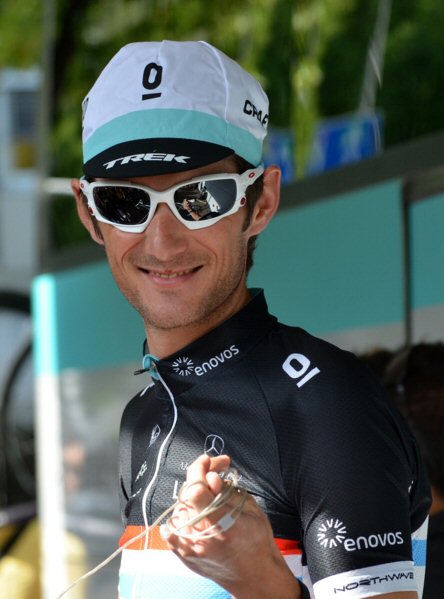
Frank Schleck was connected to Eufemiano
Fuentes in the past, but subsequently
cleared of all doping charges
(©Noel Reynolds CC2.0)
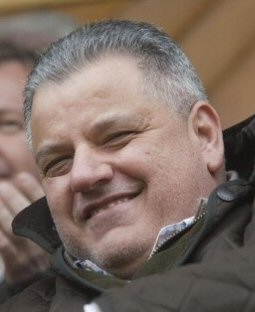
News is emerging that the headquarters of Andy Schleck's team LeopardTrek was raided by Luxembourg police on Tueday morning. Early reports state that the home of team owner Flavio Becca was also targetted. At first, the obvious reason appeared to be an anti-doping investigation, but it has since transpired that Becca is subject to a financial investigation.

In a press release, representatives for Mr. Becca said: "Until now [meaning "at present"] nobody has been charged. The companies and Mr Becca have collaborated with the judicial authorities and intend to continue to do so. We wish that the authorities do their job quickly and that they show that the allegations are groundless."

It should also be noted that Becca, a businessman who developed a small masonry firm into one of Europe's most profitable construction companies, has wide-ranging interests outside professional cycling and as such it's likely that the investigation is linked solely to him rather than to his team.

LeopardTrek, which does not conduct internal anti-doping controls since it believes that the UCI conducts sufficient tests to make it unnecessary,  has not been involved in any doping scandals since its formation earlier this year. Police raids are quite a regular feature of professional cycling and as such should not be seen as evidence that anything untoward has been taking place. The raids have since been confirmed by police prosecutor Henri Eippers, says the wort.lu website.

Flavio Becca
The team is also home to Jens Voigt, riders' representative on the UCI ProTour Council - a position he has used to speak out against doping. In fact, the team's roster is one of the most clean-cut in the sport, with few of the riders ever being caught up in any sort of doping issue - Stuart O'Grady was a part of Cofidis during 2004, when David Millar's positive sample rocked the team whereas Frank Schleck, following an accusation made by a German newspaper, was shown to have made a mysterious payment into a bank account owned by the notorious Eufemiano Fuentes in 2005. Both riders were later cleared of all charges and have not since faced any serious accusations.

Thursday, 15 September 2011

A sad final note for Highroad

Highroad boss Bob Stapleton has
done more than most to rid the
sport he loves of doping
Few teams took such far-reaching steps to stamp out doping when it first became apparent that the practice was going to kill cycling as did HTC-Highroad. In fact, despite the still-persistent druggy image of the sport, Bob Stapleton's team has been nothing less than an example of how things needed to be done; not just in the professional cycling world but in all sports. Thus, it's nothing short of an ironic tragedy that the men's team will cease to exist at the end of the current season, due in large part to the unwillingness of potential sponsors to attach their names to cycling because of that image.

However, it seems that the team's exemplary record, now that the end is so near, may be shaken; through no fault of their own but by one single rider - Alex Rasmussen, the Danish track specialist taken on by the team from SaxoBank-Sungard for 2011 and who was due to go to Garmin-Cervelo for 2012, who missed an anti-doping control test earlier this summer and as such broke the team's internal rules which state that all riders on the books must comply with UCI requirements 100% and which led to his immediate dismissal from the team. Closer investigation, with UCI confirmation, revealed that Rasmussen had also missed two tests in 2010, but Highroad had not been informed of this when it signed the rider. He will also now no longer be representing his country at this year's World Championships.

Rasmussen, when racing for SaxoBank (when two of the
missed controls occurred) (CC3.0)
What matters most for the 27-year-old now is when the earlier incidents took place - the rule is, if a rider misses three controls within an 18-month period, he or she faces official sanction and a ban of up to two years. That's not the end of the world for a rider his age - he'd return, just as many other riders returned, still only 29 and with a good few years ahead of him.

The greatest and worst effect is, once again, on cycling's image. Many people with little knowledge of cycling will have almost subconsciously absorbed the news that Highroad's at the end of the road but won't be aware why. Now, when they see this story - and they will, because the press just love to print stories on doping in cycling - they'll automatically link the team's demise with Rasmussen's selfish decision to dope. They'll nod knowingly over their cornflakes and think to themselves, "Ah, I knew it! They're all at it!"

Thus all Stapleton's good work is undone, just a little more each time it happens; and other potential sponsors back away, unwilling to attach their names to a sport with a bad image among the mis-informed non-cycling public to whom the names on the jerseys have to appeal if the millions they would otherwise have ploughed into sport are to be worthwhile; because cycling fans, who would have read beyond the headline and got the full story, are a tiny minority.

Cheers, Alex. Nice one. Don't expect a warm welcome in two years' time if you get a ban.

Thursday, 28 July 2011

EPO "causes irreversible changes to the human body"

News just in: 

Scientists working at the world-renowned Cycling Research Anti-doping Project laboratory in South Ballifoald, Ireland, have produced shocking new evidence that EPO use can cause irreversible changes to the human body including dramatic musculoskeletal alteration and excessive hair growth.

The test subjects at the beginning of the study...

Scientists at the laboratory were able to complete the study only when one of them, an amateur cyclist, heard two members of his club discussing the notorious performance-enhancing drug and their plans to start taking it so as to gain an edge in competition. After their anonymity was guaranteed, the two men agreed to permit scientists to monitor their bodies weekly and record any changes they found.
...and following one year of unrestricted EPO use. This terrifying new evidence will be a great worry to any cyclists considering cheating by using the drug to enhance their performance.

Wednesday, 27 July 2011

Valentin Iglinskiy

Valentin Iglinskiy
News is coming in that Valentin Iglinskiy and his brother Maxim were stopped for speeding by French police at around 9pm on Tuesday night. According to initial reports on French RTL radio, Tests showed the 27-year-old Team Astana rider Valentin to be over the legal driving limit for alcohol and positive for cocaine. Maxim, who rode in this year's Tour de France which finished on Sunday, was arrested and taken into police custody, says French website Cyclism'Actu. However, police later stated that the rider did not provide a positive test result for cocaine.

The Kazakh-born brothers, who now live in Monaco, are said to have been travelling in a Volkswagen Golf at 203kmph in a 110kmph limit on the A8 motorway.

Cyclism'Actu also claims that the Iglinskiys was returning home from a party at the home of Alexandre Vinokourov, the Astana rider who was banned from professional cycling in 2007 after failing an anti-doping test at the Tour de France. Vinokourov announced his retirement at the time, but later returned to the sport and competed alongside Maxim in the Tour this year until being forced to abandon following a crash in Stage 9. He announced his second retirement shortly afterwards.

Maxim Iglinskiy
According to Nice Matin, Valentin paid a fine of 1800 euros and is likely to be banned from driving in France.

Astana has confirmed that the rider was stopped for speeding and that while the roadside breath test showed he was over the the alcohol limit, the saliva test did not prove positive for cocaine - this has subsequently been confirmed by police. The team has categorically denied that the Iglinskiys had spent time with Vinokourov during the day and also stated that anti-doping inspectors had carried out tests on Wednesday morning. Cocaine is banned from competition, but the UCI cannot institute sanctions against a rider who uses it recreationally when not competing, though it remains a criminal offence and as such may result in police prosecution.

Astana also said that Valentin, who speaks French very poorly, signed legal documents without being able to understand what they said - in which case, the police will have some questions to answer too. We'll bring more updates when we get them.