Showing posts with label Serpa. Show all posts

Tuesday, 16 April 2013

Daily Cycling Facts 17.04.2013

Left: George Ronsse, right: Andre Leducq
Paris-Roubaix was held on this date in 1927, 1938, 1966, 1977 and 1997. 1927 winner Georges Ronsse was a Classics specialist who had also won Liège–Bastogne–Liège in 1925 and would win Paris-Bordeaux in 1927, 1929 and 1930, was World Road Race Champion in 1928 and 1929, then won Stage 4 at the 1932 Tour de France. Like many Paris-Roubaix victors, he excelled in cyclo cross and was Belgian Champion in 1929 and 1930, and would later become a noted track cyclist when he won the National Track Stayers Championship in three consecutive years from 1934 to 1936.

In 1938, the start was moved to Argenteuil, but the next year was moved back to Porte Maillot. The winner was Lucien Storme, a Belgian who would win Stage 6a at the Tour de France the following year. During the Second World War, Storme made a living as a smuggler until he was caught and imprisoned by the Nazis in December 1942. He survived through to the 10th of April 1945, reaching the age of 28, when the Siegburg camp was liberated by Allied forces; but was accidentally shot and killed by an American soldier that day.

In 1966, the start was moved to Chantilly where it would remain until 1977. The winner was Felice Gimondi who would become the second rider in history to win all three Grand Tours with his 1968 Vuelta a Espana victory (the first had been Jacques Anquetil when he won the Giro d'Italia in 1964). Gimondi's cycling career had begun in rather less auspicious circumstances - a a child, he would accompany his mother who was employed by the Italian post office and used a bicycle to carry out her deliveries. In time, he became known as a master tactician, his intelligence giving him the ability to compete against the sheer might of Eddy Merckx. In addition to his Grand Tour successes, he made quite a name for himself in the Classics - in addition to Paris-Roubaix, he won Paris-Brussels (1966, 1976), the Giro di Lombardia (1966, 1973) and Milan-San Remo (1974).

Fabian Cancellara kisses the cobbles - in the good way
(image credit: Lee's Life Adventure)
1977, when the start moved to Compiègne, saw the historic fourth win by Roger de Vlaeminck; the first - and to date, the only - time a rider has won four editions of the race, and which might never have happened had de Vlaeminck not been persuaded as a teenager to give up his first love football (he was playing for a respected Belgian youth team and, by all accounts, was very good at it) in favour of the bike. That year, the final 0.6km of the Orchies, chemin des Prières, and chemin des Abattoirs cobbled section was used for the first time, the compete 1.7km section being used for the first time (and in the opposite direction) three years later. It was also the first year that the winner was awarded a trophy made from one of the rough-hewn pavé cobblestones that have given the race its unique nature.

1997 was won by Frédéric Guesdon, who had come 11th the year before and to date is the last time that Paris-Roubaix was won by a French rider. Strangely, this would be his last victory for three years until he won a stage in the 2000 Critérium du Dauphiné, as he would again in 2002 before entering another barren period in which he won nothing at all for three-and-a-half years. That his FDJ team kept him on the books throughout both of these stretches is indication of how much cachet a Paris-Roubaix win carries. It paid off - in 2006, he won Paris-Nice.

Jo de Roo
The Ronde van Vlaanderen has been held just once on this date, in 1965. It was won that year by Jo de Roo, who escaped the peloton on the Valkenberg - Ward Sels gave chase and managed to stay with him, but de Roo crossed the line just before him. The next riders - a group of four including Jean Stablinski and Rik van Looy - were more than half a minute behind them.

La Flèche Wallonne was held on this day in 1975, 1980, 1981, 1985, 1991, 1996 and 2002. 1975 was the 39th edition of the race and, for the second consecutive year, it took place on a 225km loop that began and ended at Verviers. The winner for a second time was André Dierickx, who had also won two years earlier. The 44th edition in 1980 covered 248km between Mons and Spa, with Giuseppe Saronni the fastest on the course - later on in that same year, he would win seven stages and the Points competition at the Giro d'Italia - thus disproving the old stereotype that Italian riders could ride well only in Italy and showing that they could perform to the same high standards at home and abroad. 1981 ran in the other direction, starting at Spa and ending at Mons, but with differences to the route that made it 8km shorter. The winner was Daniel Willems. 1985 saw the 49th edition, which returned to the loop format with a 246km starting and ending at Huy. The winner that year was Claude Criquielion, who very nearly achieved the Ardennes Double a few days later when he was second at Liège-Bastogne-Liège. He won again in 1989. In 1991, the 55th edition ran for the sixth consecutive year between Spa and Huy, following a route that totalled 203km and brought a second victory for Moreno Argentin. The start and finish towns remained the same when the race next fell on this date, the 60th edition in 1996, but the course was slightly shorter at 200.5km. That time, the winner was the relatively unknown young American rider Lance Armstrong, who was going to do quite well in the Tour de France over the next decade. The last time the race was held on this date was the 66th edition which took place on 2002. For the fifth year in a row, it started at Charleroi and ended at Huy, as has been the case ever since, and also covered the same distance of 198km as the previous two years. Winner Mario Aerts had come third in 1999 and fifth in 2000.

The fifth edition of La Flèche Wallonne Féminine also took place on this day in 2002. It was won by Fabiana Luperini - since she had won the first and fourth editions, she equalled the men's multiple victory record.

Caritoux
(image credit: Rob Twis
CC BY-SA 3.0)
Today is the earliest anniversary of the first day of a Vuelta a Espana, the race having started on this day in 1984. It covered a total of 3,593km in 21 stages including a prologue and one split stage. Éric Caritoux of Skil-Sem had shown climbing prowess when he was first over the line for a Mont Ventoux summit finish in Paris-Nice earlier in the year, but in his second year as a professional was far from a favourite - however, he proved to be so good in the mountains that even two disastrous time trials couldn't completely obliterate his lead and he beat Alberto Fernández Blanco (who was a favourite) into second place by 6", the shortest winning margin in the history of the Vuelta.


José Serpa, who was born on this day in Corozal, Colombia, won a gold medal for the Individual Time Trial at the 2003 PanAmerican Games, then another for the Road Race in 2006 when he also won  the Individual TT at the Central American and Caribbean Games. From 2006 onwards, he began to develop as a stage race specialist, finishing that year's Tour di Langkawi in 6th place after winning Stages 4 and 5 and won the ITT and Stage 12 at the Vuelta a Venezuela. In 2007, he won Stage 8 and was 2nd overall at Langkawi, then won Stage 5 and the overall Mountains and General Classification two years later. Serpa has yet to make his big breakthrough in cycling's European heartlands, but good results at the Settimana internazionale di Coppi e Bartali (Stage 2, 2010), Settimana Ciclistica Lombarda (Stage 4, 2010) and Giro del Friuli (1st overall, 2011) suggest that, at 33, he may still do so.

Robert Wagner, born in Germany on this day in 1983, won Stage 8 at the 2005 Thüringen Rundfahrt and then added good results at numerous races before signing with Leopard Trek for 2011, the year he won the National Road Race Championship. He will ride in 2012 with the new Radioshack-Nissan-Trek formed by the merger of Leopard Trek and Radioshack.

On this day in 1894, American inventor Michael B. Ryan was issued with a US patent for "a bicycle, so constructed that it can be easily folded and thus take up less space in length when not in use or when transported or stored." Three years later, he submitted an improved model and is the likely designer behind the Dwyer Folding Bicycle which, having found a major backer in the shape of the US Army, exhibited a bike fitted with "Ryan Folding Handlebars" (the patent for these has been located and turns out to be that same Michael B. Ryan) which was critically acclaimed and - while far too late to be the first folding bike - was the first that proved successful.

Sigrid Corneo, a Slovakian rider who was born in Italy on this day in 1970, won Stage 2 at the Tour Féminin en Limousin in 2007 and was 2nd in the National Road Race and Time Trial Championships in 2010.

The Camelford Cycle Museum in Cornwall opened its doors for the first time on this day in 1992. With a collection of more than 400 bikes, some considered innovative when built, a similar number of antique advertising signs and more ephemera  than can be imagined, the museum was very much worth a visit - sadly it closed in 2009 and the entire collection was sold, going to a new owner overseas.

On this day in 1947, Mercian Frame No. M1146 was sold. Nobody knows if it still exists, but it's the earliest documented Mercian frame.

Other cyclists born on this day: Robert McLachlan (Australia, 1971); Jacek Mickiewicz (Poland, 1970); Antônio Silvestre (Brazil, 1961); Francis Bazire (France, 1939); Panya Singprayool-Dinmuong (Thailand, 1950); Benedetto Pola (Italy, 1915, died 2000); Yu Byeong-Heon (South Korea, 1964); Cristian Becerine (Argentina, 1977); Aleksey Shmidt (Russia, 1983); Paul Crapez (Belgium, 1947); André Gruchet (France, 1933); Allan Carlsson (Sweden, 1929, died 1953); Harri Hedgren (Finland, 1959).

Tuesday, 8 May 2012

Cycling Evening News 08.05.12

Giro d'Italia Stage 3 - Tour of the Gila - Two Days of Bedford - Serpa hopes to continue Giro - Nibali denies team change rumours - Other news (links) - Cycling (links)


Giro d'Italia Stage 3 - fast finish brings carnage
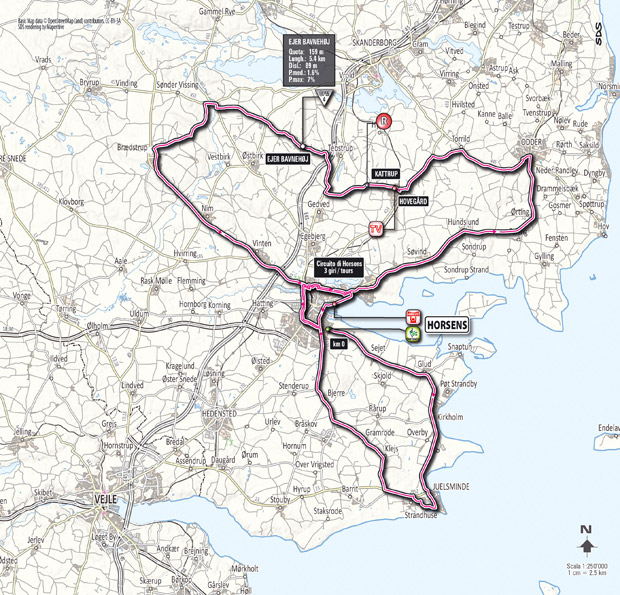
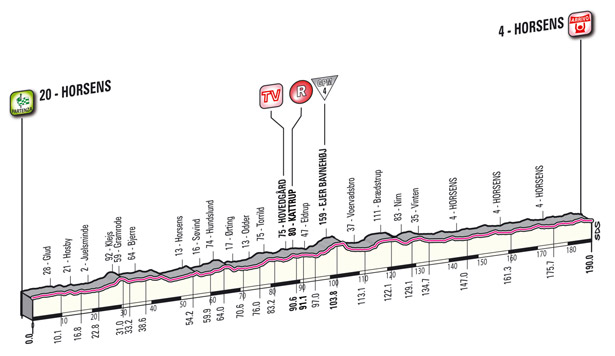
Monday's Stage 3 (map, profile) was the last in Denmark before a rest day on Tuesday. 190km in length, starting and ending in Horsens on the east of the country, it was another flat parcours liable to finish once again with a sprint.

The race began with a minute's silence, speeches and tributes in honour of Wouter Weylandt (right), the 26-year-old Leopard Trek rider who was killed in a high-speed crash as he descended the Passo del Bocco during Stage 3 last year. Tribute was also paid to Horsens mayor and cycling fan Jan Trøjborg, who was instrumental in bringing the Giro to the city but never lived to see it after suffering a fatal heart attack on Sunday.

Matt Goss
Mads Christensen (Saxo Bank), Reto Hollenstein (Team NetApp), Miguel Minguez (Euskaltel-Euskadi), Martijn Keizer (Vacansoleil-DCM), Alfredo Balloni (Farnese Vini-Selle Italia) and Ramunas Navardauskas (Garmin-Barracuda) got away, but on such a fast, flat stage the peloton was unwilling to let it last and began drawing them back as soon as they'd got three minutes' lead - and since Navaradauskas would have come within 22" of Taylor Phinney's General Classification leadership had the break worked, it was BMC who provided the bulk of the effort required to catch them.

Mark Cavendish was a favourite to win the stage, but somehow he became separated from Geraint Thomas, once again doing service as lead-out man and he wasn't where he needed to be this time. He sought familiar ground, tucking in behind Mark Renshaw (Rabobank), but the simple fact of the matter was that where Sky failed Orica-GreenEDGE excelled, and the Australian team expertly position Matt Goss for a win that looked inevitable with 300m to go. Of course, Cav wasn't about to sit up and let him take it unchallenged, but the moment he took after Tyler Farrar into the sprint Robert Ferrari (Androni Giocattoli-Venezuela) suddenly swerved from his own line and directly into the Manxman's path - causing a crash that saw both Cav and Phinney hit the tarmac hard. Cav was up first and carried his bike across the finish line, Phinney stayed down longer but, thankfully, has since been declared free of injury. Ferrari finish ninth, but after viewing video footage it was decided that he had acted recklessly and he was relegated to last place - a controversial decision. Cav claimed that he'd been thrown out of races for less. Goss agreed: "Some guys don't have much regard for the safety. It's win at all costs at some points," he said.

Other riders have since been revealed to have been injured in the crash - William Bonnet (FDJ-Bigmat) has extensive bruising and his team mate Mickaël Delage has a painful shoulder. Cav might have been worse off were it not for the catlike reactions of the Farnese Vini-Selle Italia riders behind him: Andrea Guardini managed to somehow avoid him, Elia Favilli bunny-hopped right over him (seriously impressive move there, Elia!) while Pierpaolo de Nigri slammed on the brakes but couldn't escape a collision, going down beside him and bruising his hip. It could have been much, much worse. Cav says he was traveling at 75kph when the crash happened. That's the same speed Weylandt was doing when he died.

Stage 4, team time trial
Ferrari, originally, was dismissive; in a post-race interview, he claimed to be uninterested in what takes place behind him, apparently suggesting that it's up to those following him to take evasive action when he does something unpredictable and dangerous. Androni manager Gianni Savio sounded no less arrogant: "Ferrari goes on instinct, he didn't know what he did behind him," though he later told Cycling News that he would apologise for his rider's actions. It's since been reported that Ferrari will publicly apologise too.

Cycling is a dangerous sport, as Stage 3 of the Giro d'Italia will always remind us after the tragedy of last year - things can go terribly, horribly wrong in the blink of an eye and riders therefore have a duty of care, an obligation not to endanger one another. Ferrari is directly responsible for a crash that could have ended the race for five riders - or their careers, or worse. Cav's right: he shouldn't be permitted to continue. Apologies - especially ones that inly come after the backlash, are not enough, and there is a very good case for disqualifying him. If Savio is truly sorry, it won't come to that - because he would already have sent Ferrari home.

Sky provided a press release stating that Cav "suffered considerable road rash but his injuries haven't worsened overnight and he wasn't complaining of any serious discomfort during the transfer to Italy. The medical team will continue to monitor his progress throughout today but we're confident he will be able to ride on."

Top Ten

  1.  Matthew Goss Orica-GreenEDGE 4h20'53"
  2.  Juan Jose Haedo SaxoBank ST
  3.  Tyler Farrar Garmin-Barracuda ST
  4.  Arnaud Demare FDJ - BigMat ST
  5.  Mark Renshaw Rabobank ST
  6.  Thor Hushovd BMC ST
  7.  Alexander Kristoff Katusha ST
  8.  Romain Feillu Vacansoleil-DCM ST
  9.  Fumiyuki Beppu Orica-GreenEDGE ST
  10.  Andrea Guardini Farnese Vini-Selle Italia ST
(Full stage results and GC)


On Wednesday, the Giro returns to Italy for a 33.2km team time trial around Verona. It's another fast, flat course with only a little pimple of a hill shortly after the first time check and several long straights on the outward and return journeys followed by a straight 800m section to the finish line.

Stages 1 / 2 / 3 / 4 / 5 / 6 / 7 / 8 / 9 / 10 / 11 / 12 / 13 / 14 / 15 / 16 / 17 / 18 / 19 / 20 / 21


Tour of the Gila
This race belonged to Armstrong from
start to finish
Kristin Armstrong has been nothing short of untouchable this year, winning four of five stages and apparently giving away the one she didn't win in order to save energy for the challenging Stage 5 - her form is nothing short of remarkable right now, very possibly the best of any cyclist male or female. The Gila Monster, as Stage 5 is known, is a tough parcours by anyone's standards however, and even she had to work hard to win with three categorised climbs along the 115.6km - a Cat 4 to 2,070m at 20km, Cat 2 Wild Horse Mesa/Meadow Creek rising to 2,278m beginning at 85km (though precisely how this climb rates at Cat 2 rather than 1 is a mystery) and a final Cat 4 before the finish line; along with the uncategorised Continental Divide rising to 2,045, halfway through. 

Armstrong, however, is not a rider who likes to rest on her laurels and take things easy, even if - as was the case after Stage 4 - she starts a race with a comfortable 4'46" advantage, so she gave it her all and won by an impressive 1'56". The teams played a complex game throughout the stage as they fought it it not just for good places in the GC, but also for the Youth jersey with attacks firing off at several points along the route and a stellar display of well-controlled high-speed descending by Alison Powers and Carmen Small, who took second and third for the stage and reverse the positions for the GC.

Tayler Wiles won the Youth
category
Top Ten Stage 5
  1.  Kristin Armstrong Exergy Twenty12 3h15'44"
  2.  Alison Powers Now and Novartis for MS +1'56"
  3.  Carmen Small Optum p/b Kelly Benefit ST
  4.  Janel Holcomb Optum p/b Kelly Benefit +2'15"
  5.  Tayler Wiles Exergy Twenty12 +2'17"
  6.  Jade Wilcoxson Optum p/b Kelly Benefit +2'18"
  7.  Emily Kachorek Primal/MapMyRide +2'21"
  8.  Andrea Dvorak Exergy Twenty12 +2'26"
  9.  Anna Barensfield Optum p/b Kelly Benefit ST
  10.  Jacquelyn Crow Exergy Twenty12 ST
(Full Stage 5 results)


Top Ten Overall General Classification
  1.  Kristin Armstrong Exergy Twenty12 11h51'28"
  2.  Carmen Small Optum p/b Kelly Benefit +6'41"
  3.  Alison Powers Now and Novartis for MS +7'19"
  4.  Jade Wilcoxson Jade Optum p/b Kelly Benefit +10'07"
  5.  Janel Holcomb Jade Optum p/b Kelly Benefit +10'21"
  6.  Emily Kachoek Primal/MapMyRide +10'46"
  7.  Olivia Dillon   Now and Novartis for MS  +12'27"
  8.  Tayler Wiles   Exergy Twenty12  +12'31"
  9.  Andrea Dvorak   Exergy Twenty12  +12'44"
  10.  Robin Farina   Optum p/b Kelly Benefit  +13'09"
(Full overall GC)


Rory Sutherland
The men's race, which tool place over 170.1km and added two ascents of 2,284m Anderson Vista (Cat 2 on the first ascent, Cat 1 on the second), lit up after 13km when a 21-man break escaped and rapidly began building a significant gap which, for a while, reached six minutes before the Vista took its toll and they were reduced to seven riders. Only Chad Beyer (Competitive Cyclist) and Lawson Craddock (Bontrager Livestrong) had the energy to continue and broke away, gaining 30" on the chase group before being joined by Craddock's team mate Ian Boswell who mounted a superb solo attack after 140km to give Bontrager a serious advantage going into the last part of the race. Working together, they soon left Beyer behind and rode together to the finish.


While Kristin Armstrong fought tooth-and-nail through the stage, the men's GC leader Rory Sutherland took it easy and stayed out of trouble despite starting the day with a 33" lead - 4'13" less than hers. Nevertheless, it worked: he ended the stage with just 15" over second place over Beyer, but it won him the General Classification.


Ian Boswell's solo attack won team mate
Lawson Craddock the stage
Top Ten Stage 5

  1.  Lawson Craddock Bontrager Livestrong 4h27'33"
  2.  Ian Boswell Bontrager Livestrong ST
  3.  Chad Beyer Competitive Cyclist +06"
  4.  Francisco Mancebo Competitive Cyclist +2'10"
  5.  Tyler Wren Jamis-Sutter Home +2'12"
  6.  Rubens Bertogliati Team Type 1-Sanofi +2'14"
  7.  Joe Dombrowski Bontrager Livestrong ST
  8.  Cameron Wurf Champion System +2'17"
  9.  Mathew Cooke Exergy +2'20"
  10.  Sebatian Salas Optum p/b Kelly Benefit ST


Top Ten Overall General Classification

  1.  Rory Sutherland United Healthcare 13h28'12"
  2.  Chad Beyer Competitive Cyclist +15"
  3.  Joe Dombrowski Bontrager Livestrong +22"
  4.  Francisco Mancebo Competitive Cyclist +1'10"
  5.  Lawson Craddock Bontrager Livestrong +1'39"
  6.  Sebastian Salas Optum p/b Kelly Benefit +1'56"
  7.  Chris Baldwin Bissel +1'59"
  8.  Rubens Bertogliati Team Type 1-Sanofi +2'30"
  9.  Mathew Cooke Exergy +2'59"
  10.  Nathan English Kenda/5-Hour Energy +3'52"

Two Days of Bedford
Ciara Horne (in green) leads the Reading Women's Omnium
Sarah Storey (For Viored) took a 5" lead in the General Classification after the Stage 3 individual time trial, completing the 2km course 10" faster than second place Elinor Barker (Scott Contessa) despite the wet conditions as the last riders went - insufficient to allow predictions for the eventual outcome, so everything rested on the rain-soaked Stage 4.

Originally intended to consist of nine laps and 85km around the Milbrook Vehicle Test Track, the stage was shortened to eight laps when the rain showed no sign of stopping. Barker, who started the stage with a 26" disadvantage behind Storey, read the conditions perfectly and knew that strong winds would give the peloton problems; so she attacked in the first stage in the hope that if someone went with her, they'd be able to work together to improve their places and keep out of trouble. However, nobody did, leaving her looking for a while as though she might have made a big mistake. Ultimately, though, it paid off and after settling into a fast rhythm she'd managed to gain a lead of a minute and a half. Ciara Horne (Node 4-Giordana) realised that, unless Barker was caught, her chances of overall victory were over and gave chase in the last two laps. She never did catch her, but reduced the gap to 8" as she crossed the line - enough to take the overall General Classification by one second. (Stages 1/2 report here)

Stage 3 Top Three

  1.  Sarah Storey For Viored 4'23"
  2.  Elinor Barker Scott Contessa +10"
  3.  Ciara Horne Node 4-Giordana +12"


Stage 4 Top Three

  1.  Elinor Barker Scott Contessa 1h54'05"
  2.  Ciara Horne Node 4-Giordana +8"
  3.  Lucy Garner Node 4-Giordana ST


Overall General Classification Top Ten

  1.  Ciara Horne Node 4-Giordana  
  2.  Elinor Barker Scott Contessa Epic +1"
  3.  Lucy Garner Node 4-Giordana +1'01"
  4.  Sarah Storey For Viored +1'02"
  5.  Amy Roberts Scott Contessa Epic +1'25"
  6.  Molly Weaver Scott Contessa Epic +1'39"
  7.  Corrine Hall Node 4-Giordana +1'44"
  8.  Emily Kay Scott Contessa Epic +1'46"
  9.  Helen Wyman Matrix Fitness-Prendas Home +1'51"
  10.  Harriet Owen Node 4-Giordana +1'55"


Add caption
José Serpa hopes to continue Giro
Robert Ferrari might have made himself persona non grata with his dodgy sprinting, but Androni Giocattoli-Venezuela team mate José Serpa is this edition's first hero after remaining in the race despite breaking a finger in Stage 2. While the other riders enjoy a rest day in Verona to recover from the drive down from Denmark, Serpa is spending the day in Turin undergoing X-rays to make sure the fracture didn't become any worse during Stage 3. If not, he will be fitted with a cast designed to allow him to both grip and release the handlebars so that he can remain in the race. (More from Cycling News)

Nibali denies team change
Vincenzo Nibali has denied that he is planning to leave Liquigas-Cannondale at the end of this season, as was widely reported at the weekend (including here). The team revealed that it had not yet heard from the rider after making him an offer said to be worth 1.8 million euros for 2013: "We made him an attractive offer. He has not responded and is therefore not in our contract proposal. The case is closed for us." Rumours then circulated that BMC and Astana had offered him 2.5 million. Liquigas have since issued a new statement saying that "while they are aware "of the rumours that have surfaced over the contractual position for the immediate future, so far no official negotiations have been made on a possible contract extension."

Other News
"Giro d'Italia remembers Wouter Weylandt" (Cycling Weekly)

"Ticket prices revealed for Box Hill area of Olympic road race" (Bike Radar)

Cycling
Britain
"Evolution of cycling" (The Guardian)

"Walkers and cyclists to be rewarded" (UKPA)

"Cyclists hit out at motorists endangering them by parking in bike lanes" (This Is Plymouth)

"Cyclist slams Bedfordshire's ‘strange’ cycle lane" (LocalGov)

Worldwide
"City looks to reduce 'doorings' of cyclists" (CTV, Ottawa)

"Cycle of Fear" (Why riding in NYC will make you happy, New York Times)

Tuesday, 17 April 2012

Daily Cycling Facts 17.04.12

Left: George Ronsse, right: Andre Leducq
Paris-Roubaix was held on this date in 1927, 1938, 1966, 1977 and 1997. 1927 winner Georges Ronsse was a Classics specialist who had also won Liège–Bastogne–Liège in 1925 and would win Paris-Bordeaux in 1927, 1929 and 1930, was World Road Race Champion in 1928 and 1929, then won Stage 4 at the 1932 Tour de France. Like many Paris-Roubaix victors, he excelled in cyclo cross and was Belgian Champion in 1929 and 1930, and would later become a noted track cyclist when he won the National Track Stayers Championship in three consecutive years from 1934 to 1936.

In 1938, the start was moved to Argenteuil, but the next year was moved back to Porte Maillot. The winner was Lucien Storme, a Belgian who would win Stage 6a at the Tour de France the following year. During the Second World War, Storme made a living as a smuggler until he was caught and imprisoned by the Nazis in December 1942. He survived through to the 10th of April 1945, reaching the age of 28, when the Siegburg camp was liberated by Allied forces; but was accidentally shot and killed by an American soldier that day.

In 1966, the start was moved to Chantilly where it would remain until 1977. The winner was Felice Gimondi who would become the second rider in history to win all three Grand Tours with his 1968 Vuelta a Espana victory (the first had been Jacques Anquetil when he won the Giro d'Italia in 1964). Gimondi's cycling career had begun in rather less auspicious circumstances - a a child, he would accompany his mother who was employed by the Italian post office and used a bicycle to carry out her deliveries. In time, he became known as a master tactician, his intelligence giving him the ability to compete against the sheer might of Eddy Merckx. In addition to his Grand Tour successes, he made quite a name for himself in the Classics - in addition to Paris-Roubaix, he won Paris-Brussels (1966, 1976), the Giro di Lombardia (1966, 1973) and Milan-San Remo (1974).

Fabian Cancellara kisses the cobbles - in the good way
(image credit: Lee's Life Adventure)
1977, when the start moved to Compiègne, saw the historic fourth win by Roger de Vlaeminck; the first - and to date, the only - time a rider has won four editions of the race, and which might never have happened had de Vlaeminck not been persuaded as a teenager to give up his first love football (he was playing for a respected Belgian youth team and, by all accounts, was very good at it) in favour of the bike. That year, the final 0.6km of the Orchies, chemin des Prières, and chemin des Abattoirs cobbled section was used for the first time, the compete 1.7km section being used for the first time (and in the opposite direction) three years later. It was also the first year that the winner was awarded a trophy made from one of the rough-hewn pavé cobblestones that have given the race its unique nature.

1997 was won by Frédéric Guesdon, who had come 11th the year before and to date is the last time that Paris-Roubaix was won by a French rider. Strangely, this would be his last victory for three years until he won a stage in the 2000 Critérium du Dauphiné, as he would again in 2002 before entering another barren period in which he won nothing at all for three-and-a-half years. That his FDJ team kept him on the books throughout both of these stretches is indication of how much cachet a Paris-Roubaix win carries. It paid off - in 2006, he won Paris-Nice.

Jo de Roo
The Ronde van Vlaanderen has been held just once on this date, in 1965. It was won that year by Jo de Roo, who escaped the peloton on the Valkenberg - Ward Sels gave chase and managed to stay with him, but de Roo crossed the line just before him. The next riders - a group of four including Jean Stablinski and Rik van Looy - were more than half a minute behind them.

La Flèche Wallonne was held on this day in 1975, 1980, 1981, 1985, 1991, 1996 and 2002. 1975 was the 39th edition of the race and, for the second consecutive year, it took place on a 225km loop that began and ended at Verviers. The winner for a second time was André Dierickx, who had also won two years earlier. The 44th edition in 1980 covered 248km between Mons and Spa, with Giuseppe Saronni the fastest on the course - later on in that same year, he would win seven stages and the Points competition at the Giro d'Italia - thus disproving the old stereotype that Italian riders could ride well only in Italy and showing that they could perform to the same high standards at home and abroad. 1981 ran in the other direction, starting at Spa and ending at Mons, but with differences to the route that made it 8km shorter. The winner was Daniel Willems. 1985 saw the 49th edition, which returned to the loop format with a 246km starting and ending at Huy. The winner that year was Claude Criquielion, who very nearly achieved the Ardennes Double a few days later when he was second at Liège-Bastogne-Liège. He won again in 1989. In 1991, the 55th edition ran for the sixth consecutive year between Spa and Huy, following a route that totalled 203km and brought a second victory for Moreno Argentin. The start and finish towns remained the same when the race next fell on this date, the 60th edition in 1996, but the course was slightly shorter at 200.5km. That time, the winner was the relatively unknown young American rider Lance Armstrong, who was going to do quite well in the Tour de France over the next decade. The last time the race was held on this date was the 66th edition which took place on 2002. For the fifth year in a row, it started at Charleroi and ended at Huy, as has been the case ever since, and also covered the same distance of 198km as the previous two years. Winner Mario Aerts had come third in 1999 and fifth in 2000.

The fifth edition of La Flèche Wallonne Féminine also took place on this day in 2002. It was won by Fabiana Luperini - since she had won the first and fourth editions, she equalled the men's multiple victory record.

Caritoux
(image credit: Rob Twis
CC BY-SA 3.0)
Today is the earliest anniversary of the first day of a Vuelta a Espana, the race having started on this day in 1984. It covered a total of 3,593km in 21 stages including a prologue and one split stage. Éric Caritoux of Skil-Sem had shown climbing prowess when he was first over the line for a Mont Ventoux summit finish in Paris-Nice earlier in the year, but in his second year as a professional was far from a favourite - however, he proved to be so good in the mountains that even two disastrous time trials couldn't completely obliterate his lead and he beat Alberto Fernández Blanco (who was a favourite) into second place by 6", the shortest winning margin in the history of the Vuelta.


José Serpa, who was born on this day in Corozal, Colombia, won a gold medal for the Individual Time Trial at the 2003 PanAmerican Games, then another for the Road Race in 2006 when he also won  the Individual TT at the Central American and Caribbean Games. From 2006 onwards, he began to develop as a stage race specialist, finishing that year's Tour di Langkawi in 6th place after winning Stages 4 and 5 and won the ITT and Stage 12 at the Vuelta a Venezuela. In 2007, he won Stage 8 and was 2nd overall at Langkawi, then won Stage 5 and the overall Mountains and General Classification two years later. Serpa has yet to make his big breakthrough in cycling's European heartlands, but good results at the Settimana internazionale di Coppi e Bartali (Stage 2, 2010), Settimana Ciclistica Lombarda (Stage 4, 2010) and Giro del Friuli (1st overall, 2011) suggest that, at 33, he may still do so.

Robert Wagner, born in Germany on this day in 1983, won Stage 8 at the 2005 Thüringen Rundfahrt and then added good results at numerous races before signing with Leopard Trek for 2011, the year he won the National Road Race Championship. He will ride in 2012 with the new Radioshack-Nissan-Trek formed by the merger of Leopard Trek and Radioshack.

On this day in 1894, American inventor Michael B. Ryan was issued with a US patent for "a bicycle, so constructed that it can be easily folded and thus take up less space in length when not in use or when transported or stored." Three years later, he submitted an improved model and is the likely designer behind the Dwyer Folding Bicycle which, having found a major backer in the shape of the US Army, exhibited a bike fitted with "Ryan Folding Handlebars" (the patent for these has been located and turns out to be that same Michael B. Ryan) which was critically acclaimed and - while far too late to be the first folding bike - was the first that proved successful.

Sigrid Corneo, a Slovakian rider who was born in Italy on this day in 1970, won Stage 2 at the Tour Féminin en Limousin in 2007 and was 2nd in the National Road Race and Time Trial Championships in 2010.

The Camelford Cycle Museum in Cornwall opened its doors for the first time on this day in 1992. With a collection of more than 400 bikes, some considered innovative when built, a similar number of antique advertising signs and more ephemera  than can be imagined, the museum was very much worth a visit - sadly it closed in 2009 and the entire collection was sold, going to a new owner overseas.

On this day in 1947, Mercian Frame No. M1146 was sold. Nobody knows if it still exists, but it's the earliest documented Mercian frame.

Other births: Robert McLachlan (Australia, 1971); Jacek Mickiewicz (Poland, 1970); Antônio Silvestre (Brazil, 1961); Francis Bazire (France, 1939); Panya Singprayool-Dinmuong (Thailand, 1950); Benedetto Pola (Italy, 1915, died 2000); Yu Byeong-Heon (South Korea, 1964); Cristian Becerine (Argentina, 1977); Aleksey Shmidt (Russia, 1983); Paul Crapez (Belgium, 1947); André Gruchet (France, 1933); Allan Carlsson (Sweden, 1929, died 1953); Harri Hedgren (Finland, 1959).