Showing posts with label Nibali. Show all posts

Thursday, 14 November 2013

Daily Cycling Facts 14.11.2013

Bernard Hinault
Today is a hallowed day in the history of cycling - it's Bernard Hinault's birthday. Born in the Breton town of Yffiniac, Hinault went on to win five Tours de France, three Giri d'Italia and two Vueltas a Espana - making him the only man to have won all three Grand Tours more than once and a contender, as far as many fans during the time that he was active and today are concerned, for the unofficial title of Greatest Cyclist Ever.

Hinault was born on his grandparents' farm, but his parents encouraged him to go into banking rather than farming or finding work on the railways like his father, but when he was 13 and he began performing well in cross country running it became obvious that their son was destined for life as a sportsman instead. Then on the 2nd of May in 1971, aged 16 and riding a bike borrowed from his older brother Gilbert, Hinault entered his first cycling race and literally crushed his more experienced opponents - most couldn't even stay with him during the event, then he obliterated those few that had managed to hang on when he launched his winning sprint with 700m to go to the finish line. Within a year, he was Junior National Champion; though French cyclists were playing second fiddle to the Belgians and their mighty champion Merckx, it looked as though his successor had been found.

Late in 1974, Hinault turned professional with Sonolor-Gitane after winning the Amateur National Pursuit Championship and coming second in the Under-23 Route de France earlier in the season. The team became Gitane-Campagnolo for 1975 and Hinault won the Circuit Cycliste Sarthe and the Elite National Pursuit Championship, then in 1976 he won 18 times - including the prestigious Tours du Limousin and de l'Aude. The year after that he won Gent-Wevelgem, Liège-Bastogne-Liège, Limousin for a second time, the Critérium du Dauphiné and, proving himself as great a time trial rider as he was a stage racer, the GP des Nations.

Most riders do not complete their first Grand Tour, usually finding the level of competition, the distances and the difficulty of the parcours to be far greater than they'd expected. Hinault's first was the Vuelta a Espana in 1978 - he won the General Classification and was third in both the Points and King of the Mountains competitions. Afterwards, he won the Criterium International and the National Championships, then rode his first Tour de France and won that too, coming third on Points and second in the King of the Mountains. In 1979 he won it again, this time also winning the Points competition and again taking second in the King of the Mountains - by the final stage that year, his advantage was sufficiently large that only a crash could have prevented him winning and he could have coasted through the parcours, but that was not Hinault's way - instead, he got into a tooth-and-nails battle with Joop Zoetemelk to be first over the line and win on the Champs-Elysées. He beat the Dutchman, who days later would be disqualified from second place when it was revealed he'd failed an anti-doping test.

Hinault won Liège-Bastogne-Liège again in 1980, but the victory cost him dearly: refusing to give up in treacherous wintry conditions that forced other riders to abandon in droves, he became so cold that it took several weeks for him to regain full use of his arms. That race was probably also the beginning of the tendinitis that would plague him for the rest of the season: some fifty other riders competing at Hinault's level were also diagnosed with tendinitis at around the same time, an apparent statistical anomaly that has never been convincingly explained and which has led some researchers and fans to suspect the cause was an unknown doping agent; since no doping agent known to have been in use at that time has such an effect, it seems more likely that the high incidence of the disease was due to a combination of the cold weather at early season races and chance rather than skulduggery. Nevertheless, Zoetemelk was not affected and it allowed him to gain the upper hand at the Tour that year. Most historians are agreed that, had things have been otherwise, Hinault would have been the first man to win six Tours rather than the third to win five and, when he returned to the race in 1981, he stamped his authority on it by winning with an advantage of more than fourteen and a half minutes over second place Lucien van Impe and almost eighteen and a half over Zoetemelk.

In 1982, Hinault won the Giro d'Italia and the Tour, then the Vuelta in 1983. He was second at the Tour the following year and rumours suggesting that - as had been the case with Merckx - his best years had come to a relatively early end began circulating; but whereas Merckx failed to recognise the fact and kept trying long after the highpoint he said would mark the end of his career, Hinault still had another Tour in his legs - and what a Tour it was. American prodigy Greg Lemond had been invited to join Hinault's La Vie Claire that season, either because Hinault saw him as a great rider of the future and altruistically wished to give him a chance to learn and develop (say Hinault's fans) or to prevent him becoming a rival in what was likely to be Hinault's final realistic attempt to win the Tour (say those who believe Hinault incapable of altruism, many of whom are also fans). Hinault at his peak was all but unbeatable on a flat mass-start race or time trial and, once, had been able to rely on his sheer brute strength to muscle up the climbs; however, he was now 31 and sufficiently wise to realise that younger riders were going to beat him in the mountains - especially the Colombians, who were new to European racing but grew up training on mountains with foothills higher than Galibier, so he made an unwritten, unofficial agreement with them: he would sit back and let them win as much as they wanted without challenge on the mountain stages and in return they would not challenge him for the General Classification. He also made an agreement with Lemond: for the first part of the Tour they would see who stood the better chance of winning and the lesser man would then ride in support. It soon became apparent that Hinault, still able to do as he pleased on the flat stages and still good enough on the climbs to carry him through, was the better rider. Lemond graciously accepted, Hinault set about winning his fifth Tour. Then, in the last kilometre of Stage 14, Hinault and five others crashed. His nose was broken but, after being checked over by a doctor on the roadside for several minutes, he was able to continue. The photographs of him covered in blood taken immediately afterwards and with two black eyes over the following days have become some of the most iconic images in cycling, but the crash left Hinault in a precarious position: while his nose gave him breathing difficulties, he could still win so long as Lemond helped. The trouble was that if Lemond refused and pulled out all the stops, he was now in with a chance too. The American showed himself to be an honourable man by agreeing to support his leader and, thus, Hinault became the third man in history to win the Tour five times; in return, he agreed that in 1986 he would ride in support of Lemond.

Of course, being the man that he was, Hinault wasn't going to ride his final Tour as a humble domestique - to do such a thing was simply not in his nature and there are still those who believe that  he planned to go back on the agreement and win for himself until it became obvious to him that Lemond was going to beat him. Hinault, however, says that he did not and that his plan all along was to grind down the opposition; either way, his chances ended with a spectacular, suicidal attack on the Alpe d'Huez. The two men rode to the finish line hand-in-hand before Lemond let The Boss take the stage, knowing that the yellow jersey he'd won the day before would remain his and that he was going to be the first American to win the Tour. Shortly afterwards, Hinault announced his retirement from road racing; no other Frenchman has won the Tour since.

Hinault today


Hinault's nickname among fans - Le Blaireau ("The Badger") - is usually attributed to his aggression and fearlessness, though he argues that it was a common name used among local cyclists in his youth. The aggression that famously drove him to punch a striking docker (who, with a large number of others, had disrupted the race as a protest) at the 1984 Tour de France is still evident - when a protestor climbed onto the stage after Stage 3 in the 2008 Tour, Hinault had tackled him and thrown him off before security had even had time to react. In the peloton he was known as Le Patron, "The Boss," because he ruled cycling both on and off the bike; while many riders fade away and vanish from cycling once they reach retirement, Hinault has increased his control - as a special advisor to the Tour's organising committee the Société du Tour de France, he has a great deal of say in the route that the race takes each year, deciding whether it will favour climbers, sprinters, time trial specialists or rouleurs. He is also vehemently opposed to doping and supports lifetime bans for those proven guilty.

November the 14th also marks the anniversary of Hinault's final race, a cyclo cross event followed by a party in his honour. At the party, he hung his bike up on a specially-provided hook to symbolise that his career was over. He claims that he did not ride a bike again for many years afterwards.


Mara Abbott
Born in Boulder, Colorado on this day in 1985, Mara Abbott - in common with a probable majority of female professional riders - didn't intend to make a career from cycling. She was, in her teenage years, a swimmer, and she took part in competitions while she was at college. Cycling was just a handy addition to her springtime training regime, when she she needed to get back to race fitness after winter.

It didn't take long before someone noticed how fast she was on the bike and suggested she join the college's cycling team - which, with her onboard, won the team time trial and the omnium. Then, in 2005, she won the bronze medal in the Under-23 National Championship (which makes you wonder how many world-class cyclists - and other athletes - are never discovered here in Britain and other countries where colleges don't have such well-financed sports programs, doesn't it?) In addition she won the infamously difficult Mount Evans Hill Climb with its finish line at 4,308m - 1,506m (roughly equal to the total height of the Col du Grand Columbier) higher than the Cime de la Bonette, the highest point ever reached in the Tour de France - that year, and again in 2006 when she would also take fifth place in the Elite National Road Race Championships.

In 2007, Abbott turned professional with Webcor and got her season off to a promising start with victory on Stage 1 and second place overall (behind Amber Neben) at Redlands, then won Stage 2 and overall at the Tour of the Gila. She was second at the Nature Valley GP, beat Kristen Armstrong and Amber Neben to become National Road Race Champion and came second at the Tour de Toona to round off the year. Having graduated and signed a contract with Columbia, she won no General Classifications in 2008 but took stages at San Dimas, Redlands, Mount Hood, the Krasna Lipa Tour and the Giro della Toscana - the latter two proving to be the first of many successes still to come in Europe, from the next season onward: in 2009, Stage 3 and second place overall (behind Claudia Hausler) at the Giro Donne; Stage 4 and second place overall and in the Mountains classification at the Tour de l'Aude, Stages 8 and 9 and overall at the Giro Donne in 2010 (and, back at home, another National Road Race Championship, then a stage and overall at Cascade).

Suddenly, without obvious cause, Abbott began to perform at first less well (though not badly - tenth at the Giro Donne could never be described as bad) and then worse. In 2012, she announced that she would be retiring, and gave two reasons. One was her concern at the environmental impact of professional cycling (cycling is seen as a "green" activity, and in almost all cases it is. Professional cycling, which requires a rider such as Abbott to travel around the world by airliner in order to attend races where large numbers of vehicles - as many as four thousand, not including five or six helicopters, at a race like the Tour de France, though most races including women's races will have many times fewer - follow the peloton, is rather questionable). The other was that she had developed an eating disorder.

She thought she was done with cycling and got a job working in a coffee shop to supplement the income she earned teaching yoga. Cycling, however, was not done with her: "I thought I could quit cycling and solve all my problems. At the end of a year off, I still had all the same hang-ups, the same problems, the same angsty things that we all have. They were all still there, and I missed cycling," she said, soon after she'd approached Exergy-Twenty16 and been offered a new contract. Still recovering from her illness, she and the team coaches carefully planned a program designed to gradually return her to peal fitness, using minor races - certainly not anything on the scale of the Giro Rosa, as the Giro Donne was now known.


By May, she'd come on leaps and bounds and had begun to think she couldn't bear not to with her team at the Giro so, following consultation with her doctors, she was given a place on the squad - and, in what since Lance Armstrong was exposed as a cheat might be the most incredible comeback story in cycling, she won Stages 5, 6 and the General Classification

*Total vertical gain (ie, actual height ascended) on the Mount Evans parcours is 2,008m; Bonette, from Jausiers, is 1,589m. Mount Evans is made even more difficult because, at altitudes greater than 3,500m, severe altitude sickness is a real issue. Symptoms include pulmonary oedema, cerebral oedema, retinal haemorrhage and loss of consciousness.


Vincenzo Nibali
Girls, as we have seen with Mara Abbott, are rarely encouraged to consider professional cycling as a potential career path - this is partly because of out-dated attitudes in society and partly because of the sad truth that, as things are now, very few of them will ever make a decent salary from their sport (even the very best - even a rider like Marianne Vos, who is widely considered the best cyclist of either sex of her generation - will earn much, much less than any half-decent male Elite rider). For boys, this is not so often the case - especially if they were born and raised in a region where cycling is popular such as Brittany, where Bernard Hinault was born on this day in 1954, or Italy (Messina, Sicily, to be precise) where Vincenzo Nibali was born on the same day three decades later.

Aged 16, Nibali was given an opportunity to move to the other end of the country in order to be able to race in cycling-mad Tuscany; by 2002 he was Junior National Champion and had won the junior Giro della Lunigiana, which got him a place on the G.S. Mastromarco Chianti Sensi team for 2003 and 2004. More success followed: four races in 2003, then five - and bronze at the Under-23 World Championship - in 2004, and he signed his first professional contract to race for Fassa Bortolo at the end of the season. As tends to be the case, the culture shock experienced by most riders when they move into the top level of the sport hit Nibali hard and he didn't win that season (though he was with the team when they won the time trial at the Tour de Suisse, and managed second place on Stage 9 at the same race), but he was able to negotiate a contract with Liquigas for 2006 and won two races with them, including the prestigious GP Ouest France.

Nibali would stay with Liquigas for seven seasons. In 2007, having won the Giro di Toscana, he raced his first Grand Tour, the Giro d'Italia, and performed surprisingly well - he was seventh on Stage 20 and finished in 19th place overall. Later in the same year, he won two stages at the Tour of Slovenia and came second at the National Championships. In 2008 he won the Giro del Trentino and came 11th overall at the Giro d'Italia, then entered the Tour de France for the first time, finishing in 20th place overall and taking third in the young riders' classification. He was third young rider again the following year, but upped his General Classification result to seventh place overall.

Now there was no doubting: Nibali was a potential Grand Tour winner, yet he was not chosen for the Giro d'Italia that year until days before the race when irregularities regarding Franco Pellizotti's biological passport came to light. He came closer to winning than ever before with third place in the General Classification and the Points at the Giro, also winning Stage 14 - his first ever Grand Tour stage win. Though attempting to win the Tour de France in the same season as the Giro is, for most riders, too much, Nibali's victory at the Tour of Slovenia proved the earlier Grand Tour hadn't taken too much out of him; having shown that he had the necessary form, he was allocated a place with the Vuelta a Espana squad - and having finished four stages in second place (and, perhaps, receiving a little boost with the withdrawal of Igor Anton, who was injured in a crash two-thirds of the way through the event), he won overall and was third in the Points competition.

In 2011, Nibali was third overall and in the Points at the Giro, after spending much of the race fighting it out with Michele Scarponi, who was second overall, when it became apparent that neither of them was going to be able to catch Alberto Contador - however, Contador would later be stripped of the win following his controversial doping ban; as a result, Scarponi is listed as winner and Nibali as second place. At the Vuelta, he was settled for seventh - though he achieved many impressive placings, he went without victory in major races that year. It wouldn't take long in 2012 to demonstrate that he was back, however: an early season stage victory and second place overall at the Tour of Oman, then another stage win and victory in the General Classification and on Points at Tirreno-Adriatico did the trick, as did a good showing at the Classics (3rd at Milan-San Remo, 8th at the Flèche Wallonne and 2nd at Liège-Bastogne-Liège) and third place overall at the Tour de France.

Nibali leading the 2013 Giro
Nibali left Liquigas at the end of 2012, moving on to Astana. With them, he won Tirreno-Adriatico and the Giro del Trentino again before returning to the one race that all Italian cyclists want to win even more than the Tour de France - the Giro d'Italia. He performed consistently well and won Stage 18, taking overall victory as well as second on Points and in the King of the Mountains - evidence of a highly unusual ability to sprint and climb, which might well earn him a Tour one day too. Later that year, he would manage second place overall and fifth in the King of the Mountains at the Vuelta (and broke a record, becoming the Italian rider to have led the Vuelta most), then came fourth at the World Championships. He will remain at Astana for 2014.


It's also Petra Rossner's birthday. The German professional was World Road champion in 2002, an Olympic gold medallist and won the Liberty Classic on seven occasions. She lives in the city of her birth, Leipzig.

Guy Ignolin was also born on this day, in Vernou-sur-Brenne in 1936. He won a series of races from the end of the 1950s through to the end of the 1960s as well as three stages of the Tour de France and two at the Vuelta a Espana.

Today marks the anniversary of the birth in 1927 of Renato Perona, the Italian professional who won a gold medal for the tandem event (with Ferdinando Terruzzi) at the 1948 Olympic Games in London. He died on the 9th of April 1984, aged 56. Terruzzi, born three years earlier, is still with us.

Other cyclists born on this day: Andi Bajc (23), Zachary Bell (29), Lien Beyen (26), David Boifava (65), Timothy Duggan (29), Ben Gastauer (24), Yoshinori Irie (41), Alo Jakin (25), Gianluca Leonardi (22), Adam McGrath (24), Guillaume Nelessen (28), Madeleine Olsson (29), Adam Pierzga (27), Joey Van Rhee (19), Amelie Rivat (22), Jose Alberto Benitez Roman (30), Matthias Russ (28), Pavel Shumanov (43), Marina Theodorou (23), Hege Linn Eie Vatland (32), Patricia Vazquez (21), Nikita Zharovem (19)

Wednesday, 14 November 2012

Daily Cycling Facts 14.11.2012

Bernard Hinault
Today is a hallowed day in the history of cycling - it's Bernard Hinault's birthday. Born in the Breton town of Yffiniac, Hinault went on to win five Tours de France, three Giri d'Italia and two Vueltas a Espana - making him the only man to have won all three Grand Tours more than once and a contender, as far as many fans during the time that he was active and today are concerned, for the unofficial title of Greatest Cyclist Ever.

Hinault was born on his grandparents' farm, but his parents encouraged him to go into banking rather than farming or finding work on the railways like his father, but when he was 13 and he began performing well in cross country running it became obvious that their son was destined for life as a sportsman instead. Then on the 2nd of May in 1971, aged 16 and riding a bike borrowed from his older brother Gilbert, Hinault entered his first cycling race and literally crushed his more experienced opponents - most couldn't even stay with him during the event, then he obliterated those few that had managed to hang on when he launched his winning sprint with 700m to go to the finish line. Within a year, he was Junior National Champion; though French cyclists were playing second fiddle to the Belgians and their mighty champion Merckx, it looked as though his successor had been found.

Late in 1974, Hinault turned professional with Sonolor-Gitane after winning the Amateur National Pursuit Championship and coming second in the Under-23 Route de France earlier in the season. The team became Gitane-Campagnolo for 1975 and Hinault won the Circuit Cycliste Sarthe and the Elite National Pursuit Championship, then in 1976 he won 18 times - including the prestigious Tours du Limousin and de l'Aude. The year after that he won Gent-Wevelgem, Liège-Bastogne-Liège, Limousin for a second time, the Critérium du Dauphiné and, proving himself as great a time trial rider as he was a stage racer, the GP des Nations.

Most riders do not complete their first Grand Tour, usually finding the level of competition, the distances and the difficulty of the parcours to be far greater than they'd expected. Hinault's first was the Vuelta a Espana in 1978 - he won the General Classification and was third in both the Points and King of the Mountains competitions. Afterwards, he won the Criterium International and the National Championships, then rode his first Tour de France and won that too, coming third on Points and second in the King of the Mountains. In 1979 he won it again, this time also winning the Points competition and again taking second in the King of the Mountains - by the final stage that year, his advantage was sufficiently large that only a crash could have prevented him winning and he could have coasted through the parcours, but that was not Hinault's way - instead, he got into a tooth-and-nails battle with Joop Zoetemelk to be first over the line and win on the Champs-Elysées. He beat the Dutchman, who days later would be disqualified from second place when it was revealed he'd failed an anti-doping test.

Hinault won Liège-Bastogne-Liège again in 1980, but the victory cost him dearly: refusing to give up in treacherous wintry conditions that forced other riders to abandon in droves, he became so cold that it took several weeks for him to regain full use of his arms. That race was probably also the beginning of the tendinitis that would plague him for the rest of the season: some fifty other riders competing at Hinault's level were also diagnosed with tendinitis at around the same time, an apparent statistical anomaly that has never been convincingly explained and which has led some researchers and fans to suspect the cause was an unknown doping agent; since no doping agent known to have been in use at that time has such an effect, it seems more likely that the high incidence of the disease was due to a combination of the cold weather at early season races and chance rather than skulduggery. Nevertheless, Zoetemelk was not affected and it allowed him to gain the upper hand at the Tour that year. Most historians are agreed that, had things have been otherwise, Hinault would have been the first man to win six Tours rather than the third to win five and, when he returned to the race in 1981, he stamped his authority on it by winning with an advantage of more than fourteen and a half minutes over second place Lucien van Impe and almost eighteen and a half over Zoetemelk.

In 1982, Hinault won the Giro d'Italia and the Tour, then the Vuelta in 1983. He was second at the Tour the following year and rumours suggesting that - as had been the case with Merckx - his best years had come to a relatively early end began circulating; but whereas Merckx failed to recognise the fact and kept trying long after the highpoint he said would mark the end of his career, Hinault still had another Tour in his legs - and what a Tour it was. American prodigy Greg Lemond had been invited to join Hinault's La Vie Claire that season, either because Hinault saw him as a great rider of the future and altruistically wished to give him a chance to learn and develop (say Hinault's fans) or to prevent him becoming a rival in what was likely to be Hinault's final realistic attempt to win the Tour (say those who believe Hinault incapable of altruism, many of whom are also fans). Hinault at his peak was all but unbeatable on a flat mass-start race or time trial and, once, had been able to rely on his sheer brute strength to muscle up the climbs; however, he was now 31 and sufficiently wise to realise that younger riders were going to beat him in the mountains - especially the Colombians, who were new to European racing but grew up training on mountains with foothills higher than Galibier, so he made an unwritten, unofficial agreement with them: he would sit back and let them win as much as they wanted without challenge on the mountain stages and in return they would not challenge him for the General Classification. He also made an agreement with Lemond: for the first part of the Tour they would see who stood the better chance of winning and the lesser man would then ride in support. It soon became apparent that Hinault, still able to do as he pleased on the flat stages and still good enough on the climbs to carry him through, was the better rider. Lemond graciously accepted, Hinault set about winning his fifth Tour. Then, in the last kilometre of Stage 14, Hinault and five others crashed. His nose was broken but, after being checked over by a doctor on the roadside for several minutes, he was able to continue. The photographs of him covered in blood taken immediately afterwards and with two black eyes over the following days have become some of the most iconic images in cycling, but the crash left Hinault in a precarious position: while his nose gave him breathing difficulties, he could still win so long as Lemond helped. The trouble was that if Lemond refused and pulled out all the stops, he was now in with a chance too. The American showed himself to be an honourable man by agreeing to support his leader and, thus, Hinault became the third man in history to win the Tour five times; in return, he agreed that in 1986 he would ride in support of Lemond.

Of course, being the man that he was, Hinault wasn't going to ride his final Tour as a humble domestique - to do such a thing was simply not in his nature and there are still those who believe that  he planned to go back on the agreement and win for himself until it became obvious to him that Lemond was going to beat him. Hinault, however, says that he did not and that his plan all along was to grind down the opposition; either way, his chances ended with a spectacular, suicidal attack on the Alpe d'Huez. The two men rode to the finish line hand-in-hand before Lemond let The Boss take the stage, knowing that the yellow jersey he'd won the day before would remain his and that he was going to be the first American to win the Tour. Shortly afterwards, Hinault announced his retirement from road racing; no other Frenchman has won the Tour since.

Hinault today


Hinault's nickname among fans - Le Blaireau ("The Badger") - is usually attributed to his aggression and fearlessness, though he argues that it was a common name used among local cyclists in his youth. The aggression that famously drove him to punch a striking docker (who, with a large number of others, had disrupted the race as a protest) at the 1984 Tour de France is still evident - when a protestor climbed onto the stage after Stage 3 in the 2008 Tour, Hinault had tackled him and thrown him off before security had even had time to react. In the peloton he was known as Le Patron, "The Boss," because he ruled cycling both on and off the bike; while many riders fade away and vanish from cycling once they reach retirement, Hinault has increased his control - as a special advisor to the Tour's organising committee the Société du Tour de France, he has a great deal of say in the route that the race takes each year, deciding whether it will favour climbers, sprinters, time trial specialists or rouleurs. He is also vehemently opposed to doping and supports lifetime bans for those proven guilty.

November the 14th also marks the anniversary of Hinault's final race, a cyclo cross event followed by a party in his honour. At the party, he hung his bike up on a specially-provided hook to symbolise that his career was over. He claims that he did not ride a bike again for many years afterwards.


Another very happy birthday to Mara Abbott.  Abbott, one of the most successful cyclists in the world today - and among the strongest, her sheer power allowing her to win the brutal  Mt. Evans hill climb (More than 2000m of ascent in 44km) for two consecutive years, the first in 2005 when she was only 19 years old. In 2007 she became National Road Race Champion, won the King of the Mountains at the Giro Donne two years later, won the same event outright the following year and then came 2nd overall in the Tour of the Gila in 2011.

Vincenzo "The Shark" Nibali was born on this day in 1984. Nibali, who rides with Liquigas, came to prominence with an unexpected win at the 2006 GP Ouest France and went on to win the Giro di Toscana the following year. In 2008 he came 20th in the Tour de France and 11th in the Giro d'Italia, improving the next year to finish 7th in the Tour. In 2010, he won the Vuelta a Espana and came 3rd in the Giro, winning two stages, then achieved the same finish in the 2011 Giro. There is every reason to expect a Grand Tour overall win sometime soon.

It's also Petra Rossner's birthday. The German professional was World Road champion in 2002, an Olympic gold medallist and won the Liberty Classic on seven occasions. She lives in the city of her birth, Leipzig.

Guy Ignolin was also born on this day, in Vernou-sur-Brenne in 1936. He won a series of races from the end of the 1950s through to the end of the 1960s as well as three stages of the Tour de France and two at the Vuelta a Espana.

Today marks the anniversary of the birth in 1927 of Renato Perona, the Italian professional who won a gold medal for the tandem event (with Ferdinando Terruzzi) at the 1948 Olympic Games in London. He died on the 9th of April 1984, aged 56. Terruzzi, born three years earlier, is still with us.

Other cyclists born on this day: Andi Bajc (23), Zachary Bell (29), Lien Beyen (26), David Boifava (65), Timothy Duggan (29), Ben Gastauer (24), Yoshinori Irie (41), Alo Jakin (25), Gianluca Leonardi (22), Adam McGrath (24), Guillaume Nelessen (28), Madeleine Olsson (29), Adam Pierzga (27), Joey Van Rhee (19), Amelie Rivat (22), Jose Alberto Benitez Roman (30), Matthias Russ (28), Pavel Shumanov (43), Marina Theodorou (23), Hege Linn Eie Vatland (32), Patricia Vazquez (21), Nikita Zharovem (19)

Tuesday, 8 May 2012

Cycling Evening News 08.05.12

Giro d'Italia Stage 3 - Tour of the Gila - Two Days of Bedford - Serpa hopes to continue Giro - Nibali denies team change rumours - Other news (links) - Cycling (links)


Giro d'Italia Stage 3 - fast finish brings carnage
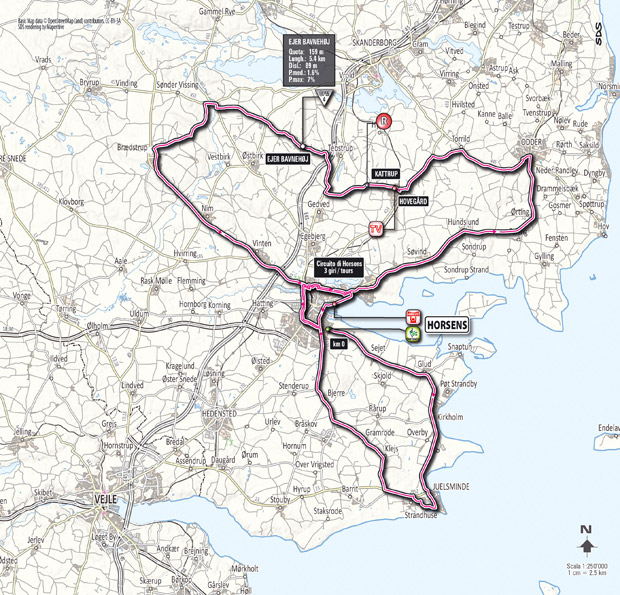
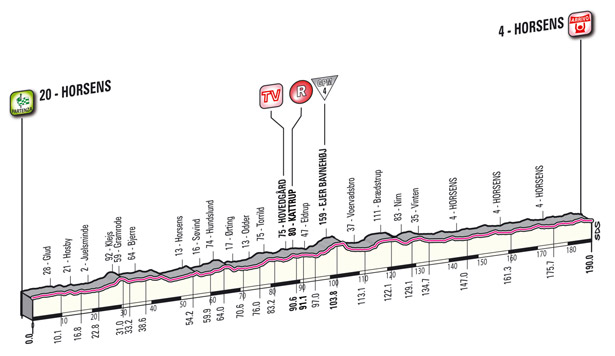
Monday's Stage 3 (map, profile) was the last in Denmark before a rest day on Tuesday. 190km in length, starting and ending in Horsens on the east of the country, it was another flat parcours liable to finish once again with a sprint.

The race began with a minute's silence, speeches and tributes in honour of Wouter Weylandt (right), the 26-year-old Leopard Trek rider who was killed in a high-speed crash as he descended the Passo del Bocco during Stage 3 last year. Tribute was also paid to Horsens mayor and cycling fan Jan Trøjborg, who was instrumental in bringing the Giro to the city but never lived to see it after suffering a fatal heart attack on Sunday.

Matt Goss
Mads Christensen (Saxo Bank), Reto Hollenstein (Team NetApp), Miguel Minguez (Euskaltel-Euskadi), Martijn Keizer (Vacansoleil-DCM), Alfredo Balloni (Farnese Vini-Selle Italia) and Ramunas Navardauskas (Garmin-Barracuda) got away, but on such a fast, flat stage the peloton was unwilling to let it last and began drawing them back as soon as they'd got three minutes' lead - and since Navaradauskas would have come within 22" of Taylor Phinney's General Classification leadership had the break worked, it was BMC who provided the bulk of the effort required to catch them.

Mark Cavendish was a favourite to win the stage, but somehow he became separated from Geraint Thomas, once again doing service as lead-out man and he wasn't where he needed to be this time. He sought familiar ground, tucking in behind Mark Renshaw (Rabobank), but the simple fact of the matter was that where Sky failed Orica-GreenEDGE excelled, and the Australian team expertly position Matt Goss for a win that looked inevitable with 300m to go. Of course, Cav wasn't about to sit up and let him take it unchallenged, but the moment he took after Tyler Farrar into the sprint Robert Ferrari (Androni Giocattoli-Venezuela) suddenly swerved from his own line and directly into the Manxman's path - causing a crash that saw both Cav and Phinney hit the tarmac hard. Cav was up first and carried his bike across the finish line, Phinney stayed down longer but, thankfully, has since been declared free of injury. Ferrari finish ninth, but after viewing video footage it was decided that he had acted recklessly and he was relegated to last place - a controversial decision. Cav claimed that he'd been thrown out of races for less. Goss agreed: "Some guys don't have much regard for the safety. It's win at all costs at some points," he said.

Other riders have since been revealed to have been injured in the crash - William Bonnet (FDJ-Bigmat) has extensive bruising and his team mate Mickaël Delage has a painful shoulder. Cav might have been worse off were it not for the catlike reactions of the Farnese Vini-Selle Italia riders behind him: Andrea Guardini managed to somehow avoid him, Elia Favilli bunny-hopped right over him (seriously impressive move there, Elia!) while Pierpaolo de Nigri slammed on the brakes but couldn't escape a collision, going down beside him and bruising his hip. It could have been much, much worse. Cav says he was traveling at 75kph when the crash happened. That's the same speed Weylandt was doing when he died.

Stage 4, team time trial
Ferrari, originally, was dismissive; in a post-race interview, he claimed to be uninterested in what takes place behind him, apparently suggesting that it's up to those following him to take evasive action when he does something unpredictable and dangerous. Androni manager Gianni Savio sounded no less arrogant: "Ferrari goes on instinct, he didn't know what he did behind him," though he later told Cycling News that he would apologise for his rider's actions. It's since been reported that Ferrari will publicly apologise too.

Cycling is a dangerous sport, as Stage 3 of the Giro d'Italia will always remind us after the tragedy of last year - things can go terribly, horribly wrong in the blink of an eye and riders therefore have a duty of care, an obligation not to endanger one another. Ferrari is directly responsible for a crash that could have ended the race for five riders - or their careers, or worse. Cav's right: he shouldn't be permitted to continue. Apologies - especially ones that inly come after the backlash, are not enough, and there is a very good case for disqualifying him. If Savio is truly sorry, it won't come to that - because he would already have sent Ferrari home.

Sky provided a press release stating that Cav "suffered considerable road rash but his injuries haven't worsened overnight and he wasn't complaining of any serious discomfort during the transfer to Italy. The medical team will continue to monitor his progress throughout today but we're confident he will be able to ride on."

Top Ten

  1.  Matthew Goss Orica-GreenEDGE 4h20'53"
  2.  Juan Jose Haedo SaxoBank ST
  3.  Tyler Farrar Garmin-Barracuda ST
  4.  Arnaud Demare FDJ - BigMat ST
  5.  Mark Renshaw Rabobank ST
  6.  Thor Hushovd BMC ST
  7.  Alexander Kristoff Katusha ST
  8.  Romain Feillu Vacansoleil-DCM ST
  9.  Fumiyuki Beppu Orica-GreenEDGE ST
  10.  Andrea Guardini Farnese Vini-Selle Italia ST
(Full stage results and GC)


On Wednesday, the Giro returns to Italy for a 33.2km team time trial around Verona. It's another fast, flat course with only a little pimple of a hill shortly after the first time check and several long straights on the outward and return journeys followed by a straight 800m section to the finish line.

Stages 1 / 2 / 3 / 4 / 5 / 6 / 7 / 8 / 9 / 10 / 11 / 12 / 13 / 14 / 15 / 16 / 17 / 18 / 19 / 20 / 21


Tour of the Gila
This race belonged to Armstrong from
start to finish
Kristin Armstrong has been nothing short of untouchable this year, winning four of five stages and apparently giving away the one she didn't win in order to save energy for the challenging Stage 5 - her form is nothing short of remarkable right now, very possibly the best of any cyclist male or female. The Gila Monster, as Stage 5 is known, is a tough parcours by anyone's standards however, and even she had to work hard to win with three categorised climbs along the 115.6km - a Cat 4 to 2,070m at 20km, Cat 2 Wild Horse Mesa/Meadow Creek rising to 2,278m beginning at 85km (though precisely how this climb rates at Cat 2 rather than 1 is a mystery) and a final Cat 4 before the finish line; along with the uncategorised Continental Divide rising to 2,045, halfway through. 

Armstrong, however, is not a rider who likes to rest on her laurels and take things easy, even if - as was the case after Stage 4 - she starts a race with a comfortable 4'46" advantage, so she gave it her all and won by an impressive 1'56". The teams played a complex game throughout the stage as they fought it it not just for good places in the GC, but also for the Youth jersey with attacks firing off at several points along the route and a stellar display of well-controlled high-speed descending by Alison Powers and Carmen Small, who took second and third for the stage and reverse the positions for the GC.

Tayler Wiles won the Youth
category
Top Ten Stage 5
  1.  Kristin Armstrong Exergy Twenty12 3h15'44"
  2.  Alison Powers Now and Novartis for MS +1'56"
  3.  Carmen Small Optum p/b Kelly Benefit ST
  4.  Janel Holcomb Optum p/b Kelly Benefit +2'15"
  5.  Tayler Wiles Exergy Twenty12 +2'17"
  6.  Jade Wilcoxson Optum p/b Kelly Benefit +2'18"
  7.  Emily Kachorek Primal/MapMyRide +2'21"
  8.  Andrea Dvorak Exergy Twenty12 +2'26"
  9.  Anna Barensfield Optum p/b Kelly Benefit ST
  10.  Jacquelyn Crow Exergy Twenty12 ST
(Full Stage 5 results)


Top Ten Overall General Classification
  1.  Kristin Armstrong Exergy Twenty12 11h51'28"
  2.  Carmen Small Optum p/b Kelly Benefit +6'41"
  3.  Alison Powers Now and Novartis for MS +7'19"
  4.  Jade Wilcoxson Jade Optum p/b Kelly Benefit +10'07"
  5.  Janel Holcomb Jade Optum p/b Kelly Benefit +10'21"
  6.  Emily Kachoek Primal/MapMyRide +10'46"
  7.  Olivia Dillon   Now and Novartis for MS  +12'27"
  8.  Tayler Wiles   Exergy Twenty12  +12'31"
  9.  Andrea Dvorak   Exergy Twenty12  +12'44"
  10.  Robin Farina   Optum p/b Kelly Benefit  +13'09"
(Full overall GC)


Rory Sutherland
The men's race, which tool place over 170.1km and added two ascents of 2,284m Anderson Vista (Cat 2 on the first ascent, Cat 1 on the second), lit up after 13km when a 21-man break escaped and rapidly began building a significant gap which, for a while, reached six minutes before the Vista took its toll and they were reduced to seven riders. Only Chad Beyer (Competitive Cyclist) and Lawson Craddock (Bontrager Livestrong) had the energy to continue and broke away, gaining 30" on the chase group before being joined by Craddock's team mate Ian Boswell who mounted a superb solo attack after 140km to give Bontrager a serious advantage going into the last part of the race. Working together, they soon left Beyer behind and rode together to the finish.


While Kristin Armstrong fought tooth-and-nail through the stage, the men's GC leader Rory Sutherland took it easy and stayed out of trouble despite starting the day with a 33" lead - 4'13" less than hers. Nevertheless, it worked: he ended the stage with just 15" over second place over Beyer, but it won him the General Classification.


Ian Boswell's solo attack won team mate
Lawson Craddock the stage
Top Ten Stage 5

  1.  Lawson Craddock Bontrager Livestrong 4h27'33"
  2.  Ian Boswell Bontrager Livestrong ST
  3.  Chad Beyer Competitive Cyclist +06"
  4.  Francisco Mancebo Competitive Cyclist +2'10"
  5.  Tyler Wren Jamis-Sutter Home +2'12"
  6.  Rubens Bertogliati Team Type 1-Sanofi +2'14"
  7.  Joe Dombrowski Bontrager Livestrong ST
  8.  Cameron Wurf Champion System +2'17"
  9.  Mathew Cooke Exergy +2'20"
  10.  Sebatian Salas Optum p/b Kelly Benefit ST


Top Ten Overall General Classification

  1.  Rory Sutherland United Healthcare 13h28'12"
  2.  Chad Beyer Competitive Cyclist +15"
  3.  Joe Dombrowski Bontrager Livestrong +22"
  4.  Francisco Mancebo Competitive Cyclist +1'10"
  5.  Lawson Craddock Bontrager Livestrong +1'39"
  6.  Sebastian Salas Optum p/b Kelly Benefit +1'56"
  7.  Chris Baldwin Bissel +1'59"
  8.  Rubens Bertogliati Team Type 1-Sanofi +2'30"
  9.  Mathew Cooke Exergy +2'59"
  10.  Nathan English Kenda/5-Hour Energy +3'52"

Two Days of Bedford
Ciara Horne (in green) leads the Reading Women's Omnium
Sarah Storey (For Viored) took a 5" lead in the General Classification after the Stage 3 individual time trial, completing the 2km course 10" faster than second place Elinor Barker (Scott Contessa) despite the wet conditions as the last riders went - insufficient to allow predictions for the eventual outcome, so everything rested on the rain-soaked Stage 4.

Originally intended to consist of nine laps and 85km around the Milbrook Vehicle Test Track, the stage was shortened to eight laps when the rain showed no sign of stopping. Barker, who started the stage with a 26" disadvantage behind Storey, read the conditions perfectly and knew that strong winds would give the peloton problems; so she attacked in the first stage in the hope that if someone went with her, they'd be able to work together to improve their places and keep out of trouble. However, nobody did, leaving her looking for a while as though she might have made a big mistake. Ultimately, though, it paid off and after settling into a fast rhythm she'd managed to gain a lead of a minute and a half. Ciara Horne (Node 4-Giordana) realised that, unless Barker was caught, her chances of overall victory were over and gave chase in the last two laps. She never did catch her, but reduced the gap to 8" as she crossed the line - enough to take the overall General Classification by one second. (Stages 1/2 report here)

Stage 3 Top Three

  1.  Sarah Storey For Viored 4'23"
  2.  Elinor Barker Scott Contessa +10"
  3.  Ciara Horne Node 4-Giordana +12"


Stage 4 Top Three

  1.  Elinor Barker Scott Contessa 1h54'05"
  2.  Ciara Horne Node 4-Giordana +8"
  3.  Lucy Garner Node 4-Giordana ST


Overall General Classification Top Ten

  1.  Ciara Horne Node 4-Giordana  
  2.  Elinor Barker Scott Contessa Epic +1"
  3.  Lucy Garner Node 4-Giordana +1'01"
  4.  Sarah Storey For Viored +1'02"
  5.  Amy Roberts Scott Contessa Epic +1'25"
  6.  Molly Weaver Scott Contessa Epic +1'39"
  7.  Corrine Hall Node 4-Giordana +1'44"
  8.  Emily Kay Scott Contessa Epic +1'46"
  9.  Helen Wyman Matrix Fitness-Prendas Home +1'51"
  10.  Harriet Owen Node 4-Giordana +1'55"


Add caption
José Serpa hopes to continue Giro
Robert Ferrari might have made himself persona non grata with his dodgy sprinting, but Androni Giocattoli-Venezuela team mate José Serpa is this edition's first hero after remaining in the race despite breaking a finger in Stage 2. While the other riders enjoy a rest day in Verona to recover from the drive down from Denmark, Serpa is spending the day in Turin undergoing X-rays to make sure the fracture didn't become any worse during Stage 3. If not, he will be fitted with a cast designed to allow him to both grip and release the handlebars so that he can remain in the race. (More from Cycling News)

Nibali denies team change
Vincenzo Nibali has denied that he is planning to leave Liquigas-Cannondale at the end of this season, as was widely reported at the weekend (including here). The team revealed that it had not yet heard from the rider after making him an offer said to be worth 1.8 million euros for 2013: "We made him an attractive offer. He has not responded and is therefore not in our contract proposal. The case is closed for us." Rumours then circulated that BMC and Astana had offered him 2.5 million. Liquigas have since issued a new statement saying that "while they are aware "of the rumours that have surfaced over the contractual position for the immediate future, so far no official negotiations have been made on a possible contract extension."

Other News
"Giro d'Italia remembers Wouter Weylandt" (Cycling Weekly)

"Ticket prices revealed for Box Hill area of Olympic road race" (Bike Radar)

Cycling
Britain
"Evolution of cycling" (The Guardian)

"Walkers and cyclists to be rewarded" (UKPA)

"Cyclists hit out at motorists endangering them by parking in bike lanes" (This Is Plymouth)

"Cyclist slams Bedfordshire's ‘strange’ cycle lane" (LocalGov)

Worldwide
"City looks to reduce 'doorings' of cyclists" (CTV, Ottawa)

"Cycle of Fear" (Why riding in NYC will make you happy, New York Times)

Sunday, 22 April 2012

Liège-Bastogne-Liège

Iglinsky takes the most unexpected
Classics win of the season so far
Maxim Iglinsky (Astana) took a superb victory in the final seconds at Liège-Bastogne-Liège, gaining the upper hand over Vincenzo Nibali (Liquigas-Cannondale) with a combination of sheer power and a cool head after a hard-fought battle up and over some of the steepest hills in the Ardennes.


(Videos at the foot of the page)

Samuel Sanchez (Euskaltel Euskadi), tenth last year and a favourite this time around after his stunning performance in the Tour of the Basque Country got into difficulties when his Orbea let him down on the Stockeau and while successful in getting back to the front, doing so used up a lot of energy as the race entered its final part. A breakaway group of eight - Pierre Rolland (Europcar), Vasil Kiryienka (Movistar) and David Le Lay (Saur-Sojasun), Dario Cataldo (Omega Pharma-QuickStep), and Kevin Ista (Accent Jobs-Veranda's Willems), Reinier Honig (Landbouwkrediet-Euphony), Gregory Habeaux ( Accent Jobs-Veranda's Willems ) and Alessandro Bazzana (Type 1-Sanofi) - were building up a lead by this time, the pace proving too much as they approached Theux and suddenly found themselves down to five men.

However, at no point were they permitted to form a gap that might be described as dangerous - a selection of fast riders hovered around the front of a pack of 40 men and kept things ticking over far to quickly for that. Philippe Gilbert (BMC) was a notable face among them, never far from pole position and evidently now well on his way back to good form after a slow start to the season. With 25km to go, their lead was down to 37" and looked doomed to failure, while a second group trailing Gilbert's pack was gradually making up the difference and bringing with it several riders in with a good chance of shaking things up on the last climbs, among them Frank Schleck (RadioShack-Nissan).

By the time they reached the Cote de la Roche aux Faucons, the break had only 14" and the hill looked as though it might once again prove decisive with its average gradient of around 9.9%. Rodriguez (Katusha)  experienced some difficulty on the way up, dropping back from the front of the group, then so too did Sanchez - an unexpected sight as many believed he'd be out to reach the summit fast and then use his legendary descending abilities to get into a good place for the end. Nibali was first up and cruised over the summit without challenge, then mounted a solo attack with 18.5km still to go and rapidly gained 22". A brave and, in all likelihood, ultimately doomed effort with Côte de Saint-Nicolas and the tricky little climb in the last couple of kilometres to Ans, one would have thought, but guaranteed to bring glory if it worked, much like Tom Boonen's already-legendary win at Paris-Roubaix this year. And, perhaps more importantly, beautiful to watch.

It looked like it was in the bag for
Nibali
Gilbert, Gasparotto (Astana), Iglinsky, Sanchez (Euskaltel-Euskadi), Rodriguez, Kiserlovski (Astana), Mollema (Rabobank), Rolland (Europcar), Voeckler (Europcar), Scarponi (Lampre-ISD), Van Den Broeck (Lotto-Belisol), Nocentini (AG2R-La Mondiale), Hesjedal (Garmin-Barracuda), Martin (Garmin-Barracuda), and Vanendert (Lotto-Belisol) went after him, but Nibali's attack seemed to have thrown them all into a state of confusion and there was so little organisation to their attempts that with 15km to go the race looked briefly to be a done deal. Perhaps there were simply too many of them - once the chasers had been whittled down to a more manageable seven, they fell into shape and began to work together. Then, the Italian produced a completely unexpected ace from up his sleeve - it turns out he can descend very, very well indeed; sufficiently so to increase his lead to 40" as he neared the final 10km. That threw the chasers into a panic once again so that before too long only Iglinsky was concentrating on the task in hand.

Iglinsky kept up the pressure, clawing his way up to the leader and getting to within 15" as they passed Liège stadium, Nibali looking quite surprised to see him there as they entered the last 3km - and then, incredibly, Iglinsky dropped him as they passed under the 1km banner! Precisely where he found the power after 256.5km is a mystery, but find it he did - and he powered up the last climb to take a 21" advantage and what must be the most unexpected victory of the 2012 Classics so far.
  1.  Maxim Iglinskiy Astana 6h43'52"
  2.  Vincenzo Nibali Liquigas-Cannondale +21"
  3.  Enrico Gasparotto Astana +36"
  4.  Thomas Voeckler Europcar ST
  5.  Daniel Martin Garmin-Barracuda ST
  6.  Bauke Mollema Rabobank ST
  7.  Samuel Sanchez Euskaltel-Euskadi ST
  8.  Michele Scarponi Lampre-ISD ST
  9.  Ryder Hesjedal Garmin-Barracuda ST
  10.  Jelle Vanendert Lotto-Belisol ST
(Full results)


Wednesday, 14 March 2012

Cyclopunk's News Digest 14-15.03.12

No women's race at the Smithfield Nocturne
Since the IG Markets Nocturne began five years ago, it's grown into one of the most popular cycling events in Britain with a combination of top quality hard criterium racing and fun events (including the now-legendary folding bike race) that have ensured thousands of people show up for a night of free family entertainment. It also receives TV coverage.

That, obviously, is precisely the sort of event that can benefit women's cycling - the audience, infrastructure and cameras are already in place; giving the teams a chance to prove that women's cycling is every bit as exciting, competitive and interesting as the men's. Nocturne organisers recognised this fact and decided that they'd benefit too - after all, Britain's female professional cyclists are at the pinnacle of their sport and have a small but dedicated following who will flock to any such an event.

Brilliant. Fantastic. Win-win, hunky-dory, spiffing and sorted. Except for one thing: "outside influences," namely British Cycling, have prevented a women's race from going ahead due to another race taking place the next day - a race organised by British Cycling, funnily enough. Are the riders' pretty little heads likely to become confused as to which race they should enter? Are they too weak and feeble to do both? Or is it just sour grapes due to the fact that the Nocturne is a bigger, more successful event than the British Cycling race?

Team Mule Bar Girl responded to the news on their Facebook page:
"So British Cycling have asked Smithfield Nocturne NOT to hold a women's race because it makes the girls tired for a big BC race the next day. The last I checked we weren't living in North Korea and we are allowed to choose how we spend our time. The Nocturne Women's race is one of the most talked about on the calendar, it's the one we get bubbly with excitment for. It took a big effort and some beautiful support for it to happen in the first place, just to have it taken away, it totally sucks!!!"
With that sort of attitude from the National Federation, those who wish to promote women's cycling and ensure it receives the exposure it has for so long deserved have an even harder task ahead of them than was previously thought. Keep an eye on Mule Bar Girl for petitions and further details - and you can contact British Cycling to share your opinions on their misguided decision via this link.

Chicci becomes 15th foreigner to win Nokere Koerse
Francesco Chicchi
(image credit: johnthescone CC BY 2.0)
Today brought us the 67th edition Flanders semi-Classic Nokere Koerse, traditionally the domain of second-division tough guys while the A-listers are preparing themselves for Milan-San Remo and a race that had been won only fourteen times by non-Belgian riders - fifteen, now that 31-year-old Italian Francesco Chicchi of Omega Pharma-QuickStep has added his name to the list of victors.

A 12-man break was caught with 40km to go, at which point a larger group of 14 riders escaped before being reeled back in just 18km from the finish, then various hopefuls tried and failed to launch attacks in the last 9km but were all chased down and pulled back in. Boy Van Poppel (3rd) of United Healthcare and Vacansoleil's Kris Boeckmans (2nd) tried hard to get the better of Chicci as the UCI 1.1 race entered its uphill closing straight, but Chicchi powered away form them and right up to the line.

The race brought misfortune for Rabobank's Jos Van Emden, however - the Dutch 27-year-old crashed and is believed to have broken his shoulder, though medical confirmation has yet to be announced. (Race results available here.)

Definitive Milan-San Rem start list revealed
See it here. Team Sky looks like this...

  201    CAVENDISH, Mark
  202    HAGEN, Edvald Boasson
  203    HUNT, Jeremy
  204    EISEL, Bernhard
  205    HAYMAN, Mathew
  206    LÖFKVIST, Thomas
  207    STANNARD, Ian
  208    KNEES, Christian
Chavenel out of Milan-San Remo
Omega Pharma-QuickStep star Sylvain Chavanel's hopes for Milan-San Remo have been smashed after he suffered an attack of bronchitis on Thursday morning. The 32-year-old Frenchman, who was eighth at Paris-Nice and ranked among the favourites for Saturday's Monument, began to cough and experience breathing problems during a training ride. Team doctors and managers decided to pull him from the race in order to give him time to recover for the upcoming Northern Classics. He will be replaced by Matteo Trentin.

Nibali to Astana rumours
Has €4 million persuaded Nibbles todefect?
Smells like rot, we say.
(image credit: Richard Masoner CC BY-SA 2.0)
According to a report in the Sydney Morning Herald, Tirreno-Adriatico winner Vincenzo Nibali has secretly signed a €4 million, two-year deal to ride with Astana in 2013/14. The 27-year-old Italian, nicknamed The Shark (or, by English-speaking fans, Nibbles), was thought to be discussing a contract extension with his current Liquigas team, making the rumour seem likely to be unfounded.

"Imagine you're the guy deciding whether to renew Liquigas' sponsorship and you read that??!!" Garmin-Barracuda boss Jonathan Vaughters told us.

Other News
28-year-old Dries Devenyns will not ride in  Milan-San Remo this year after suffering a broken shoulder, ay Omega Pharma-Quickstep management .Tom Boonen will lead the team, which also consists of Sylvain Chavanel, Gerald Ciolek, Nikolas Maes, Jérôme Pineau, Niki Terpstra, Stijn Vandenbergh and Peter Velits.

Team Sky's time at the top of the UCI rankings proved fleeting - they've been replaced in the wake of Tirreno-Adriatico by RadioShack-NissanTrek, previouly in third place. Sky are now in second, while Movistar move down to third. Alessandro Valverde is still far ahead in the riders' category with 167 points, while Tirreno-Adriatico victory places Vincenzo Nibali into joint second place alongside Sky's Bradley Wiggins. Spain continue to lead the nations, having upped their points from 205 to 250; while Australia, who were previously second with 193 have added only four and as a result are overtaken by Italy with 217. Great Britain slips from third to sixth and is now trailing behind the Netherlands and the USA (but we'll soon see about that when Cav wins Milan-San Remo).

X-ray results have confirmed that Rabobank's Theo Bos sustained no fractures in his Nokere Koerse crash. The 28-year-old, who won the Dwars door Drenthe earlier this year, will resume training next week.

Tweets
Fabian Cancellara ‏ @f_cancellaraModern style of the hotels for the future. #emtpyminibars.They put just a vending machine toward the elevator. #unclass view photo
the Inner Ring ‏ @inrng@f_cancellara are you sure Chris Horner just didn't get there before you?